Good grief. Just when you thought this pantomime couldn’t get any more ridiculous….
As many of you will know, Raeshaw Estate in the Scottish Borders was one of the first in Scotland to be subjected to a General Licence restriction, issued in 2015, based on clear police evidence that wildlife crimes had been committed although there was insufficient evidence to prosecute any individual (see here). The estate contested the legality of SNH’s decision and this was seen as a test case, which went to Judicial Review in 2016. In March this year, the Court of Session upheld SNH’s decision and the General Licence restriction was considered lawful (here).
Here is a map showing the location of Raeshaw Estate, near Heriot in south Scotland (estate boundary details sourced from Andy Wightman’s Who Owns Scotland website).
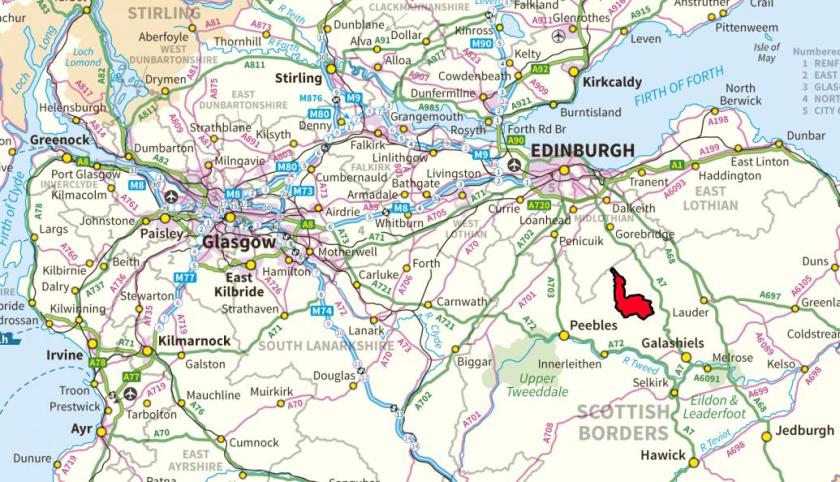
For background, there’s been a long history of raptor persecution “nr Heriot“, dating back to at least 2001. Here’s a list we’ve compiled of confirmed raptor persecution crimes, listed in RSPB annual reports and / or the press:
2001 May: poisoned buzzard (Carbofuran) “Heriot Dale”. No prosecution
2003 Feb: poisoned buzzard (Carbofuran) “Heriot”. No prosecution
2003 Mar: poisoned buzzard (Carbofuran) “Heriot”. No prosecution
2003 Apr: poisoned buzzard (Carbofuran) “Heriot”. No prosecution
2003 Nov: poisoned buzzard (Carbofuran) “Heriot”. No prosecution
2004 Feb: Carbofuran (possession for use) “Heriot”. No prosecution
2004 Feb: two poisoned buzzards (Carbofuran) “Heriot”. No prosecution
2004 Oct: poisoned buzzard (Carbofuran) “Heriot”. No prosecution
2005 Dec: poisoned buzzard & raven (Carbofuran) “Heriot”. No prosecution
2006 Sep: poisoned buzzard (Carbofuran) “Heriot”. No prosecution
2006 Oct: poisoned buzzard (Carbofuran) “Heriot”. No prosecution
2009 Mar: two poisoned buzzards (Carbofuran) “nr Heriot”. No prosecution
2009 Jun: poisoned red kite (Carbofuran) “nr Heriot”. No prosecution
2009 Jun: 4 x poisoned baits (2 x rabbits; 2 x pigeons) (Carbofuran) “nr Heriot”. No prosecution
2010 Nov: poisoned buzzard (Carbofuran) “nr Heriot”. No prosecution
2011 Jan: poisoned buzzard (Carbofuran) “nr Heriot” No prosecution
2013 Jun: shot + poisoned buzzard (Carbofuran) “nr Heriot”. No prosecution
2014 May: crow trap baited with two live pigeon decoys “nr Heriot”. No prosecution (but General Licence restriction applied in Nov 2015)
2014 May: four set spring traps beside live pigeon decoy “nr Heriot”. No prosecution (but General Licence restriction applied in Nov 2015)
2014 May: four shot buzzards “nr Heriot” No prosecution
2015 Jul: shot buzzard “found by side of road between Heriot and Innerleithen” according to media reports (see here). No prosecution
Interestingly, also not included in the RSPB’s annual reports but reported by the Southern Reporter (here) and the Guardian (here), a police raid on Raeshaw Estate in 2004 uncovered nine dead birds of prey, including five barn owls, two buzzards, a kestrel and a tawny owl, described as being “poisoned or shot“. In addition, “a number of illegal poisons were discovered but no-one was ever prosecuted“. According to both these articles, during a further police raid on Raeshaw Estate in 2009 ‘three injured hunting dogs were seized by the SSPCA on suspicion of involvement with badger baiting’. We don’t know whether that resulted in a prosecution.
Also not included in the above list is the sudden ‘disappearance’ of a young satellite-tagged hen harrier in October 2011. This bird had fledged from Langholm and it’s last known signal came from Raeshaw Estate. A search failed to find the body or the tag.
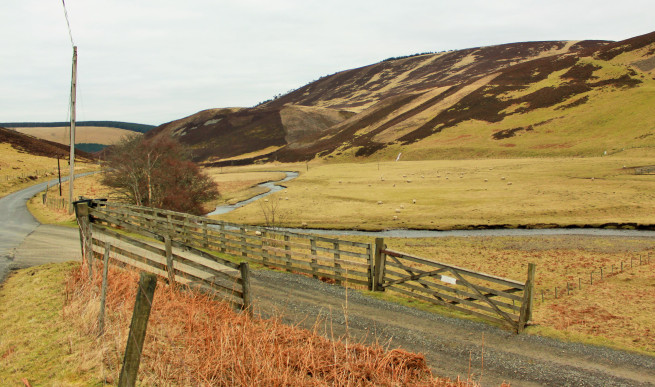
Raeshaw Estate (photo by RPUK)
Once the General Licence restriction was in place in 2015, Raeshaw Estate applied for, and was granted, a number of individual licences, allowing them to continue to carry out various ‘management’ activities (killing corvids and other so-called ‘pest’ species) but under closer scrutiny than they would have been subjected to under the General Licence. We know that between July and August 2016, at least 1,000 birds (294 rooks, 706 jackdaws) were lawfully killed under the auspices of these individual licences (see here). It looked like business as usual for this grouse-shooting estate, even with a General Licence restriction in place.
In 2017 Raeshaw Estate successfully applied for more individual licences that would allow them to continue this lawful wildlife-killing spree. However, in May 2017 after a spot check on the estate by SNH staff, SNH announced it had revoked an individual licence on Raeshaw Estate following the discovery that the terms of the individual licence had allegedly been breached (see here). SNH also reported suspected wildlife crimes to Police Scotland; we await news on this.
Good, we thought. The General Licence restriction was still in place (until Nov 2018) and now the individual licence had been revoked, so we assumed, naively, that Raeshaw Estate would no longer be permitted to kill wild birds during this period.
How wrong we were.
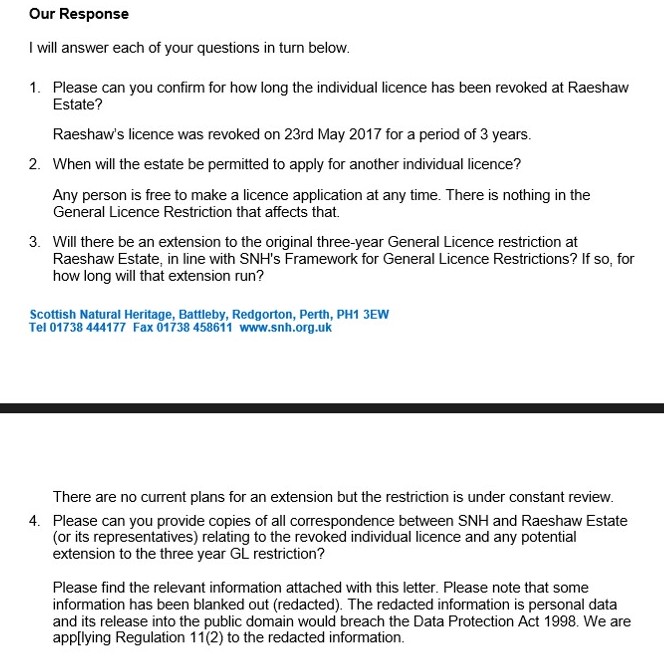
In early October 2017 we submitted an FoI to SNH to ask a series of questions about this issue. Amongst other things, we wanted to know for how long the individual licence had been revoked, and we also wanted to know whether the Estate’s General Licence restriction would be extended beyond the initial three-year period (Nov 2015-Nov 2018) given that further alleged breaches, and suspected wildlife crimes, had been discovered. SNH’s framework for dealing with General Licence restrictions explicitly states that a restriction may be extended in these circumstances:
“Where, during a period of restriction, new evidence is received by SNH which provides reason to believe that wild birds have been killed and / or taken, there is intention to do so, other than in accordance with the terms of a Licence and the Licensing manager considers that the existing restriction should be extended, the Licensing Manager will recommend to the Wildlife Operations Manager that the existing restriction be extended“.
Well, guess what? Raeshaw Estate’s original General Licence restriction has NOT been extended – why the hell not?
And even more jaw-dropping, it turns out that even though SNH has revoked one individual licence, Raeshaw Estate can simply apply for another one, and another one, and another one, ad infinitum!!!
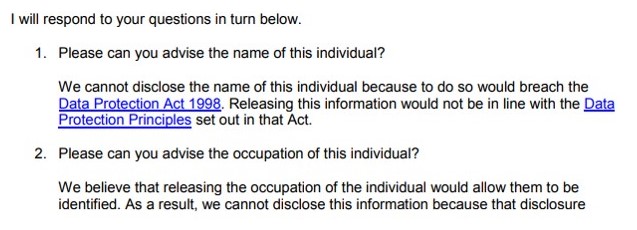
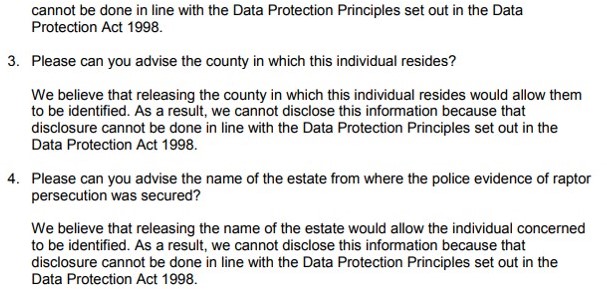
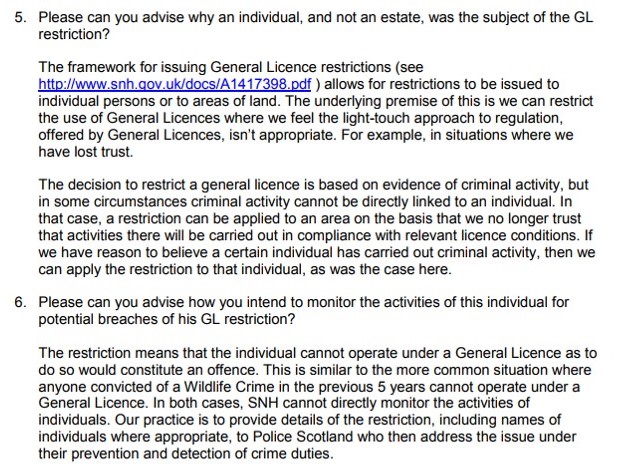
Here’s SNH’s response to our FoI:
How on earth is this allowed to go on?
It could be argued that SNH is simply following the General Restriction framework guidelines (in terms of considering further individual licence applications), and we have some sympathy with that, but, presumably SNH was involved in the drafting of these guidelines and even if they hadn’t noticed this glaring loophole at the time of drafting, it’s surely apparent now and SNH should be pushing for an urgent revision. And it does not explain why SNH has not extended Raeshaw Estate’s original General Licence restriction. If SNH has identified alleged breaches that were considered sufficient evidence to result in a revocation of an individual licence, why are these alleged breaches not considered sufficient evidence to extend the original General Licence restriction, as per the SNH guidelines?
It could also be argued that even though Raeshaw Estate is allowed to apply for as many individual licences as it likes (despite these repeated alleged licence breaches and alleged wildlife crimes), SNH may refuse to grant any more. We do know, from correspondence between Raeshaw Estate’s lawyer and SNH, released as part of our FoI resonse, that Raeshaw Estate was planning to submit another individual licence application “for 3 cage traps in order to control rooks in particular which were spoiling feeders for pheasants“. We have submitted another FoI to determine whether SNH has granted any further individual licences, even though there is yet another on-going criminal police investigation in to alleged wildlife crimes on this estate.
Watch this space.



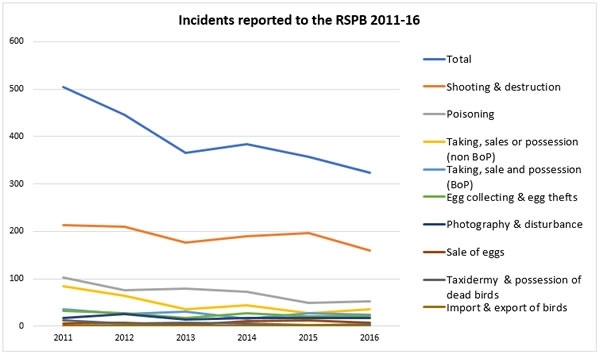
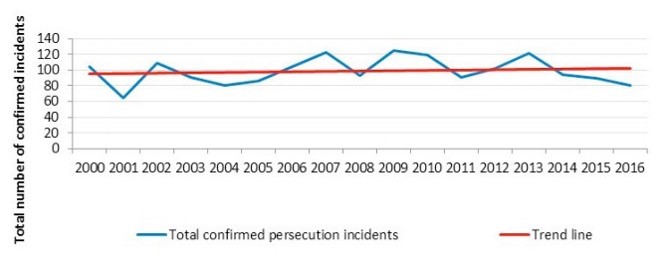
 The Northern England Raptor Forum (NERF) has just published its response to the publication of the RSPB’s Birdcrime 2016 report.
 Raptor Persecution UK