
 A couple of weeks ago we blogged about Police Scotland withholding information about raptor persecution crimes from the RSPB’s 2015 Birdcrime report (here). Their approach was in sharp contrast to every other UK police force that had provided data for this report.
This wasn’t the first time we’d noticed a distinct lack of transparency from Police Scotland, and indeed we remarked that it was becoming something of a speciality of theirs, as they’d also withheld raptor persecution data from the ‘official’ PAW Scotland 2015 raptor persecution report (see here) and also from the Scottish Government’s 2015 annual wildlife crime report (see here, here and here).
One of our blog readers contacted Police Scotland to ask why information about raptor persecution crimes (a national UK police priority) was being withheld from the public.
Here’s Police Scotland’s response:
Primarily, the Police Scotland concern is about specialist knowledge becoming public knowledge in these cases. Police Scotland actually withholds the data from publication in relatively few cases and only after consideration against the agreed investigative strategy for a particular case. If Police Scotland is to make an appeal for information about a bird of prey killing and has chosen not to identify the substance as part of the strategy (or even identify that poisoning was the cause of death) this would be undermined by the identification of the chemical used in a public document. It would not take too much initiative to put the two together and that specialist knowledge tool is lost. A similar argument is equally as legitimate where other modus operandi (MO) are used in this form of raptor persecution.
On occasions, the decision is made not to make an investigation public at all for a variety of reasons (time of year, other ongoing investigations etc.). Publication of pesticide data or MO by HSE, RSPB or whoever else would ensure that Police Scotland loses control over this tool.
Differences in the legal system in Scotland is also another issue. The time bar for bringing wildlife crimes to court in Scotland is (in most cases) three years from the date of the offence. Police Scotland therefore expect to be able to legitimately withhold information relating to cases for that time period. This argument was supported by a specialist prosecutor from the Crown Office and Procurator Fiscal Service’s Wildlife & Environmental Crime Unit who also thought that this was particularly relevant in Scotland because we still have a requirement for corroboration.
Police Scotland cannot speak for the approach taken by forces in England and Wales but our commitment to wildlife crime ensures that we must ensure that we use every tool available and therefore on occasions this will include withholding information about a crime.
ENDS
Police Scotland’s justification for withholding information about raptor persecution crimes is technically legitimate. They have the right to withhold information when they think it is the most appropriate and/or effective approach to take.
However, just because we accept that this is a technically legitimate course of action for Police Scotland to take, it doesn’t mean that we agree with it. On the contrary, their approach raises some very serious concerns.
The first, and most important, concern is the issue of public safety. Public safety is the underlying objective of any police force, and Police Scotland even have it incorporated in to their logo. How on earth is withholding information about the use of a dangerous (potentially fatal) poison in a given area ‘keeping people safe’?
What happens if a member of the public visits that area with a child or a pet dog, ignorant to the fact that poisoned baits have been discovered there, and they stumble across the poisoned bait and, god forbid, the child (or adult) touches it, or the dog eats it, and dies as a result? These poisons have been banned for a reason – they are so highly toxic that even absorption through the skin (via touch) can be enough to cause death. Many pet dogs have succumbed in this way and it is only a matter of time before it happens to a human.
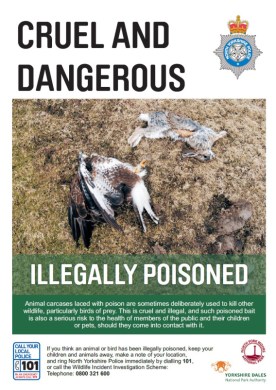 At the very least, the very, very least, Police Scotland should be screaming about the use of illegal poison, every single time they encounter it. It should be in the papers, on the radio, on the TV, all over social media, and warning posters should be prominently displayed in the local area (just as North Yorkshire Police are doing – see here). What Police Scotland absolutely should NOT be doing is hiding this information from the public for three years. What on earth are they thinking?
What’s more important to Police Scotland – protecting the public from a devastating consequence or clinging to a false hope that somebody might come forward with corroborating information that might lead to an arrest? It’s a bit of a no brainer, isn’t it?
And ‘clinging to a false hope’ is a deliberately chosen expression. How many times, in the last, say, 10 years, following a raptor poisoning crime, has anyone ever come forward with corroborating evidence that has enabled a prosecution? If you read RSPB Scotland’s recent written evidence to the ECCLR Committee (here), you’ll find this statement:
‘We note that a number of cases of confirmed raptor persecution have not been included in the Wildlife Crime Report. RSPB Scotland is concerned that increasingly, such data are being withheld from public scrutiny on the basis that cases remain under investigation and/or there is an anticipation that an individual will come forward, as a result of an appeal, with some specialist information that will identify a potential suspect. As far as we are aware, this has never happened, almost certainly due to the culture of silence outlined above‘.
Other concerns about the withholding of persecution crime data have been covered on this blog many times before. This lack of transparency not only undermines the public’s confidence in officially-cited (by Government) raptor persecution trends, but it also creates the false impression that raptor persecution is no longer an issue of concern. If the public isn’t reading about it, they’ll assume it’s not happening. Naturally, those with a vested interest in hiding the extent of raptor persecution crime will be all over this, using it in propaganda campaigns to indicate that the game shooting industry has finally cleaned up its act.
And of course, if raptor persecution crimes are not in the public domain, it makes it virtually impossible for people like us to track and assess the performance of Police Scotland and also that of the Crown Office in dealing with these offences. No public awareness = no public scrutiny.
How very convenient.
Police Scotland should be hung out to dry about this. Not only are they putting public safety at risk, but they are also demolishing public confidence in their ability to effectively tackle wildlife crime. We’ll be contacting several MSPs to follow up on this issue and we encourage you to contact your own MSP to make your concerns clear.
 The following internal email was written by Rob Cooke (Natural England Director) on 6 February 2017:
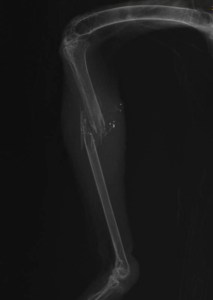 Recent events have resulted in a large number of FoI requests and fair bit of resultant commentary on raptor blogs. Much of this is commentators adding up 2 and 2 and coming to 5. In particular the huge amount of space devoted to whether NE ‘watered down’ a media release concerning Rowan’s post-mortem to say ‘likely to have been shot’, as opposed to ‘shot’. The simple truth is that the post-mortem did not say definitively that the bird was shot so nor did we (or the RSPB either – ‘injuries consistent with being shot’). That prosaic point aside what is really disappointing is that this focus detracts from the spotlight which needs to be shone on the continuing plight of HHs and work underway to change that. The lurid accusation that NE is in some way colluding with those responsible for hen harrier persecution is simply absurd.
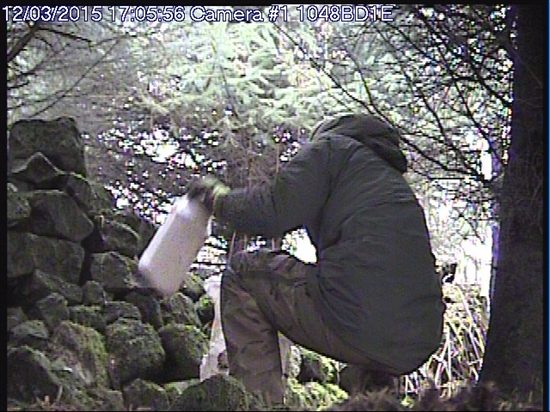
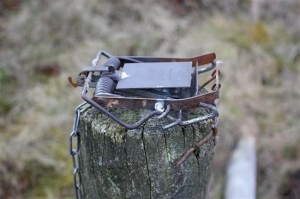 On what basis does he believe in this supposed sincerity? The plan was launched over a year ago in January 2016, with the ‘partners’ supposedly all signed up. Since then we’ve seen an armed man sitting next to a decoy hen harrier on a grouse moor in the Peak District National Park; a gamekeeper caught on film setting three illegal pole traps on a grouse moor in the Yorkshire Dales National Park; an endless number of raptor shootings, trappings and poisonings across England, many on or next to a grouse moor; an increase in the number of reported gas guns and banger ropes being deployed on grouse moors to deter breeding hen harriers; only three hen harrier nests in England (where there could be 330) and not one of them was on a grouse moor; and eight satellite tagged hen harrier fledglings from the 2016 season have already either ‘disappeared’ in the uplands or have been confirmed shot.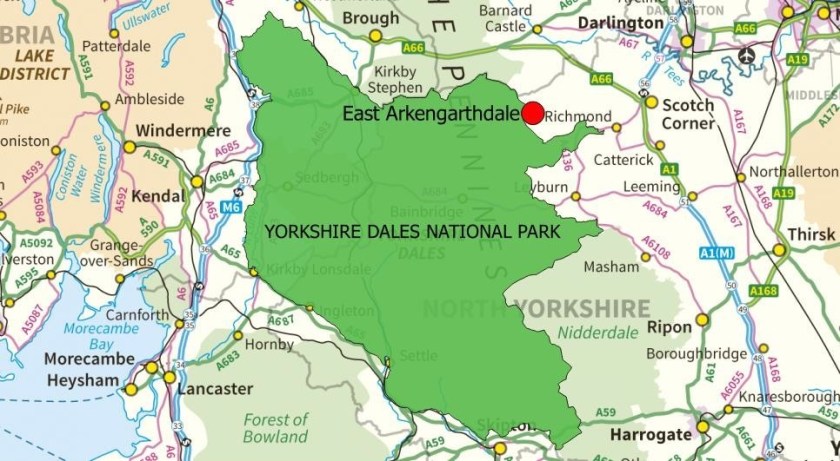
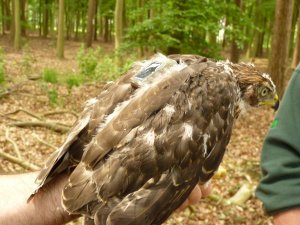 Not for the first time, the Queen’s Sandringham Estate in Norfolk has been at the centre of a police investigation in relation to a raptor incident.
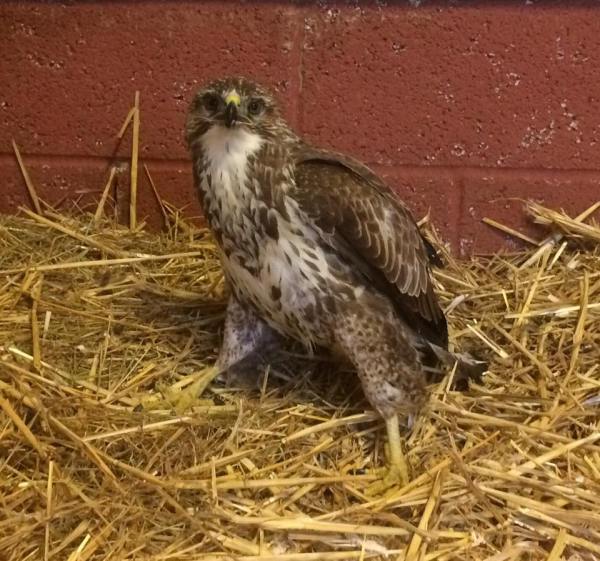
 The Countryside Alliance has responded to the
 Raptor Persecution UK