 Back in November we blogged (here) about DEFRA’s proposed ‘reintroduction’ of hen harriers to southern England, which is part of DEFRA’s Hen Harrier InAction Plan.
We had received information, via an FoI request, that Natural England had identified two potential areas for the reintroduction – Exmoor and Wiltshire.
These two areas had been identified from a ‘project scoping’ (feasibility) report, dated 2012 and cited in DEFRA’s InAction Plan as being ‘unpublished’. We were very keen to see this scoping report and we’ve now got hold of a copy, via another FoI.
The report is called The Feasibility of Translocating Hen Harriers to Southern England, and Prioritisation of Potential Translocation Sites and Strategies. It is authored by D.J. Hodgson [Exeter University], W. Schuett [Exeter University], S.M. Redpath (Aberdeen University], S.C.F. Palmer [Aberdeen University], J.P. Heinonen [Aberdeen University], J.M.J. Travis [Aberdeen University] and R. Saunders [Natural England]. The report was written in 2012, was funded by Natural England, but for unknown reasons has never been published, which seems a bit odd for a report paid for with taxpayers’ money.
You can download it here: draft-hh-reintro-to-southern-england-feasibility-study
It makes for an interesting read. It identifies four potential release areas (Exmoor, Dartmoor, Dorset Heaths and Wiltshire), based on a series of ecological data, with the highest scoring areas being Exmoor & Wiltshire. There is also mention that Scottish birds would be the most suitable for a translocation to Exmoor (based on habitat similarities) whereas birds from the Continent would be more suitable for release in Wiltshire. (Remember, we already know that hen harriers that have been removed from grouse moors as part of the brood meddling scheme cannot be used for the southern England reintroduction project (see here) and so other donor populations need to be identified).
What is most surprising about this report is how dated the reference material is that has been used to justify the project’s feasibility, and, more pertinently, the apparent exclusion of more recent data that would throw a different light on the project’s feasibility, and we wonder whether that exclusion is deliberate. Let us explain….
The whole (presumed) premise of this project is to establish a self-sustaining population of hen harriers in southern England; a population that will be unaffected by the continued persecution of hen harriers on the grouse moors of northern England/Scotland. For this to be achievable, DEFRA/Natural England would need to be sure that the hen harriers released in southern England wouldn’t disperse to the grouse moor badlands in the north, where undoubtedly they’d be killed (illegally) and thus the southern reintroduction project would fail.
So in this feasibility report, the authors have discussed the natal dispersal of hen harriers (i.e. the distance dispersed from the natal nest to the nest of the first breeding attempt). It’s a reasonable subject to include, especially if, as in the case of this project, DEFRA/Natural England are trying to show that hen harriers will attempt to breed relatively close to any proposed release (substitute natal) site. The authors of this feasibility report have cited very short natal dispersal distances, based on the findings of Etheridge et al (1997), although they do acknowledge that there is limited evidence of greater natal dispersal distances based on more recent data. The Etheridge et al paper reported on fieldwork undertaken in Scotland between 1988 – 1995 and natal dispersal distances were assessed from wing tag re-sightings. None of the birds had been radio or satellite-tagged. Natal dispersal distances for males generally fell between 14-150km and for females, 9.5-51km. So, if you’re trying to argue that reintroduced hen harriers are likely to attempt to breed close to the release site, the Etheridge et al paper is a good one to cite.
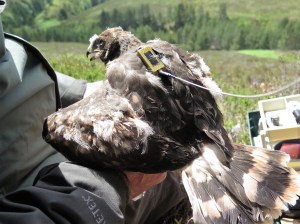 However, since that 1997 paper was published, many, many more hen harriers have been radio and satellite-tagged (99 radio tagged 2002-2006; 47 satellite tagged 2007-2015 by Natural England according to Stephen Murphy’s presentation in Sheffield last Sept) but the RSPB has also been satellite tagging hen harriers in recent years so the totals will be higher. Natural England has yet to publish the full findings of the hen harrier tagging project (well, it’s only been 15 years since it started) but seeing as though one of the authors of the feasibility report is a Natural England employee (Richard Saunders), surely those more recent data should have been available to include in the feasibility report?
Now, it’s likely that there aren’t that many hen harriers that were radio or sat-tagged since 2002 that have survived for long enough to start a first breeding attempt, so there aren’t that many more recent data on natal dispersal that the authors could have used (there are a few birds that have survived for long enough, but not that many because most radio/sat tagged birds have been killed within the first year or so of leaving the nest (e.g. see here)).
But what we do know from the hen harriers tagged since 2002 is that juvenile dispersal (i.e. the movements made by the young birds before they settle to breed), as opposed to natal dispersal, involves huge distances of hundreds of miles across large parts of the country, with some birds even dispersing to the Continent. It is these distances that need to be taken into account in the feasibility study, not just natal dispersal distances, because the chances are, any young birds released in to southern England will travel far and wide during the period of juvenile dispersal (probably to the grouse moors of northern England and Scotland) and so the probability of them still being alive to return to breed in southern England has to be seen as pretty slim, to say the least.
It’s all very well for the authors of the feasibility report to cite short natal dispersal distances, but to ignore the period of dispersal between fledging and first breeding attempt seems a fairly fundamental flaw, especially when the report authors have acknowledged throughout that persecution in the uplands continues to be a major issue. The authors did consider juvenile dispersal distances when they modeled population spread from southern England, but again, this was flawed because, if we’ve correctly understood the feasibility report, they only used dispersal distances from the Etheridge paper AND they assumed ‘no illegal activity’ in their modelling variables!
And it’s not just the information on dispersal that is so outdated in this feasibility report. The rest is pretty old too – the most recent reference cited in the reference list is from 2009. Sure, the feasibility report was written in 2012 but there are a lot more recent data they could have used, including the Hen Harrier Conservation Framework that was published in 2011. That Framework Report (written by Fielding et al) is the most comprehensive review on the ecological requirements and status of hen harriers (if you exclude the updated HH Framework Report that was submitted to SNH in 2013 but remains unpublished, four years on, because SNH wants to keep it a secret) so why weren’t the findings of the 2011 Framework Report incorporated in to this 2012 feasibility report?
It’s possible, of course, that we’ve misunderstood the feasibility report (and we’d be very keen to hear others opinions once you’ve had a chance to read it) but if we haven’t misunderstood it, and the feasibility report is flawed, then where does that leave DEFRA’s planned hen harrier reintroduction? It surely can’t proceed if the science used to justify the project’s feasibility is so flaky and unpublished?
We’ll be blogging more about the planned hen harrier reintroduction to southern England over the coming days, including further information about specific release sites, funding, and potential hen harrier donor populations that have been revealed via FoI.
Photo of satellite-tagged hen harrier Elwood, by Adam Fraser. Elwood ‘disappeared’ last year on a grouse moor in the Monadhliaths just a few weeks after fledging (see here).

 Jeffrey Lendrum, a notorious international falcon egg thief, has gone on the run in Brazil and there are fears he may well turn up back in the UK this year to go after peregrine eggs.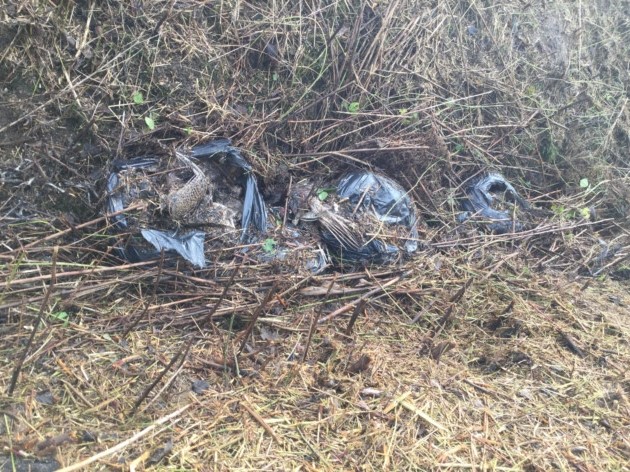
 Following on from today’s earlier blog about the three shot buzzards in Somerset (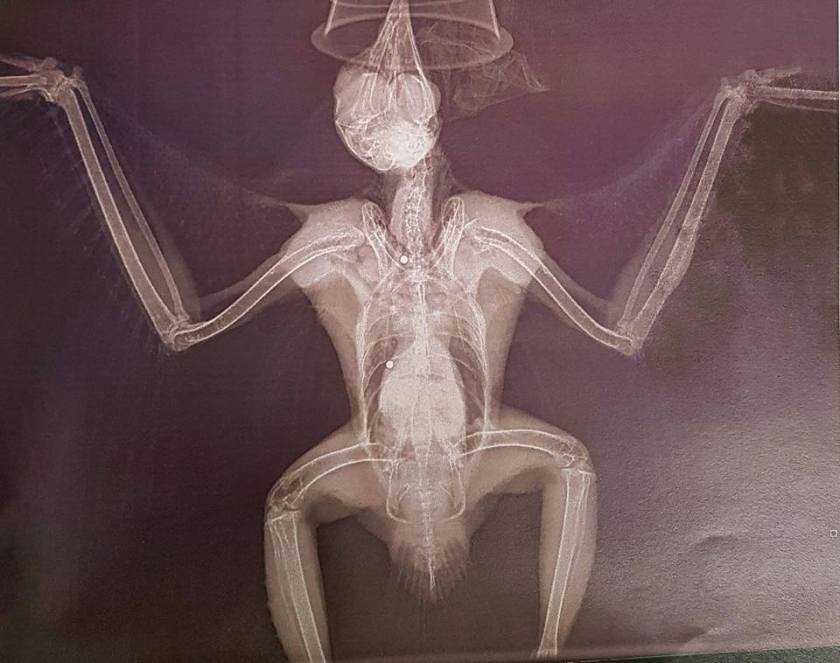
 Next week (Tuesday 10 January 2017, 9.30am) the Scottish Parliament’s Environment, Climate Change and Land Reform (ECCLR) Committee will hear evidence about the Government’s recent (2015) annual wildlife crime report.
 Raptor Persecution UK