
 The Scottish Government has today published the long awaited report from the Wildlife Crime Penalties Review Group – and it is very good news.
You may recall that this Review Group was established in July 2013 by then Environment Minister Paul Wheelhouse, as part of a series of measures aimed at tackling the continued persecution of birds of prey (see here). It was his response to growing levels of public concern and a lack of confidence in the judiciary to deal with raptor-killing criminals. Criticisms of the system have often centred around perceived corruption, vested-interests and biased Sheriffs, and we have come to expect unduly lenient and inconsistent sentencing in most cases (e.g. see here).
The Review Group was tasked to explore how wildlife crime was treated within the criminal justice system, including an examination of whether the penalties available properly reflect the seriousness of the damage caused to vulnerable wildlife and fragile habitats and ecosystems.
The Group was due to report in December 2014 and we’ve been frustrated by the number of subsequent delays involved, but the report has now been published and it was well worth the wait.
The Review Group’s conclusions are clear. The current system of wildlife crime penalties in Scotland is wholly inadequate and the currently available penalties do not act as an effective deterrent to would-be offenders. This will be no surprise to regular readers of this blog, so we’re delighted that this independent Group has reached the same conclusion.
The Review Group has made ten short-term and medium-term recommendations for the Scottish Government to consider. These include raising the maximum penalty for summary convictions to at least £40,000 and 12 months imprisonment. The current maximum penalty is £5,000 and 6 months imprisonment.
The Group also recommends the extended use of ‘forfeiture provisions’, including a provision that where a firearm or shotgun is involved in the commission of a wildlife crime, the court should have the power to cancel the relevant certificate.
They also recommend the development of sentencing guidelines for wildlife crimes to enhance the consistency and transparency of sentencing.
This Review Group’s report is an impressive piece of work – and we’re not just saying that because we agree with its conclusions and recommendations. Unusually for a Government report, it is extremely well-written (and thus easy to understand), detailed, and well-supported by documentary evidence. Professor Mark Poustie (University of Strathclyde Law School) and his fellow Review Group members are to be commended.
The report can be downloaded here: Wildlife Crime Penalties Review Group Report 2015
So what happens next? Well, the Scottish Government now has to consider the report’s recommendations and decide whether to implement any of them. Current Environment Minister Dr Aileen McLeod is quoted this morning:
“I will carefully consider all the recommendations and will make a further announcement on how we intend to take this work forward“.
Let’s hope she gets on with it. She still hasn’t made a decision on whether to increase the investigatory powers of the SSPCA, even though the public consultation on this issue closed over a year ago on 1st September 2014 (see here).
And in fact, the SSPCA consultation is highly relevant to the Wildlife Crime Penalties Review Group report. It would be pointless to have a robust set of penalties for wildlife crimes if the enforcement measures responsible for getting the wildlife criminals before a court are ineffective. It wouldn’t matter how strong the available penalties are if the actual criminal involved hasn’t been brought to court. Harsher penalties will not be an effective deterrent if the would-be offender knows that the chance of being caught / charged is virtually nil, which is how things are at the moment. Problems with wildlife crime enforcement by Police Scotland have been well documented (e.g. see here) and there needs to be a massive improvement in this area. Granting an extension of powers to the SSPCA would, in our opinion, greatly enhance the effectiveness of enforcement. If this is also coupled with the recommendations of the Wildlife Crime Penalties Review Group report, then we might, just might, be making some progress.
This is the perfect opportunity for Dr McLeod to make her mark and demonstrate, in a tangible way, the Scottish Government’s oft-claimed commitment to stamping out raptor persecution. Over to you, Minister.
 Last month we blogged about the failure of the Crown Office to initiate a vicarious liability prosecution in the Kildrummy case (see
  Regular blog readers will know that in October 2014, gamekeeper Allen Lambert was convicted of a series of wildlife crime offences on the Stody Estate, Norfolk, including the mass poisoning of birds of prey (10 buzzards and one sparrowhawk) which had been found dead on the estate in April 2013. He was also convicted of storing banned pesticides and other items capable of preparing poisoned baits (a ‘poisoner’s kit’) and a firearms offence (see
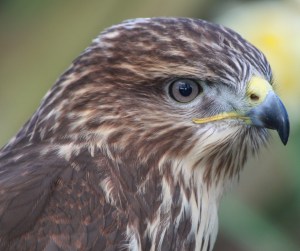 The High Court has this morning ruled that Natural England acted unlawfully
 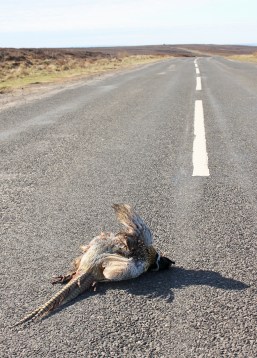 As absurd as it is, the bottom line is that DEFRA (and thus Natural England, acting on DEFRA’s behalf), permits gamekeepers (even those with criminal convictions) to apply for licences to kill protected native species like the buzzard, to allow the wholesale slaughter of millions of non-native gamebirds like pheasants, just for fun. There’s something fundamentally askew with that logic, even if you’re a die-hard supporter of game-bird shooting. A recent analysis of the GWCT’s National Gamebag Census revealed that by 2011, approx 42 million pheasants and almost 9 million red-legged partridges were released annually into the British countryside, for ‘sport’ shooting. The impact on biodiversity of releasing 50 million non-native gamebirds hasn’t been formally assessed. The game-shooting industry should accept that if they’re releasing birds in such magnitude, they should expect losses. How many are killed on the roads? An educated guess would suggest it’s a far higher number than the known 1-2% lost to raptors. If the game-shooting industry can’t operate without accepting such losses (as they claim they can’t), then it’s pretty clear evidence that this industry is unsustainable and as such, has no future.
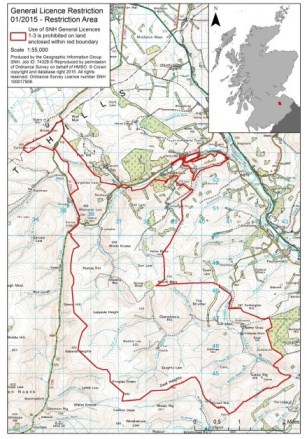 Further to last week’s news that SNH has suspended the use of General Licences on four estates for what it said was “clear evidence that wildlife crimes have been committed on these properties”, which includes the discovery of poisoned raptors and illegal traps (see
  Last week we blogged about the implementation of General Licence restrictions on parts of four properties: Burnfoot Estate & Wester Cringate Estate in Stirlingshire, and Raeshaw Estate & Corsehope Estate in the Borders (see
 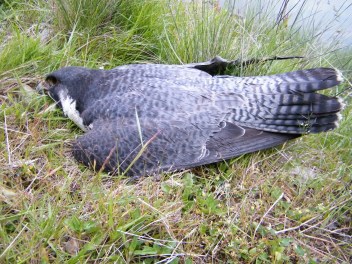 West Mercia Police have issued an appeal for information following the discovery of a poisoned peregrine.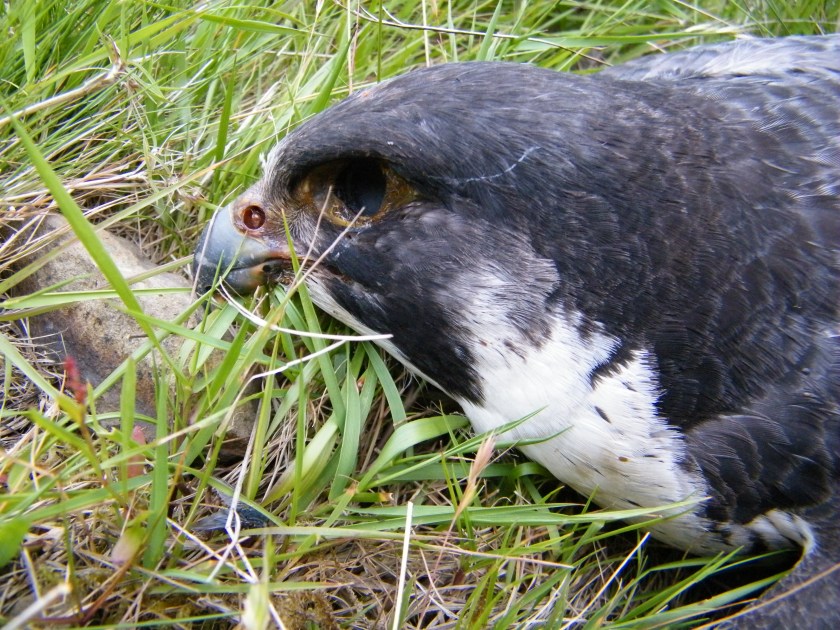
 Three weeks ago we blogged (
 Raptor Persecution UK