Henry’s tour day 63: 1 month to go until Hen Harrier Day 2015

Fri 10 July Copy

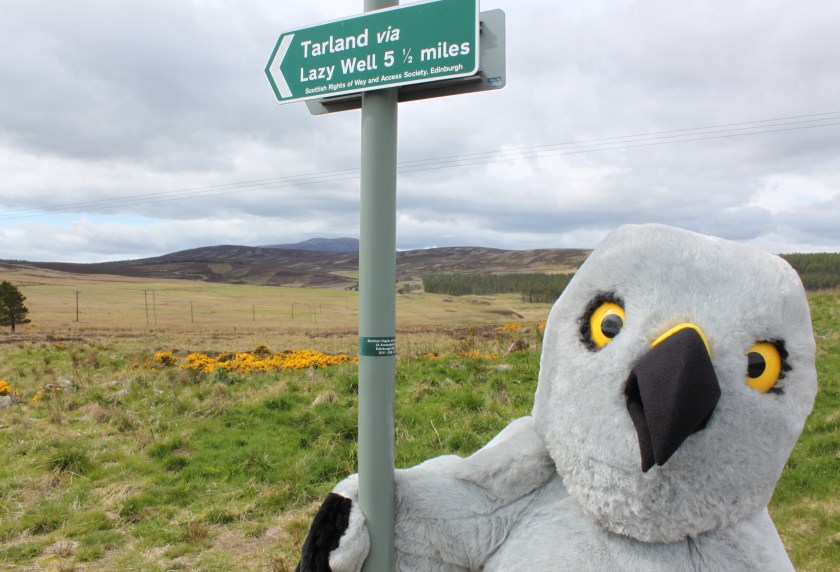
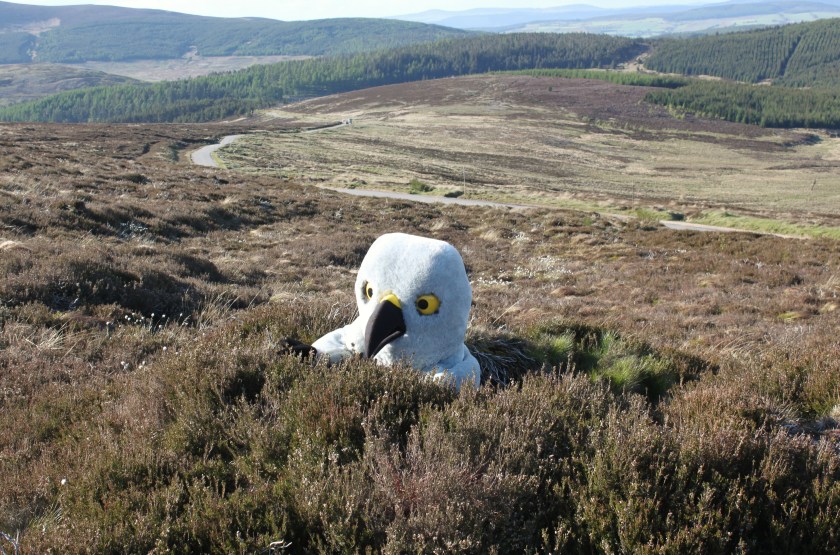
Henry’s found another grouse butt to occupy as he and his friends start the countdown to Hen Harrier Day 2015 – Sunday 9th August – just a month away.

Hen Harrier Day events are popping up all over the place this year, including events in Scotland, Derbyshire’s Peak District, NE England, NW England and southern England. Find out about events near you (or better still, organise your own if there isn’t one close by) by keeping an eye on the Hen Harrier Day Website (HERE).

This year there’ll also be a special event taking place on the eve of Hen Harrier Day – tickets have just got on sale – see HERE for info.

Iceland (the supermarket) to start selling frozen red grouse

IcelandIceland, the low budget supermarket, has announced it is to start selling red grouse before the start of the shooting season, according to an article in yesterday’s Daily Mail (here).

How are they managing that? Well, they’re planning on selling frozen red grouse, that were presumably shot last year. Sales are due to begin in early August and will be limited to 12 packs in each store.

According to the Mail’s article, ‘A spokesperson from Iceland said: “Kezie Whole Grouse are sourced from moors in northern England and in Scotland, rich in heather and audited to ensure they adhere to the code of good shooting practice“‘.

The CEO of Iceland, Malcolm Walker, lists ‘shooting’ amongst his ‘greatest enthusiasms‘.

Iceland has an interesting statement on its website about corporate responsibility which includes the following quotes:

  • “Iceland  has always been a responsible retailer, committed to providing safe, healthy and ethically sourced food”.
  • “We also respect the environment…”
  • “All Iceland brand products are clearly labelled on the back of our packs with a full and honest list of our ingredients…”
  • “We encourage healthy eating…”
  • “Iceland brand products adhere to a strict animal welfare policy”.

If you look around the Iceland website, and also on google, you’ll find a fair bit of bragging about how they introduced various food safety policies ‘before Marks and Spencer’. They’re a bit behind M&S when it comes to selling red grouse though; M&S abandoned grouse sales last year because they were not able to guarantee a responsible source of red grouse (see here).

Iceland Malcolm WalkerSo, in light of Iceland’s stated corporate responsibility policy, and the ever-increasing concerns about how environmentally damaging the driven grouse shooting industry is, here are some questions for Malcolm Walker (his email address is provided at the foot of this post) –

1. When were your frozen red grouse actually shot?

2. For how long can you safely freeze grouse meat? We couldn’t find any specific information about this on the website recommended by Iceland (Cool Cookery – see here) nor in an otherwise helpful article recently published in the Daily Mail that suggests varying periods for uncooked meat (although game not specifically mentioned) of between 3 to 12 months (see here). If your red grouse were shot last season (between 12 Aug – 10 Dec 2014), that would suggest they’ve already been frozen from between 7 -11 months.

3. Red grouse are shot with lead ammunition. Lead is a poison. Lead is highly toxic to humans. The health risk of lead poisoning has been well-documented (e.g. see here, here and here). In 2012, the Food Standards Agency published guidance on eating game shot with lead ammunition:

The FSA is advising people that eating lead-shot game on a frequent basis can expose them to potentially harmful levels of lead. The FSA’s advice is that frequent consumers of lead-shot game should eat less of this type of meat“.

What steps have you taken to alert your customers to this advice, how does this advice fit in to your commitment of providing ‘safe and healthy food’, and do your labels (with a ‘full and honest list of our ingredients’) include information about how much lead is in each grouse?

4. There’s a new disease spreading through red grouse populations in both England and Scotland called respiratory cryptosporidiosis, also known as Bulgy Eye. Some red grouse infected with this disease may not show any apparent symptoms. What measures have you taken to ensure the grouse you are selling are not infected and what advice are you providing to your customers about consuming diseased grouse?

5. Many grouse moors in England and Scotland are associated with the illegal persecution of birds of prey, particularly the hen harrier. From which (named) grouse moors are your red grouse sourced and how have you, as ‘a responsible retailer’, independently assessed whether they are involved with this criminal activity?

6. Intensively-managed grouse moors rely on a number of questionable practices, including the mass unregulated killing of other wildlife such as foxes, stoats, weasels, crows and mountain hares. How do these practices fit in to your commitment ‘to provide ethically sourced food’? Are these unethical practices carried out on the moors from where your grouse are sourced?

7. Intensively-managed grouse moor practices such as heather burning and drainage can damage internationally important peatland and increase greenhouse gas emissions (e.g. see here). How do these environmentally damaging practices fit in with your statement that Iceland ‘respects the environment’? Are these damaging practices carried out on the moors from where your grouse are sourced?

Emails to Iceland CEO Malcolm Walker: malcolm.walker@iceland.co.uk

For those of you on Twitter, you might find the following useful:

@MalcolmCWalker

@IcelandFoods

@IcelandFoodsPR

@MrPeterAndre (the current ‘face’ of Iceland with a known interest in wildlife & animal welfare issues)

New sentencing powers for wildlife crime in England & Wales

cash pile 2Well this is good news!

The following article appears in the RSPB’s latest Legal Eagle newsletter:

New magistrates’ court powers to impose larger fines in environmental offences.

Magistrates’ courts now have the power to impose fines of an unlimited amount on individuals or organisations convicted in England and Wales for criminal offences, which would previously have attracted a fine capped at £5,000 or more. This change to the law came into force in March, and applies to many environmental offences.

This alteration has come about due to provisions in the Legal Aid, Sentencing and Punishment of Offenders (LASPO) Act 2012 coming into force on 12 March 2015.

This is a significant expansion of magistrates’ sentencing powers.

The new provisions apply to all “summary” offences (which are always heard by the magistrates’ courts) and also to “either way” offences when dealt with in the magistrates’ (rather than the Crown) court. They apply to all offences committed after 12 March 2015 where they would previously have attracted a fine capped at £5,000 or more.

Examples of offences affected are:

  • Wildlife offences contained in the Wildlife and Countryside Act 1981, the Conservation of Habitats and Species Regulations 2010 and the Protection of Badgers Act 1992. These summary offences, until 12 March 2015, attracted a fine capped at £5,000.
  • Wider environmental offences under the Environmental Permitting (England and Wales) Regulations 2010. These (mostly “either way”) offences previously imposed fines of up to £50,000 depending on the type and nature of the offence.

In both cases the former maximum sentencing caps have now been removed and fines that can be imposed by the magistrates’ court are unlimited.

The rationale behind the new provisions is to enable more proportionate fines to be imposed on “wealthy or corporate offenders or organisations” and to reduce the number of referrals to the Crown Court for sentencing, which can be time consuming and costly. Only time will tell whether, in the absence of the maximum cap, magistrates will still continue to impose lower fines than the Crown Court.

END

Excellent! Now all we need is to get the cases to court and for the magistrates to accept the evidence…

In related (sort of) news, Westminster MPs are to be given a free vote on changes to the fox hunting laws (see here and especially here). The Countryside Alliance is supporting this move (of course) and says, “These amendments [if approved] will bring the law in to line with Scotland…” Interesting. Does that mean we can expect to see the Countryside Alliance campaigning for the introduction of vicarious liability for raptor persecution offences in England and Wales ‘to bring the law in to line with Scotland’? No, thought not.

Henry’s tour day 61: Balmoral

Weds 8 July Copy

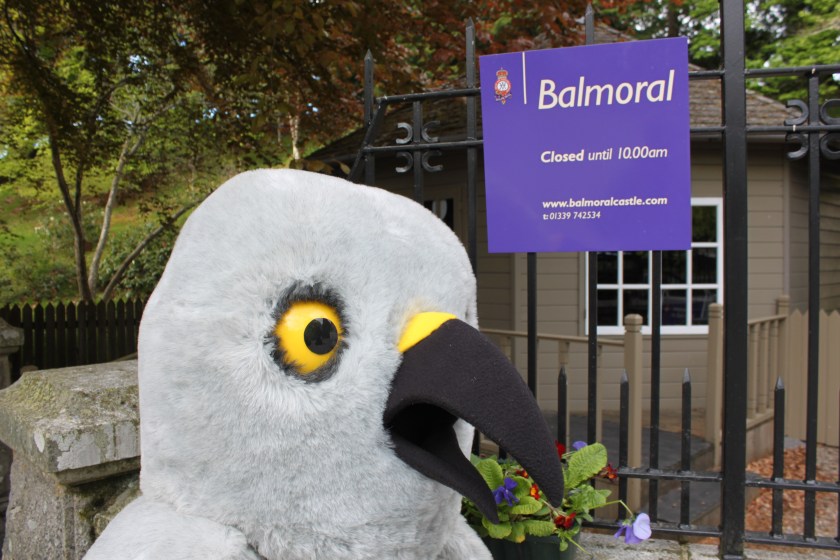
Henry’s back in Scotland and went for a mooch around Balmoral, the Queen’s private residence on the eastern side of the Cairngorms National Park.

The royal family are known to enjoy a spot of grouse shooting when they decamp to Scotland each summer. They have 2,940 hectares of grouse moor at Corgarff, as well as renting 4,688 hectares of sporting rights from the neighbouring Invercauld Estate.

Interestingly, there appears to be a recent intensification of grouse moor management on the leased ground, especially on the Glen Callater and Baddock beats at Glen Clunie. Hmm….

A while ago it was suggested to us that the Queen would be exempt from any vicarious liability prosecution, should any of the pertinent raptor crimes that might lead to a prosecution be uncovered on land she either owns or rents. We’re not sure how accurate this statement is and would be interested to hear from anybody with a more detailed knowledge.

Henry’s tour day 60: Walshaw Moor

Tues 7 July  Copy

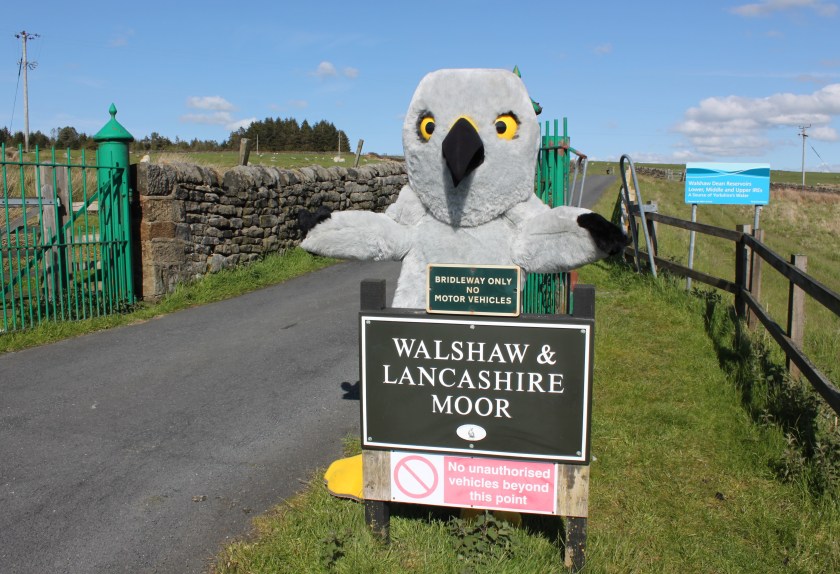
It was a beautiful day for kicking around on Walshaw Moor.

Not such a beautiful moor, though – see here.

Didn’t see any other hen harriers either.

Keep up to date with plans for Hen Harrier Day 2015 here.

Satellite-tagging golden eagles in Scotland

ge GUARDIAN pics 2015

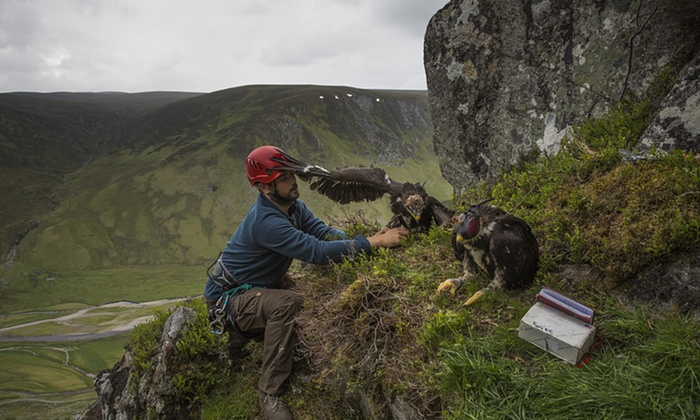
There is a series of absolutely stunning photographs in the Guardian (photographer Dan Kitwood/Getty Images) of golden eagles being satellite-tagged in the Scottish Highlands – see here.

They feature the work of some of the top class fieldworkers from the Scottish Raptor Study Group, notably Justin Grant and Dr Ewan Weston. These two, along with a handful of others, are among the best in the world – they have spent years monitoring, ringing and sat-tagging white-tailed and golden eagles (as well as many other species!), all under licence, and it’s thanks to their expertise and dedication that not only have we learned a lot about the dispersal movements of these iconic species, but we’re also now able to see where many of them are being poisoned, trapped, shot, or simply ‘disappearing’ – see here.

Henry’s tour day 59: an away day

Mon 6 July Copy

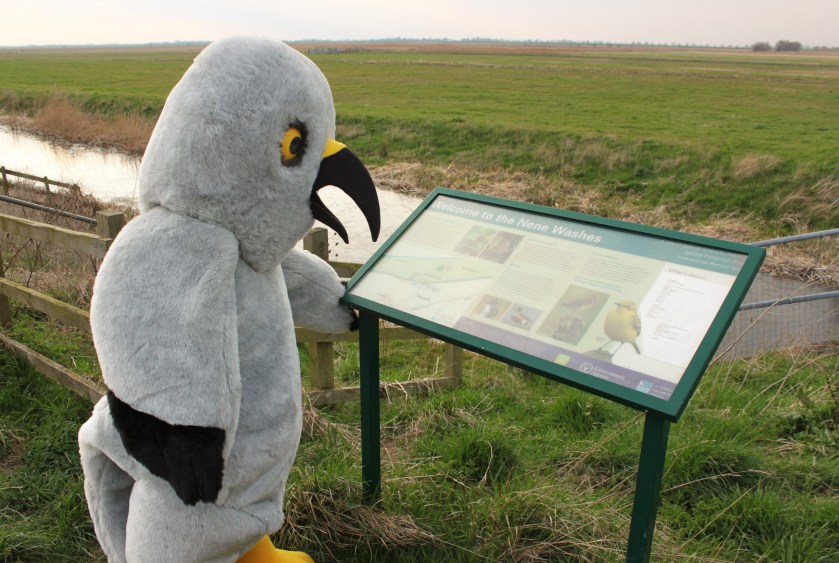
Henry took a break from the barren grouse moors of the north and headed to the RSPB’s Nene Washes Reserve in Cambridgeshire.

He watched a marsh harrier and a short-eared owl and met a photographer who was looking for a chocolate-coloured barn owl. It was good to be at a site where the raptors you expect to see in that habitat are actually there.

Tomorrow he heads back north.

Glib response from Environment Minister’s office re: wildlife crime penalties

community payback orderIt’s not been an impressive week for Scotland’s Environment Minister’s office, and the poor performance continues…

Do you remember back in May this year, when Scottish gamekeeper James O’Reilly was convicted of committing four wildlife crime offences on the Cardross Estate in Stirlingshire, including the setting of gin traps, one of which caused such injury to a buzzard that the bird had to be euthanised? See here for a recap.

O’Reilly received what we consider a typically pathetic sentence – a 240 hour Community Payback Order – and we encouraged blog readers to contact Environment Minister Dr Aileen McLeod to ask when the Government-commissioned Wildlife Crime Penalties Review report would be published.

Here’s the response received by one of our readers:

Dear XXXXXX

Thank you for your letter of 21 May 2015, to the Minister for Environment, Climate Change and Land Reform, Dr Aileen McLeod. I have been asked to respond on the Minister’s behalf.

Your letter, headed “Wildlife Crime Penalties Review”, asks when the review of the penalties for wildlife crime will be published. The review has taken longer than anticipated due to the volume of material considered and the range of issues which has arisen. The group are currently working on the draft report and we expect this to be with the Minister before the summer recess. The Minister will wish to consider the report carefully and at this juncture we are not able to provide details of when any of the recommendations might be implemented.

You also raise a concern about the recent conviction of a gamekeeper who received a 240 hour Community Payback Order (CPO). Sentencing is a matter for the Scottish Courts, however CPOs are not intended to be a “soft option”, they are an effective alternative to custody – individuals released from a custodial sentence of six months or less are reconvicted more than twice as often as those given a CPO.  There are also penalties for breaching a CPO, including an electronic monitoring sanction for non-compliance, so offenders cannot simply ignore the court’s punishment.

I hope that you find this response helpful.

Yours faithfully,

Karen Hunter Wildlife Crime Policy Officer

END

The third paragraph of this response is astounding. “CPOs….are an effective alternative to custody – individuals released from custodial sentences of six months or less are reconvicted more than twice as often as those given a CPO“. From where has this statement been lifted? It may well be applicable to easily-detectable crimes such as theft but the statement is entirely out of context and cannot possibly be applicable to assessing the reconviction rates of offenders involved in wildlife crime because there’s only ever been one custodial sentence for a raptor-killing criminal and that was only handed out in January this year (to gamekeeper George Mutch). That means that there aren’t any data on the deterrent effect of CPOs vs custody for wildlife crime offenders so making a statement to suggest that CPOs are more effective is disingenuous at best, and that’s being generous.

In addition, it’s well established that conviction rates (let alone reconviction rates) of wildlife crime offenders in no way reflect the actual offending rate – see the recently published LINK report for the low rate of prosecutions, let alone convictions, for reported wildlife crimes in Scotland. So to suggest that CPOs are an effective deterrent for addressing wildlife crime is absolute nonsense.

For all we know, a high percentage of convicted wildlife crime offenders are reoffending left right and centre – they’re just not being caught! Equally, of course, they may not be reoffending. Or, given the lengthy delays involved in bringing criminal prosecutions, they may have reoffended but the cases are still going through the system (remember that CPOs only came in to force in 2011, and we’re still waiting for some trials relating to offences that were alleged to have occurred several years ago). The point is, the limited data available do not provide for a robust assessment of the effectiveness of CPOs vs custodial sentences for wildlife crime offenders, so officials in the Environment Minister’s office would do well not to try and fob us off with such glib tosh.

Meanwhile, in a parallel universe, the North Wales Police and Crime Commissioner, Winston Roddick, is calling for tougher sentencing powers to allow the courts to deal with convicted raptor killers. His efforts are being supported by wildlife presenter Iolo Williams – see here.

Gamekeeper’s trial collapses after District Judge rules RSPB covert video “disproportionate”

A Shropshire gamekeeper has been cleared of charges relating to the alleged illegal use of a trap after the District Judge pronounced the RSPB’s use of covert surveillance “disproportionate”.

Neil Wainwright had been accused of using a Larsen trap, illegally baited with two live quails, to trap birds of prey. The trap, set near to a pheasant pen, had been seen by an RSPB investigator (whilst walking on a public right of way), who had returned the following day to install covert video (on private land) to determine the identity of the trap user.

Footage from the camera had identified Wainwright, who was also reportedly seen carrying a dead buzzard. The RSPB then alerted the police who began an investigation, resulting in the Crown Prosecution Service taking the case to court.

This case featured several court hearings, and during one of these Wainwright had admitted using the trap baited with live quail but had claimed he was targeting mink, not birds of prey. So his use of the trap wasn’t in question (because he hadn’t denied using it); just his purpose for using it (which was the basis for some of the charges against him).

It’s very strange then, that the District Judge, Kevin Grego, should then exclude the video evidence and claim its use to be “disproportionate” because the RSPB didn’t have the landowner’s permission to film there. This implies that the RSPB should have sought the landowner’s permission, which would have been a complete non-starter because for all they knew, the landowner and/or the agent may have been complicit with any alleged offences so asking for permission to film would have defeated the objective of filming. It may also imply that the judge thought that the RSPB should have approached the police before setting the camera. However, for the police to have been involved they would have needed to seek authority to film under the Regulation of Investigatory Powers Act 2000. The chances of them getting that authority for what may be considered a minor offence (in terms of the scale used to categorize the seriousness of all crimes, not just wildlife crimes) on private land would be pretty slim.

In which case, any trap user intent on illegal activity to trap and kill birds of prey on private land can be assured that the chance of being prosecuted is virtually non-existent. In other words, they’re untouchable.

This is the second time this year that RSPB video footage in relation to the alleged mis-use of a trap by a gamekeeper has been ruled inadmissible in England – see here for earlier case. These are interesting developments because covert video footage has long been accepted as admissible in the English courts, as opposed to the difficulty of having it accepted by the Scottish courts. And although neither of these two recent cases set a legal precedent, you can bet your house that defence lawyers in future English cases will be pointing to these findings as they try to justify having similar evidence dismissed.

These examples serve to demonstrate, once again, just how high the odds are stacked against securing a conviction for wildlife crimes that take place in relatively remote areas where direct witnesses are few and far between.

Wainwright’s case wasn’t a complete failure though. He was convicted of three other offences which wouldn’t have come to light without this investigation in to the alleged mis-use of the trap: failure to properly store ammunition (two offences, for which he was fined a total of £300) and failure to store a dangerous chemical securely (Phostoxin, a highly toxic fumigant used to gas moles, rabbits etc) which was found in his vehicle (one offence, for which he was fined £200). He was also ordered to pay £85 costs and a £30 surcharge.

Previous blogs on this case here, here and here.

BBC news article on Wainwright’s trial here