Henry’s tour day 71: with friends in Scotland

It’s great to see there’ll be at least two Hen Harrier Day events in Scotland this year!

There’ll be one in Perthshire, co-organised by Tayside Raptor Study Group and the Scottish Ornithologists’ Club and another one on the Isle of Mull, co-organised by Rachel French and Inspire Wild. Well done to all involved!

Details of both events can be found HERE, as well as information about other Hen Harrier Day events taking place in England.

If you can’t make it to an event you can still show your support by signing up to the Hen Harrier Day thunderclap on social media – see here.

And if you’re in the mood for signing, then this new petition to ban driven grouse shooting is worth a few seconds of your time and a couple of keyboard clicks.

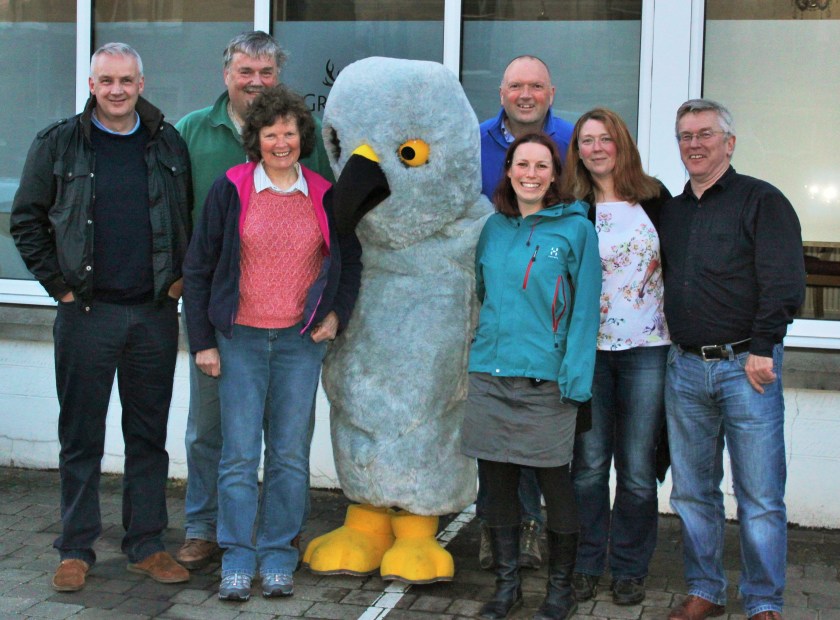
Here’s Henry with Mark and some friends from the Tayside & Central Raptor Study Groups, and with Ian Thomson, Vice President of the SOC.

Weds 22 July  Copy

Weds 22 July - Copy

Henry’s tour day 70: burning up the moors

Tues 21 July Copy

A new study led by the RSPB Centre for Conservation Science has revealed the extent of moorland burning across Britain’s upland areas. Burning on moorlands, a mixture of bog and heath habitats, is widely used to increase the numbers of red grouse that are available for recreational shooting.

Burning was detected in 55 per cent of Special Areas of Conservation (SACs) and 63 per cent of Special Protection Areas (SPAs) assessed in the study, and significantly more burning took place within them than on comparable moorlands outside. These sites are designated under EU legislation for their conservation importance and in Scotland include important places for blanket bog and golden eagles. Governments are charged with protecting them from damage and ensuring that they are restored to the best condition. However, many SACs and SPAs are in unfavourable condition, with burning identified by governments and statutory agencies as a primary reason for this poor status. In Scotland, Scottish Natural Heritage (SNH) is reviewing the scientific evidence which underpins its policies towards upland management through their Scientific Advisory Committee, and this new research will make a valuable contribution to such reviews.

Dr David Douglas, Senior Conservation Scientist at RSPB Scotland and lead author of the study said: “Upland ecosystems are highly sensitive to burning practices. Knowing how much burning takes place and where is crucial to developing sustainable land management policies for these precious environments.”

This study, published in Biological Conservation, is the first time upland burning has been mapped in detail across mainland Britain. Using aerial photography and satellite images, 45,000 1-km squares were mapped across Scotland, England and Wales, and revealed that burning occurred across 8551 of these squares, including 5245 squares in Scotland. In the ten year period covered by the study from 2001 to 2011, the number of burns recorded increased rapidly by 11 per cent each year. Other studies have found that the potential number of red grouse shooting days in some areas of Britain has risen over a similar period, and moorland management has also intensified.

In Scotland and England, a third of burning took place on deep peat soils, an important carbon store. The UK has 10-15 per cent of the world’s blanket bog peatlands. Locking in 3.2 billion tonnes of carbon, upland deep peat is the largest carbon store in the UK. Eighty per cent of the UK’s blanket bog is in Scotland and of the 1-km squares assessed in Scotland for the study, 28 per cent of those with burning present were classified as overlying deep peat.

Upland areas are also a vital water source, supplying around 70 per cent of our drinking water. Burning has been linked to poor water quality in these areas, requiring large sums of money to treat the water.

Duncan Orr-Ewing, Head of Species and Land Management at RSPB Scotland said: “The Scottish Government is in the process of reviewing the Muirburn Code, its advice to landowners and farmers in connection with burning practice. As 28 per cent of the current moorland burning in Scotland overlies deep peat , and the Scottish Government has rightly set challenging targets to reduce climate change emissions, it is essential that new burning guidance provides clear direction to sporting interests and farmers as to where burning can be damaging to peatlands and may now be inappropriate.”

The paper is available here

There was an amusing radio debate on this subject yesterday between Duncan Orr-Ewing (RSPB Scotland) and Tim (Kim) Baynes (Scottish Land & Estates). Tim (Kim) Baynes tried the usual obfuscation and spin tactics but failed miserably whereas Duncan Orr-Ewing nailed it. Listen here (starts at 1:09:34) and is available for a further 29 days.

So, yet another reason to ban driven grouse shooting, then. Sign the new petition HERE.

Ban driven grouse shooting: new e-petition launched

Last year, Mark Avery had an e-petition running on the Westminster Government’s website calling for a ban on driven grouse shooting – it attracted over 22,000 signatures.

Today he’s launched another one, which is open to British citizens and UK residents.

As before, the petition needs to attract a minimum of 100,000 signatures to trigger consideration for a Parliamentary debate. However, this time the petition is only available for 6 months (instead of the previous 12-month period) thanks to changes brought in by the thoughtful, caring Westminster Government.

Looks like we’ll all have to work twice as hard to publicise this one.

PLEASE SIGN IT (HERE) AND SHARE IT WITH YOUR FRIENDS, FAMILY, COLLEAGUES ETC.

IMG_5605 (2) - Copy

Henry’s tour day 69: Marks & Spencer

Mon 20 July Copy

Last year, Marks & Spencer decided to ban the sale of red grouse in their stores because they feared a consumer boycott  – it was a welcome move (see here).

This year, rumour has it that they might be thinking of putting red grouse back on their shelves, although this has not been confirmed.

It’d be an odd thing to do because the chances of a consumer boycott are probably higher this year as more and more people learn exactly just what is involved in the procurement of those grouse.

As an example of widening public awareness, this year’s social media thundercap already has a social reach of over 3 million people. That means that every one of those 3 million+ people will be seeing a message on their social media timelines (e.g. Facebook, Twitter) at 10am on Sunday 9th August (Hen Harrier Day) calling for an end to the illegal killing of hen harriers on driven grouse moors. That’s more than 3 million potential M&S customers who may decide to take their business elsewhere if M&S decide to put red grouse back on sale.

If you want to join in and make sure even more people get the message, please sign up HERE. It’s also worth noting which organisations have not yet signed up (see here).

Simply food? Afraid not. M&S will need to show, by their own strong food sourcing policy, that their red grouse have been sourced ethically, sustainably and responsibly and that it isn’t full of poison (lead). Good luck with that.

Stody Estate subsidy penalties: an update

IMG_4752 (2) - CopyOn 1st October 2014, gamekeeper Allen Lambert from the Stody Estate in Norfolk was found guilty of poisoning 10 buzzards and one sparrowhawk, which had been found dead on the estate in April 2013. He was also convicted of storing banned pesticides & other items capable of preparing poisoned baits (a ‘poisoner’s kit’), and a firearms offence (see here and here).

On 6th November 2014, Lambert was sentenced. Even though the magistrate acknowledged that Lambert’s crimes passed the custody threshold, he only received a 10 week suspended sentence for poisoning 11 raptors (suspended for one year), a six week suspended sentence for possession of firearms and nine poisoned buzzards (suspended for one year), and was ordered to pay £930 prosecution costs and an £80 victim surcharge.

On 5th October 2014, we blogged about the millions of pounds worth of subsidies that had been awarded to Stody Estate in recent years (see here) and we encouraged blog readers to contact the Rural Payments Agency (RPA) to ask whether Stody Estate would receive a financial penalty in the form of subsidy withdrawal for being in breach of the terms & conditions of their subsidy-fest.

On 10th October 2014, the RPA responded by saying they would consider what action could be taken against Stody Estate (see here).

Then it all went quiet.

In December 2014, one of our blog readers submitted an FoI to the RPA to ask what was happening. In January 2015, the RPA responded by saying they ‘weren’t able to provide a meaningful response’ but said they would take action if it was found to be appropriate to do so (see here).

Six months on, we thought it was time for an update so an FoI was sent to the RPA to ask whether they had implemented a subsidy penalty. This is their response:

Dear XXXXX XXXXX

Thank you for your email dated 5 July 2015 regarding Stody Estate.

Cross Compliance rules only apply to recipients of Single Payment Scheme or certain Rural Development scheme payment in the year in which a cross compliance breach is found.

The person prosecuted for the offences mentioned in your e-mail is not a recipient of either of these types of payment.  Therefore before RPA can take further action, it will be necessary to determine whether there [sic] a link between this person and a subsidy recipient and, if there is, whether that recipient can be considered liable for the actions of the person who committed the breaches.

Identifying whether the person prosecuted is linked to a subsidy recipient will form a key part of our investigations.

Should you have any further queries please contact us again quoting reference number XXXXX

Regards

Helen Hunter

Customer Service Centre, Operations

END

This is all very interesting. The mass illegal poisoning of birds of prey took place on Stody Estate and a Stody Estate employee, gamekeeper Allen Lambert, was convicted of these crimes and several others. But the Rural Payments Agency is still trying to determine whether there is a link between Lambert and the Stody Estate. Eh?

It’s not very convincing is it?

Perhaps the RPA should have a read of the judge’s comments about the relationship between Lambert and his (now former) employer – see here.

Henry’s tour day 68: occupy the butts

Friday 17 July Copy

Hen Harrier Day takes place three weeks today, on Sunday 9th August 2015.

There are plenty of Hen Harrier Day events popping up all over the country – please see here to find one near you.

If you’re going to the event in the Peak District, you might also want to attend the special Hen Harrier Evening event in Buxton the night before (Saturday 8th August), featuring Chris Packham, Mark Avery, Henry the Hen Harrier, Harry the Hen Harrier, Jeremy Deller, Findlay Wilde, Mark Cocker and Birders Against Wildlife Crime  – there’ll be some surprises! Tickets are selling fast so you’ll need to be quick – details here.

If you can’t attend one of the Hen Harrier Day events there are other ways you can show your support:

Send a selfie to the Hen Harrier Day website – see here

Buy a Hen Harrier Day t-shirt – see here

Join in the Hen Harrier Day ‘thunderclap’ on social media – see here

Think you can’t make a difference? You’re wrong! Get involved!

DEFRA’s plans unchanged despite loss of 5 breeding hen harriers

In June, following the news that five breeding male hen harriers had ‘disappeared’ from active nests this year, one of our blog readers submitted an FoI to DEFRA to ask about the Westminster Government’s contingency plans to protect hen harriers and to deal with the criminals who continue to persecute hen harriers and other wildlife:

Sir/ Madam

I am making a Freedom of Information request regarding hen harriers/ illegal persecution of wildlife.

1) With the recent losses of five male birds in northern England, as published in Natural England’s press release (https://www.gov.uk/government/news/five-hen-harriers-have-now-disappeared-from-northern-england), what is the Government’s contingency plan(s) to prevent the species becoming extinct in the wild in England as a direct result of illegal persecution within the next 5 years, i.e. the duration of this Parliament?  If there are no contingency plans, why are there no contingency plans?

2) In a recent court case in Spain (see http://www.venenono.org/?p=2506 with an English summary available here:https://raptorpersecutionscotland.wordpress.com/2015/06/09/now-thats-a-deterrent/, the sanction imposed on an individual found guilty of a wildlife offence was considerably more severe compared with recent similar incidents in England.  Does the UK Government have any plans to introduce similar sanctions that would act as a meaningful deterrent to wildlife criminals?  If not, why not?

3) Does the Government consider the current sanctions available to Magistrates/ Judges sufficiently severe to act as a deterrent to wildlife criminals, within the context of those imposed in the aforementioned Spanish case?

4) As in Spain, is the Government seriously considering introducing ‘sniffer dogs’ able to detect the use of poisoned bait as described in the article published by Raptor Persecution Scotland? If not, why not?

Many thanks,

XXXXX XXXXX

Here is DEFRA’s response:

Dear XXXXX XXXXX

Thank you for your request of 11 June about the illegal persecution of hen harriers. I have been asked to reply.

We share your concerns regarding the recent losses of five hen harriers but are encouraged by the news of several nests this year, following on from four nests in 2014, with 16 fledglings. In 2013, for the first time in over 50 years, there were no known fledglings.

All wild birds are protected under the Wildlife and Countryside Act 1981, which implements the EC Wild Birds Directive in Great Britain. This provides a powerful framework for the conservation of wild birds, their eggs, nests and habitats. I can assure you that we are committed to ensuring the strict protection afforded to wild birds of prey under our wildlife legislation is effectively enforced. There is a robust legal framework for protecting such birds with strong penalties for offenders, which can include imprisonment.

Despite the protection afforded to birds of prey, it is clear that they continue to be persecuted. To address this, senior Government and enforcement officers in the UK identified raptor persecution as a National Wildlife Crime Priority. Raptor persecution is subject to a prevention, intelligence and enforcement plan led by a senior police officer. The National Wildlife Crime Unit, which is part-funded by Defra, monitors and gathers intelligence on illegal activities affecting birds of prey and provides assistance to police forces when required.

It should be noted that despite instances of poisoning and killing of birds of prey, populations of many species, such as the peregrine falcon, red kite and buzzard have increased. While a small minority is prepared to kill birds of prey and where possible these people are brought to justice, this demonstrates that the policies in place to conserve these species are working.

One of our most threatened birds of prey is the hen harrier and we take the decline in hen harrier populations in England very seriously. In August 2012 Defra established the Hen Harrier Sub-Group of the Uplands Stakeholder Forum whose members include representatives from Natural England, the Moorland Association, the National Gamekeepers’ Organisation, the Game and Wildlife Conservation Trust, National Parks UK and the RSPB.

All members of the Hen Harrier Sub-Group have a common interest to protect hen harriers.  They have made concerted efforts to engage and have produced a Joint Action Plan that contains a suite of actions intended to contribute to the recovery of the hen harrier population in England. The commitment shown by the differing organisations involved in the Sub-Group to help the recovery of one of our most iconic birds demonstrates a desire to bring about behavioural change amongst gamekeepers and confidence that this can be achieved through a package of complementary actions.

The Joint Action Plan includes three measures to stamp out illegal persecution, a trial toolkit comprising two measures for land owners to safely accommodate hen harriers on grouse moors and a measure to reintroduce them to suitable habitat in other parts of England. Defra officials are currently working with Sub-Group members to finalise the Plan.

As previously stated there are already strong penalties in place for people committing offences against birds of prey. You have asked if the Government intends to introduce tougher penalties for those convicted of wildlife crimes. I should first point out that Parliament is responsible for deciding the maximum penalties for offences. There are currently no plans to increase the penalties for offences against wildlife. Within the maximum limits, it is up to the court to decide the appropriate sentence in any case, having taken into account all the facts of the case.

We are aware that sniffer dogs are used in other countries, including Italy, Spain and Greece, to detect poisoned bait but are not aware that enforcement bodies in the UK have this resource or are considering it for the future. This would be a matter for individual Police forces to decide upon.

Yours sincerely,
Charlie Coombs
Customer Contact Unit

Henry’s tour days 64-67: Langholm

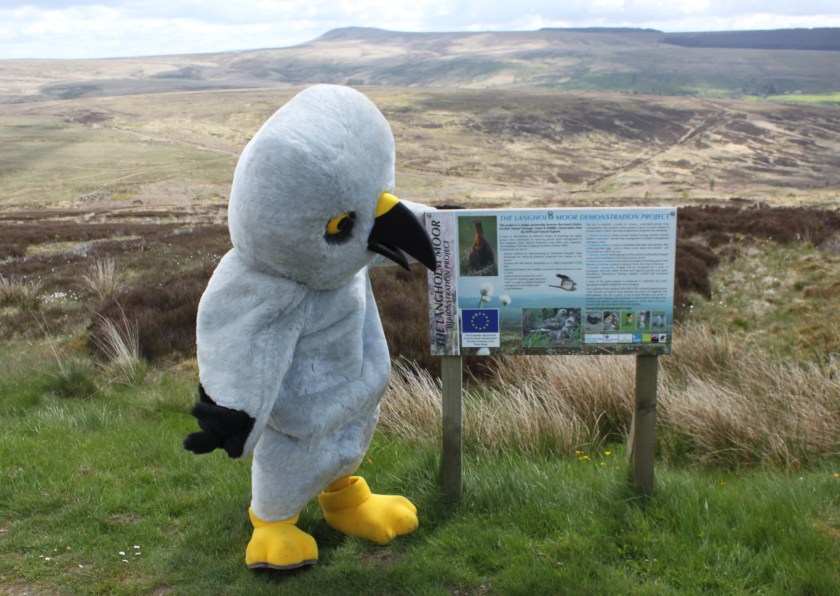
Henry’s been at Langholm all week. To find out what he was doing see here, here, here and here.

There’s a famous monument at Langholm. Some would say the current Langholm Project (‘Langholm 2′) has been a monumental waste of taxpayers’ money. There’s something in that, although it has shown us that when young satellite-tagged hen harriers stay at Langholm they seem to do OK (because they’re not routinely being killed), whereas many of the young sat tagged birds that did decide to disperse away from the moor have mysteriously vanished (e.g. see herehere, here, here, here, here, here). Amazing, eh?

Mon 13 July  Copy

Tues 14 July Copy

Weds 15 July  Copy

Thurs 16 July  Copy

Inglorious: Conflict in the Uplands (book review)

Inglorious - CopyInglorious – Conflict in the Uplands by Mark Avery. Bloomsbury Press, London. 304pp.

Publishing date: 30 July 2015

RRP: £14.99

ISBN (hardback) 9 78-1-4729-1741-6; ISBN (ebook) 9 78-1-4729-1742-3

This book won’t make it on to my bookshelf for quite some time. The reason? It’ll either be being held in my hands as I (re)-read it or it’ll be on my desk within easy reach for when I want to be reminded that the time for negotiation and 2nd, 3rd, 4th,…..18th, 19th, 20th, etc. chances is over and the time for change is now.

I won’t ruin Mark’s story by giving a detailed analysis of the book’s content but the main thrust is that Mark thinks driven grouse shooting should be banned and his arguments for this position are laid out with compelling clarity.

Inglorious begins with a raging, damning condemnation of driven grouse shooting in an impassioned foreword written by Chris Packham. Then there’s a short preface from Mark with a synopsis of the book and his reasons for writing it. Chapter 1 opens with the basics of hen harrier biology and ecology and their persecution on driven grouse moors; Chapter 2 provides an overview of driven grouse shooting, including its history, how it works and who’s involved; a detailed analysis of the first Joint Raptor Study at Langholm (also known as ‘Langholm 1) which took place in the mid-1990s and was focused on the conflict between hen harriers and grouse shooting is discussed in Chapter 3; an explanation of the political events and scientific studies that took place between 1997-2013 and brought greater attention to upland management practices is provided in Chapter 4; Chapter 5 presents Mark’s perspective on events that took place in 2014 when the public finally woke up to what was happening and began the fight back for hen harriers; Chapter 6 tells the fictional story of a former gamekeeper, now gainfully and happily employed in 2046 as a land manager for the National Trust, reflecting on his previous career and how it all came crashing down; Chapter 7 outlines all the things an ordinary member of the public can do to help hasten the inevitable demise of driven grouse shooting.

It’s obvious that a lot of thought went in to the structure of Inglorious, effectively building the story from the plight of one relatively little known bird (the hen harrier) to the exposure of the corruption, criminality and political influence that underpins the driven grouse shooting industry. Inglorious is audacious, courageous and defiant. If you’re not outraged after reading this book then you’ve either not been paying attention or you’re someone who has a vested interest in this racket.

If, like me, you thought you were pretty well-versed in the subject of driven grouse shooting and its associated environmental atrocities, Inglorious will surprise you. Yes, all the by-now- familiar scientific evidence is in there (and is well explained for a non-technical audience) but interwoven is a fascinating insight to the political backdrop of nature conservation, especially during the period 1997-2013. Understanding what was happening behind closed (and sometimes open) parliamentary doors during this 17 year period and how it impacted on the (mis)fortunes of the hen harrier and on the management of our uplands is crucial to understanding how Mark reached the decision to call for a ban on driven grouse shooting. Of course, some of this insight is subjective as it stems from Mark’s personal experience from his time working as the RSPB’s Conservation Director but that makes it all the more persuasive. His isn’t the view of someone uninformed and with a shallow understanding, hitching a ride on the back of an increasing public awareness of ‘wildlife crime’; this is the view of someone with authoritative credibility earned through his intimate involvement over many years in UK nature conservation policies.

The publication of Inglorious couldn’t have been better timed. First, it comes soon after the suspicious ‘disappearance’ of five breeding male hen harriers in the space of a few weeks in May this year. When that news broke, any tiny flicker of optimism that the grouse-shooting industry wanted to stop their disgraceful persecution of this species was extinguished. Secondly, it comes just a few days before this year’s Hen Harrier Day (9th August 2015) when hundreds of thousands of people, maybe millions, throughout the UK will be making a public stand against the illegal killing of hen harriers on driven grouse moors, whether that be by participating in a ‘Thunderclap’ on social media, posting a selfie on the Hen Harrier Day website, or by attending one of several rallies set to take place across the country. This book will unite that community and inspire many new campaigners to the join the fight.

Inglorious bears all the hallmarks of Mark’s writing: engaging, intelligent, thoughtful, insightful, articulate, well-reasoned, fair and good humoured. Although it is a depressing and poignant read in parts, it is also optimistic, and that’s important. The message is clear – driven grouse shooting has to end and the pathway to bringing that about has been brightly illuminated by this book.

To pre-order this book, please see here.

To listen to a recent podcast of Mark discussing Inglorious, click here

To read another review of Inglorious, click here


Iceland (the supermarket) responds: massive fail

IcelandOn Friday we blogged about the news that Iceland Foods is set to sell old frozen red grouse in its supermarkets next month and we set out our concerns about this (see here). Mark Avery also wrote a blog about the same subject and had similar concerns (see here).

We encouraged blog readers to email Iceland Foods CEO Malcolm Walker and ask him some questions. On Friday evening, the following statement appeared on the Iceland Foods website:

WHOLE GROUSE

The frozen grouse we will be selling are a branded product supplied by Kezie Foods. Below is some further information on this product.

  • The grouse were shot on the grouse moors of southern Scotland and Northern England towards the end of the last shooting season.
  • It is generally accepted that frozen game including grouse will remain in great condition and safe to eat for two years. The grouse going on sale in Iceland were frozen no more than ten months ago. As freezing is Nature’s pause button they will be in excellent condition.
  • Game shot with lead ammunition has not been proven medically to have any adverse health effect.
  • The FSA’s advice is to avoid eating shot game frequently, which they define as once or more per week every week of the year. There is no documented medical advice that moderate consumption of shot game is in any way detrimental to health.
  • Game is good to eat, and is a great source of low fat tender meat.
  • All our grouse are processed through an EU approved game plant which has strict health controls and each batch of grouse is inspected by an FSA approved vet and can only enter the food chain once approved.
  • We do not condone illegal activities and would not source from any establishment which was involved in any illegal activity
  • Proper moorland management is fundamental to the rural environment. Any form of wildlife control is properly regulated. We do not source from moorlands with unethical or questionable practices.
  • A managed heather programme, involving limited and rotational heather burning, is an accepted part of good moorland management to protect the rural environment. If moorland were not managed, there would be no grouse.

END

It was good to see a quick response from Iceland Foods but the details within that response leave a lot to be desired and don’t come anywhere near close to answering the questions we posed. It looks like we’ll have to ask some more questions:

Questions for Iceland Foods CEO Malcolm Walker:

1. You say that “it is generally accepted that frozen game including grouse will remain in great condition and safe to eat for two years”. Please can you tell us BY WHOM it is generally accepted? Because every single website we’ve looked at when researching maximum storage times for frozen meat provides a range of between 1-12 months, not “two years”. And we’ve looked at a lot of websites, including UK and USA sites. Granted, there is very limited specific information about storage times for feathered game (which makes us all the more curious about the source of your claim) although we did find one website where feathered game was specifically mentioned (Penn State College of Agricultural Sciences, USA – see here) and they say game bird meat will store in the freezer for 9-12 months. It’s also pretty disingenuous to claim that “as freezing is Nature’s pause button they will be in excellent condition [for two years]” because during those long months in the freezer, the meat still undergoes changes, typically causing rancidity and oxidation, which is why frozen meat is labelled with a ‘best before date’ and why guidelines are provided for maximum storage periods!

2. You say that “game shot with lead ammunition has not been proven medically to have any adverse health effect”. Hmm. Is that because, inexplicably, game meat is exempt from the legal lead level tests required for every other type of meat sold in the UK (e.g. pork, chicken beef) and when it has been tested (see here) some of it was found to contain more than ten times the legal level (and some of it 100 times the legal level) allowed for those other meats? With this frightening level of poison in lead-shot red grouse, and “the overwhelming scientific evidence on the toxic effects of lead on human and wildlife health” (see here) how can you possibly claim that eating lead-shot red grouse is safe and healthy?

3. You say “we would not source from any establishment which was involved in any illegal activity”. Please will you tell us how you assess whether any of your source establishments is or isn’t involved in any illegal activity? Which body or organisation is making that assessment, on what basis is the assessment made, and is the assessor independent? For transparency, please name the estates.

4. You say “we do not source from moorlands with unethical or questionable practices”. Please will you tell us how you assess whether each of those moors/estates is or isn’t involved with unethical or questionable practices? Which body or organisation is making that assessment, on what basis is the assessment made, and is the assessor independent? For transparency, please name the estates.

5. You say “Proper moorland management is fundamental to the rural environment”. However, moorland management practices associated with intensively managed grouse moors, such as burning and drainage, can damage internationally important peatland and increase greenhouse gas emissions (see here). Please can you explain how these damaging management practices are “fundamental to the rural environment”?

6. You say that “any form of wildlife control is properly regulated” [on the moors from where your red grouse are sourced]. Please can you explain what you mean by “properly regulated”? Wildlife control (usually the killing of predators and also mountain hares) is highly unregulated on grouse moors with no requirement for monitoring the population impact on those species that are killed.

7. You say “If moorland were not managed, there would be no grouse”. Could you please explain this statement? Do you mean that if the moorlands were not intensively managed, the natural grouse population would be just fine but there wouldn’t be the ridiculously artificial high density of red grouse available for people to shoot? Because that’s very different from saying ‘without moorland management there would be no grouse’.

Emails please to Iceland Foods CEO Malcolm Walker: malcolm.walker@iceland.co.uk