Henry’s tour day 48: butt naked

Fri 19 June  Copy

This butt, and hundreds like it, needs to be occupied.

Occupy the butts!

Go to a grouse moor, find a grouse butt, take a photograph of yourself occupying the butt, send in the photograph to this website.

Finding one of these butts is easy – you don’t have to walk for miles across the moors – a lot of them are right there by the roadside. Grouse butts are normally marked on OS maps at 1:25000 scale. Try http://www.streetmap.co.uk and zoom in on your favourite moor.

It’s not illegal to stand in a grouse butt and take a photograph, as long as you are not damaging it nor interfering with ‘lawful activity’ (i.e. disrupting a driven grouse shoot). We’d encourage you to visit a grouse butt at any time between now and Hen Harrier Day (Sun 9th August) – just 7 weeks away – before the shooting starts on 12th August.

Henry’s tour day 47: badlands

Thurs 18 June  Copy

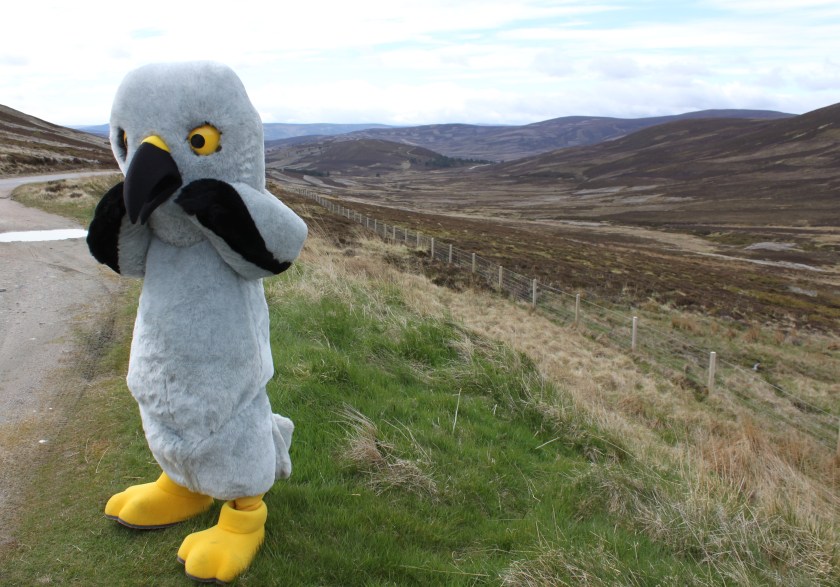
This is the eastern side of the Cairngorms National Park.

When you read about landscapes that are ‘dominated by driven grouse moors’, this place is as good as any to understand what is meant by that. Ugly burnt rectangular strips of heather for as far as the eye can see are a bit of a giveaway, as are the lines of grouse-shooting butts marching across the hillsides.

This layby, on a public road, might be a good place to pull over for spectacular views of the glen, and perhaps it would provide the perfect opportunity to watch for a hen harrier settling down to roost on the hillside in the fading hours of daylight. Armed with a decent pair of binoculars and a rudimentary understanding of hen harrier ecology, you might expect a special evening enjoying views of the protected wildlife safe within the boundaries of a National Park.

But then you remember. This is the Cairngorms National Park.

Perhaps it was a spot just like this where, in 2013, the alleged coordinated hunting and shooting of a male hen harrier took place on a driven grouse moor on the eastern side of the Cairngorms National Park?

How many pairs of successfully breeding hen harriers do you think there are inside the Cairngorms National Park?

Trial against gamekeeper Neil Wainwright gets underway

The trial against Shropshire gamekeeper Neil Wainwright got underway on Tuesday.

Wainwright, 55, of Norbury, Bishop’s Castle, is accused of baiting a Larsen trap with live quail to catch birds of prey. The offences are alleged to have taken place at Birch Hill Wood in Gatten, Stipperstones, in July 2014. Wainwright has denied these charges, but at an earlier hearing pled guilty to three other charges relating the storage of firearms, ammunition and poison (see here and here).

According to an article published yesterday in the Shropshire Star (see below), Wainwright’s defence is that he was using the Larsen to trap a mink, not birds of prey.

We always enjoy reading the far-fetched explanations of gamekeepers who have been accused of alleged wildlife crimes. Rarely plausible, they often push the boundaries of credibility. Recently-convicted Kildrummy Estate gamekeeper George Mutch’s explanation was a classic – he claimed he’d killed the goshawk he’d caught in his Larsen trap as a mercy mission because it was injured. The Sheriff in that case called it “a convenient lie”. Recently-convicted Swinton Estate gamekeeper Ryan Waite claimed the two illegal pole traps he’d set were for targeting squirrels, not raptors. Recently-convicted Stody Estate gamekeeper Allen Lambert claimed the 11 poisoned raptors found on his estate had been dumped there by someone with a vendetta against him.

It’s not just gamekeepers, either.

Following the discovery last month of 16 fox cubs found inside a barn in North Yorkshire in suspicious circumstances, Lord Middleton, a local landowner and hunstman reportedly suggested that the cubs ‘were being cared for by the Hunt for kind reasons’ (see here).

Wainwright’s trial will continue on 29th June 2015.

The Shropshire Star published an article yesterday about the first day of the trial although the article has now vanished from their website. Here’s a copy:

From Shropshire Star 17 June 2015

Neil Gordon Wainwright a gamekeeper used a metal Larsen trap designed to catch magpies, crows and jays he had baited with two live white quail to catch birds of prey at Birch Hill Wood in Gatten, near the Stiperstones, Shrewsbury, Magistrates Court were told by the RSPB. An inspector for the Royal Society for the Protection of Birds noticed the trap while walking on a public way and set up two covert cameras to record who came to attend to it.

Wainwright, 55, of Norbury, near Bishop’s Castle, denies charges of using a trap to kill or take a wild bird, possessing an article capable of being used to commit an offence, and failing to take steps to ensure that the needs of an animal were met.

The offences are said to have taken place between July 21 and 31 last year.

District judge Kevin Grego heard yesterday that an RSPB inspector had visited Birch Hill Wood on July 23 and believed that an offence was being committed.

Mr Richard Davenport, prosecuting, told the court that the inspector noticed that a Larsen trap had been baited with two white quails and set close to a pheasant release pen.

Howard Jones, RSPB inspector, said he had been walking on a public right of way when he saw the pheasant pen. He found the Larsen trap and then returned a day later to install the cameras.

Mr Jones said he and another inspector had checked the footage and over the course of several days the defendant was seen going to the trap.

At one point Wainwright was seen with a dead buzzard in his hands. The incidents were reported to the police and a warrant to search Wainwright’s home and outbuildings was carried out on August 5. Expert witness Dr Rodney Calvert, from Natural England and a specialist on trapping, said he had never known of a Larsen trap being used to catch anything other than crows or magpies.

Wainwright’s defence is that he was using the trap to catch mink and stoats which had been taking his game birds.

Dr Calvert said that using live quail as bait would not attract such animals but would be likely to attract wild birds.

Wainwright, who has several captive peregrine falcons and an owl at his home, said he had used the quail as bait “as an act of desperation”. He said he had been targeted by a mink and had decided to bait the trap to try and catch it.

The trial was adjourned until June 29 and will be heard at Telford Magistrates Court.

Henry’s tour day 46: Glen Tanar

Weds 17 June  Copy

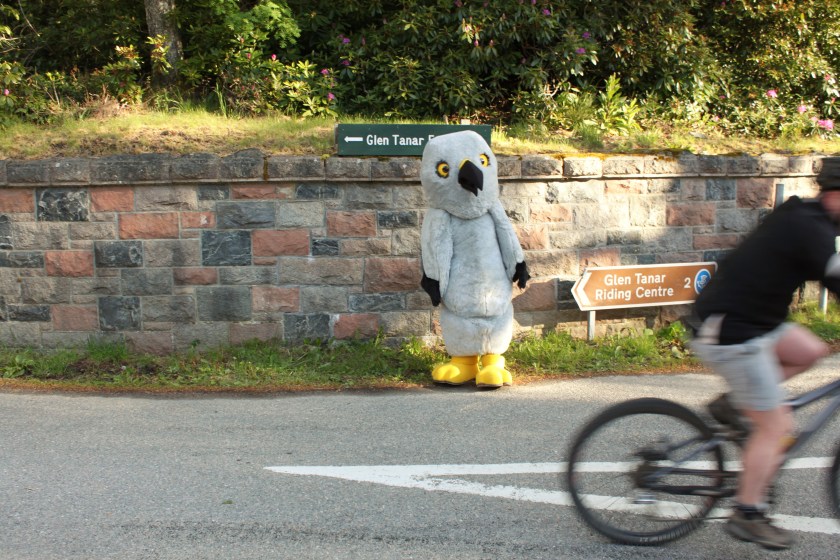
Henry was happy to visit the Glen Tanar Estate in the Cairngorms National Park – one of very few driven grouse moors that actively welcomes hen harriers, as well as other raptors.

See here, here, here, here and here.

Why can’t all driven grouse moors be managed like this?

Henry’s tour day 45: Dinnet

Tues 16 June  Copy

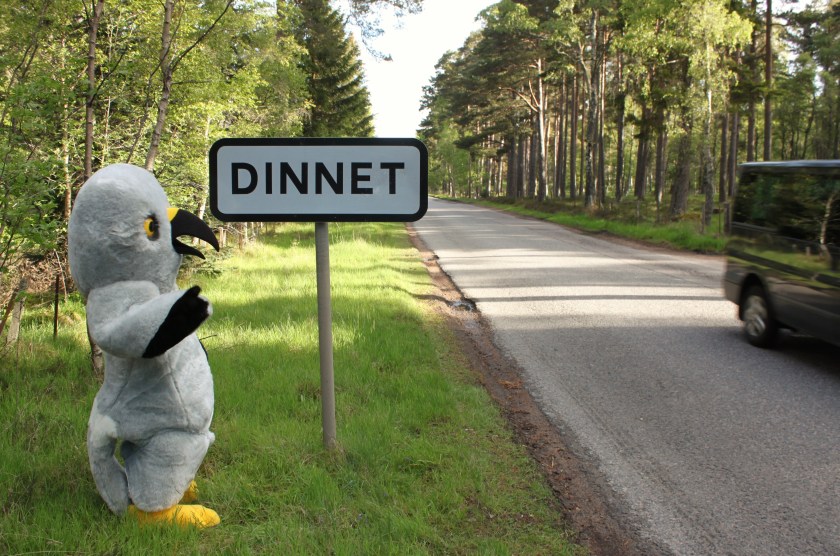
Henry called in at Dinnet (Deeside) but would only visit in daylight hours – here’s why.

It’s actually not all that safe in the daytime either – here’s why.

Welcome to the Cairngorms National Park.

Best-protected hen harriers in Scotland?

hh LAURIE CAMPBELLThere was a short piece on BBC Landward last Friday (12 June) about hen harriers nesting in a military training area in Garelochhead, Argyll.

Overlooking the controversial Faslane submarine base, this is one of the most heavily protected areas in the country.

Thanks to the hard work and expertise of Sgt. John Simpson (MOD Police) who monitors the wildlife at this site, hen harriers have been doing well here for a number of years.

Watch the video clip on BBCiPlayer here (starts at 05.38) – available for another 28 days.

Hen harrier photo by Laurie Campbell

Judicial review: awaiting written decision

The judicial review brought by a Northumberland gamekeeper to question whether Natural England followed due process when they refused to give him licences to kill buzzards and sparrowhawks, has finished.

We now await the written decision of the judge, which can take weeks.

Useful background information about the judicial review process here and here.

GWCT reputation Dented

IMG_4874 (2) - CopyIt took the GWCT quite a while to post anything on their website about the CBE that their Chief Executive, Teresa Dent, was awarded in the Birthday Honours’ List. Maybe they were as surprised as the rest of us.

Whilst RPS has nothing against Teresa Dent personally (we’ve never met), it’s a bit difficult to know quite what she and GWCT have done to deserve this ‘honour’.  After all, the emblem of the GWCT, the Grey Partridge, is at rock-bottom despite a pile of good research and a GWCT membership of large landowners who ought to be implementing all of the GWCT’s bright ideas on the subject. Not exactly the biggest conservation success story is it? I’d rather be in charge of an organisation with the Avocet as its logo (whatever cricketing legends might say about it)!

The GWCT spouts a lot about its scientific reputation but, as Mark Avery pointed out on his blog years ago, they seem to be resting on their past laurels rather a lot (see here and here). But they are still going on about how they are a (?) or the (?) ‘leading wildlife research charity’ (e.g. see here), a name-tag rarely given to GWCT by anyone else these days.  What science has GWCT contributed to the Hen Harrier debate recently?  They don’t even seem to believe the results of their own eyes and their own research at Langholm – rating the project as a failure (see here) when others rate it as a clear success (see here). GWCT really have lost the plot!

It’s difficult to know what Teresa Dent thinks about anything as she is rarely seen in public outside of shooting circles. It is much more common to hear the GWCT’s Andrew Gilruth spouting nonsense about Hen Harriers, brood meddling and re-tweeting YFTB nonsense on Twitter.

The GWCT news item about Teresa Dent’s CBE can’t even explain what she has done! It rather cryptically says she has told people things they don’t want to know. Could this possibly mean that she sits her chairman, Ian Coghill, down and tells him that lead ammunition ought to be banned and he ought to get used to the idea? Or maybe it means that she has a word with Hawk and Owl Trust Chair Philip Merricks and tells him that brood meddling is a daft idea? Or does she tell the Moorland Association (‘a sad morons’ coalition’, for you anagram fans) and Scottish Land and Estates (‘dated tactless shits, anon’) that their members had better start getting out of driven grouse shooting before land prices drop as a ban approaches? No? Probably not.

The news item seems to think that the GWCT Council were announcing something – the announcement was made a couple of days ago by Number 10 – we all noticed it then, but the GWCT spent the weekend dozing, or dreaming of days gone by when the world outside of shooting cared what they said, and cared a little for them too.

The news item sums up the GWCT these days: vague, self-congratulatory, wrong and late.

Henry’s tour day 44: Cairngorms National Park

Mon 15 June Copy

Henry’s arrived in the Cairngorms National Park.

You might think he’d be safe here, what with it being a National Park and all that.

You’d be wrong.

Almost 45% of the CNP is covered by ‘managed moorland’ and raptor persecution here has been so prominent that last year it led to the Convenor of the Cairngorms National Park Authority declaring that “it threatens to undermine the reputation of the National Park as a high quality tourist destination” (see here and then here).

More media coverage of hen harrier persecution

It sounds like an odd thing to say, but something good has stemmed from the ‘disappearance’ of five breeding hen harrier males this year, and that’s the amount of media coverage generated by these incidents.

The national press has been all over these crimes (and yes, we are calling them crimes because you’d have to be either pretty dense and/or wilfully obstructive to claim that these ‘disappearances’ are the result of anything else) with plenty of column inches in the Guardian, Independent, Daily Mail and Express, as well as TV broadcasting on the BBC News and Channel 4 News. Social media has also been busy, with massive coverage on Twitter and Facebook in addition to constant coverage on several well-read personal blogs, all with a wide social reach.

Instrumental to all this media attention was the release of the information in the first place, and for that we have the RSPB to thank. As a result, the RSPB find themselves at the centre of (another) targeted slur campaign, funded by the industry with the most to lose in terms of public perception when news gets out about another ‘missing’ hen harrier in yet another area managed for driven grouse shooting. The funny part is, the more they smear the RSPB, the more that news editors will want to run the story, so the more people are going to hear about what’s going on.

Some may worry about what’s been written in some of the papers – the Daily Mail coverage was, well, pretty much what you’d expect from the Daily Mail (with it’s grouse moor-owning proprietor), but did that matter? Apparently not. The plight of the hen harrier has never been so high profile and never have so many people raised their voices in support of this species – it’s inconceivable that just a couple of years ago the hen harrier would have been voted the nation’s 9th favourite bird (as it was this week) – it would have been lucky to have made the Top 100, let alone the Top Ten. That’s pretty impressive, especially when you consider that the grassroots campaign in support of the hen harrier is still pretty young – it’s only really just got started.

There’s even more media coverage this weekend, with this article in the Independent. It doesn’t really tell us anything new, apart from learning that United Utilities had ‘banned’ the reporter from visiting the one remaining hen harrier nest in Bowland because the issue had become “too political”, whatever that means. But the content of the article isn’t really what’s interesting – what is interesting is that the Independent thought this issue newsworthy enough to send a journalist all the way from London to Cumbria to look at the now abandoned hen harrier nest on the Geltsdale Reserve. The accompanying text is largely irrelevant (although undoubtedly it will have been read by some people who were previously unaware of hen harrier persecution on driven grouse moors, so that’s good); it’s the fact that the story is being published in the mainstream media, again, that’s important.

Not only does extensive media coverage reach an ever-increasing audience, it also helps to build pressure on the authorities who are in a position to do something about these seemingly untouchable raptor killers, but so far have managed to do virtually nothing, or at least anything meaningful.

A few days ago the UK Government’s statutory nature conservation agency, Natural England, published a statement in response to the news that five breeding male hen harriers have ‘disappeared’. You can read it here. It tells us how ‘concerned’ they are, but other than that, it seems to be business as usual. More satellite-tagging to “provide even more detailed information on how birds move around the landscape and the factors currently limiting the population”.

That’ll be the same satellite tag information they’ve been collecting for the last eight years and have yet to publish in any detail.