Case against Scottish gamekeeper William Dick: trial begins

Criminal proceedings against Scottish gamekeeper William Dick have progressed to trial, which began yesterday at Dumfries Sheriff Court.

Dick, 24, of Whitehill Cottages, Kirkmahoe, Dumfries is accused of bludgeoning a buzzard with rocks and then repeatedly stamping on it. The offences are alleged to have taken place in Sunnybrae, Dumfries in April 2014. He is also accused of alleged firearms offences. He has denied the charges.

The trial is expected to continue for several days.

Previous blogs on this case here, here, here, here, here, here.

Hare-brained propaganda from the grouse shooting industry

Over the last couple of years we’ve blogged a lot about the obscene massacre of mountain hares on Scottish grouse moors (see here for previous posts).

It’s quite the hot topic these days, resulting in Parliamentary questions, public petitions, and even a call from SNH/GWCT/SLE for grouse moor managers to practice “voluntary restraint”  – a pointless exercise in our opinion (see here).

It seems that SNH doesn’t have much faith that voluntary restraint will be employed – a few weeks after they issued their plea to landowners, they asked hill-walkers to report any evidence of large-scale culls (see here).

Today, the grouse-shooting industry issued their own press release about mountain hares on grouse moors. We thought it was an early April Fools’ Day stunt but apparently it isn’t. It reads as follows:

MOUNTAIN HARES ON THE MARCH AFTER GROUSE BONANZA

(Issued on behalf of a Scottish Moorland Group)

The Highlands are celebrating a special conservation bonus following two very good grouse seasons.

Scottish moorland managers are reporting large numbers of the much loved and easily recognised mountain hare, linked to last year’s ‘best in a generation’ grouse season. The Scottish population of hares is thought to be around 350,000 and in some areas they are now at historically high levels – the hares have the red grouse to thank!

Concern has been expressed recently that hare numbers may be going down; however grouse moors in the Angus Glens, Speyside and Highlands report that their numbers have increased along with grouse levels. Heather moorland managed for red grouse is an extremely good habitat for hares to thrive on.

The mountain hare is the only native species of hare or rabbit in Britain, easily distinguished by its white plumage during the winter months and brown during the summer. It is known that its population fluctuates in 7-10 year cycles, however actively managed moorlands give this iconic Scottish species a sustainable future.

Danny Lawson, head gamekeeper on Glenogil Estate in the Angus Glens, said: “I have seen more mountain hares this year than at any time since I came here. Our mountain hare population has been increasing along with grouse over the last three years because our heather management gives them good grazing and because of predator control over the estate and other neighbouring estates.

Good weather in the breeding season helps mountain hare numbers and the last two seasons, 2013 and 2014, have been very good for both grouse and mountain hares. Like grouse, mountain hare populations have to be carefully managed. Culling is legal and is necessary in some circumstances and such management should be done sustainably and be supported by a sound management plan.”

Tim Baynes, Director of the Scottish Moorland Group, says: “There are surprising gaps in our collective knowledge about this secretive animal.  This can lead to assumptions about population changes which are not correct and we support the research project commissioned by Scottish Natural Heritage to get a better handle on how to accurately count hares on the open hill.  What does seem certain from the long term observations of moorland managers on the ground is that there is a strong link to land use; hare numbers are likely to go down where moorland is unmanaged or afforested but will increase where managed for red grouse.”

-ENDS-

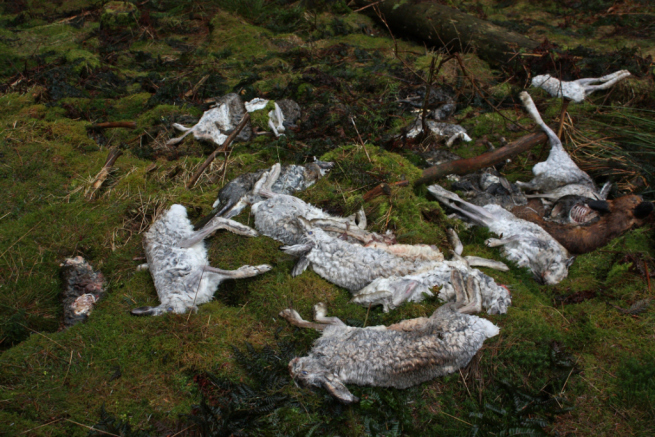
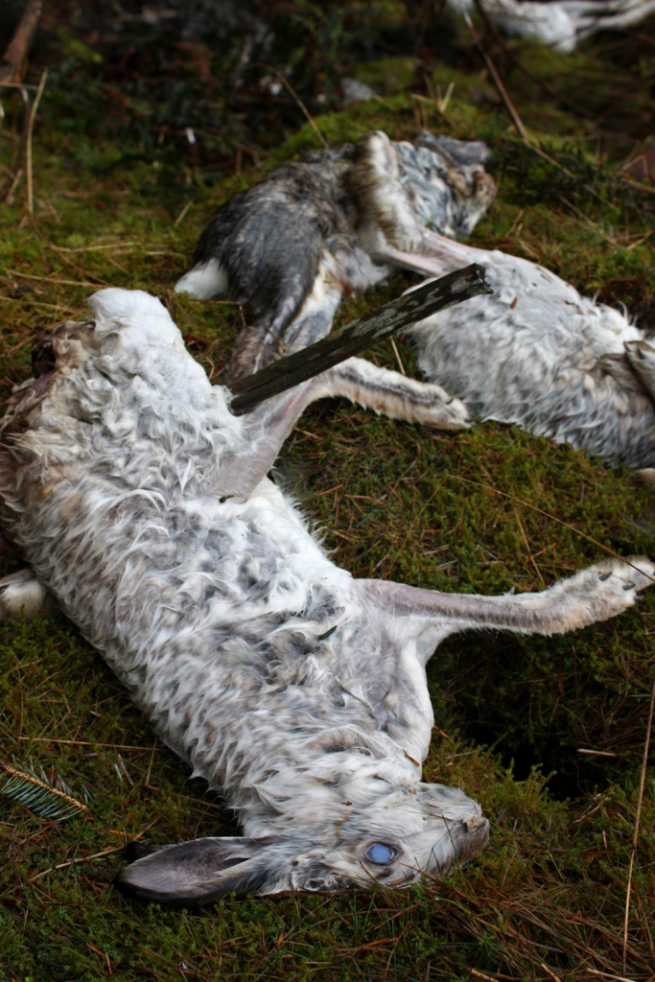
Anyone convinced that grouse moor managers view mountain hares as “much loved”? Anyone convinced that hare culls by grouse moor managers are “carefully managed”?

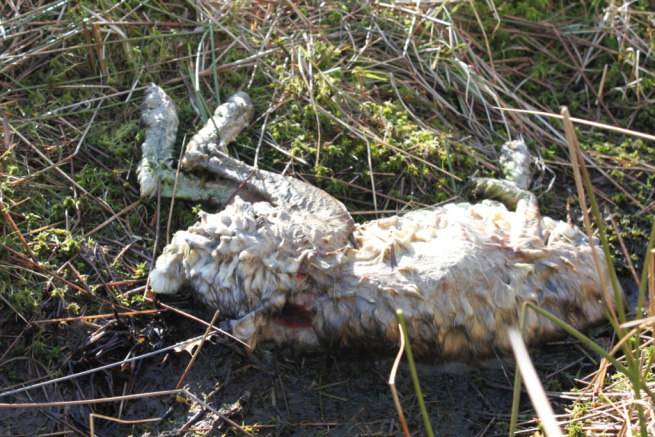
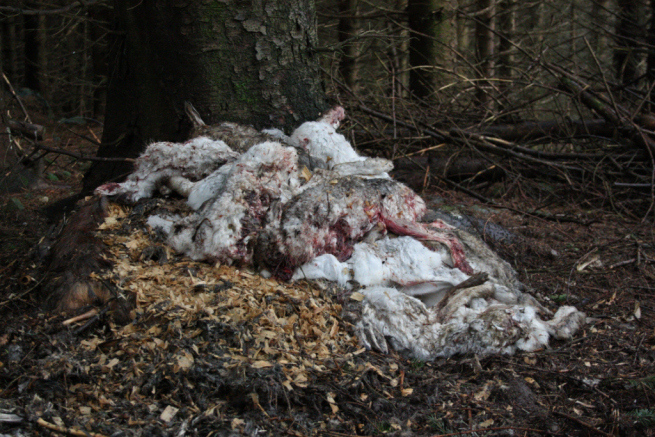
Have a look at the photographs at the foot of this blog and make up your own minds.

What’s also interesting about this press release is the decision to include a quote from the head gamekeeper of Glenogil Estate. We’ve blogged a lot about Glenogil Estate over the years (see here). Glenogil Estate is one of several grouse-shooting estates in the Angus Glens. Here’s some information about raptor persecution in the Angus Glens, mainly gleaned from the RSPB’s annual BirdCrime reports and SASA’s annual reports:

2004 May, near Edzell: long-eared owl and two short-eared owls starved to death in crow cage trap.  No prosecution.

2004 May, Invermark Estate: peregrine nest destroyed. No prosecution.

2006 March, Glenogil Estate: poisoned rabbit bait (Carbofuran). No prosecution.

2006 April, Easter Ogil: poisoned buzzard (Alphachloralose). No prosecution.

2006 April, Easter Ogil: poisoned tawny owl (Alphachloralose). No prosecution.

2006 May, Glenogil Estate: poisoned rabbit bait (Carbofuran). No prosecution.

2006 June, Glenogil Estate: poisoned woodpigeon bait (Carbofuran). No prosecution.

2006 June, Glenogil Estate: Traces of Carbofuran found in estate vehicles & on equipment during police search. No prosecution. Estate owner had £107k withdrawn from his farm subsidy payments. This was being appealed, but it is not known how this was resolved.

2006 July, Millden Estate; poisoned sheepdog (Lindane). No prosecution.

2007 November, Glenogil Estate: Disappearance of radio-tagged white-tailed eagle ‘Bird N’ coincides with tip off to police that bird been shot. No further transmissions or sightings of the bird.

2008 May, ‘Nr Noranside’: poisoned white-tailed eagle ‘White G’ (Carbofuran, Isophenfos, Bendiocarb). No prosecution.

2008 May, ‘Nr Noranside’: poisoned buzzard (Bendiocarb). No prosecution.

2008 May, ‘Nr Noranside’: poisoned mountain hare bait (Carbofuran, Isophenfos, Bendiocarb). No prosecution.

2008 May, Glenogil Estate: 32 x poisoned meat baits on fenceposts (Carbofuran, Isophenfos, Bendiocarb). No prosecution.

2008 October, ‘Glenogil Estate: poisoned meat bait on fencepost (Carbofuran). No prosecution.

2009 March, Glenogil Estate: poisoned buzzard (Carbofuran). No prosecution.

2009 March, Glenogil Estate: poisoned buzzard (Carbofuran). No prosecution.

2009 April, Millden Estate: poisoned buzzard (Alphachloralose). No prosecution.

2009 July, Millden Estate: poisoned golden eagle ‘Alma’ (Carbofuran). No prosecution.

2009 August, Glenogil Estate: poisoned white-tailed eagle “89” (Carbofuran). No prosecution.

2010 May, ‘Nr Noranside’: poisoned red kite (Carbofuran). No prosecution.

2010 September, Glenogil Estate: poisoned buzzard (Chloralose). No prosecution.

2010 October, Glenogil Estate: poisoned buzzard (Carbofuran). No prosecution.

2010 October, Glenogil Estate: poisoned pigeon bait (Carbofuran). No prosecution.

2010 October, Glenogil Estate: poisoned pigeon bait (Carbofuran). No prosecution.

2011 February, Airlie Estate: buzzard caught in illegal crow trap. (see below)

2011 March, Airlie Estate: 3 x buzzard caught in illegal crow trap. Prosecution (!) but dropped after statement from suspect given to SSPCA deemed inadmissible.

2011 April, Millden Estate: shot buzzard. No prosecution.

2012 April, ‘Nr Noranside’: Remains of buzzard found beside pheasant pen. Suspicious death.

2011 June, Rottal & Tarabuckle Estate: dead kestrel inside crow cage trap. No prosecution.

2012 February, ‘Nr Edzell’: spring-trapped buzzard. No prosecution.

2012 February, ‘Nr Bridgend’: remains of buzzard found under a rock. Suspicious death.

2012 May, Millden Estate: satellite-tagged golden eagle seemingly caught in spring trap, then apparently uplifted overnight and dumped on Deeside with two broken legs & left to die. No prosecution.

2012 May, Glen Esk: disappearance of sat-tagged red kite. No further transmissions or sightings of bird.

2013 January, Invermark Estate: white-tailed eagle nest tree felled. No prosecution.

2013 November, Glen Lethnot: poisoned golden eagle ‘Fearnan’. No prosecution.

2014 October, Nathro: shot buzzard. Prosecution? Unknown.

Can we take it then, that as this press release was issued by the Scottish Moorland Group – a sub-group of Scottish Land & Estates – that Glenogil Estate is a member of SLE? If so, surely the partner organisations of the PAW Scotland Raptor Group will be asking questions at their next ‘partner’ meeting.

A few newspapers have picked up on this press release today, including an article in the P&J entitled, ‘Mountain hare thriving thanks to grouse management‘.

Here are some pictures of ‘much-loved’ mountain hares ‘thriving’ on Scottish grouse moors, including one photograph that was taken on, er, Glenogil Estate.
mountain-hare-cull-angus-glens-large - Copy

mh4 - Copymh2 - Copyslry30 - Copymh3 - Copy

Ross-shire Massacre: one year on

RK7It’s been one year since the corpses of 22 birds of prey (16 red kites and 6 buzzards) were found in a small area around Conon Bridge in the Highlands.

We know that 16 of these birds were illegally poisoned (12 red kites & 4 buzzards). Still no word on the other six victims.

Still no word on the type of poison used, although Police Scotland did eventually admit that it was an “illegally-held poisonous substance” (see here). Carbofuran is suspected by many of us (see here).

The details of this illegal mass poisoning have still been deliberately excluded from the quarterly SASA reports – the Government reports that are supposed to inform us about recent illegal poisoning crimes in Scotland.

Police Scotland still maintains that the birds “were most likely not targeted deliberately but instead were the victims of pest control measures” – even though they can’t possibly know this unless they have a suspect who has given a full confession.

We’re still waiting to hear whether MSP Dave Thompson’s request, back in November 2014, for a review of Police Scotland’s handling of this investigation will be undertaken (see here).

We’re still waiting for the thousands of pounds worth of funds, that many of us donated, to be released by Police Scotland so that RSPB Scotland can redistribute them to support the work of their investigations team (see here).

Twelve months on and still no arrests.

Twelve months on and still no charges.

Twelve months on and still no prosecution.

Twelve months on and still no conviction.

Twelve months on and still no justice.

Twelve months on and still no confidence in Police Scotland’s ability to solve this appalling crime.

Previous posts on the Ross-shire Massacre here.

Case against Scottish gamekeeper William Dick: part 6

Criminal proceedings continued yesterday against Scottish gamekeeper William Dick.

Dick, 24, of Whitehill Cottages, Kirkmahoe, Dumfries is accused of bludgeoning a buzzard with rocks and then repeatedly stamping on it. The offences are alleged to have taken place in Sunnybrae, Dumfries in April 2014. Dick has denied the charges.

Yesterday’s intermediate diet was heard at Dumfries Sheriff Court and a further intermediate diet has been set for Friday 20th March. A provisional trial date has been set for 23rd March 2015, pending the outcome of the next court hearing.

Friday’s hearing will be #7 since the case was called in June 2014 (previous hearings occurred in October 2014, November 2014, February 2015 and March 2015).

Previous blogs on this case here, here, here, here and here.

Shot kestrel successfully rehabbed and released

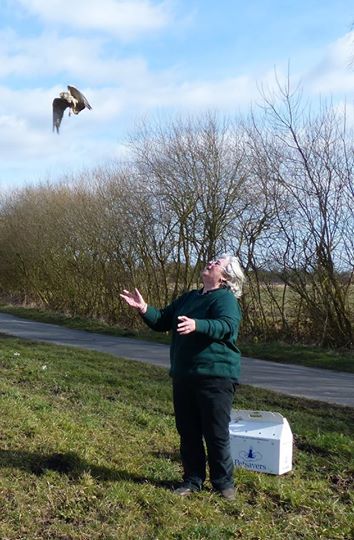
kestrel shot Ryedale 2015 2 - CopySome good news for a change….

In February we blogged about a kestrel with a shotgun injury that was being cared for by the amazing Jean Thorpe of the Ryedale Wildlife Rehabilitation Centre in North Yorkshire (see here).

What sort of moron shoots a kestrel?

Jean had posted a pitiful photo of the victim with its leg bandaged – a photo that led to a fundraising campaign to help Jean buy material for a new rehab aviary (see here).

Yesterday, Jean posted the following update on this kestrel’s progress:

The shotgun shot kestrel was successfully released back to Storwood. He went spectacularly well, hovering over farmland and looking wonderful. My thanks to Mark Naguib of Battlefatts Vets, Stamford Bridge, York for amazing veterinary work and Craig Ralston of NE for support and wonderful pictures. It’s so uplifting when it works out!

kestrel shot Ryedale 2015 released - Copy

Criminal pheasant breeder gets the chop

Last week we asked why the editorial team at Modern Gamekeeping had published an article by a pheasant breeder with eight wildlife crime convictions to his name (see here).

Modern Poisoner header March 2015 - Copy

Yesterday they issued the following statement:

As soon as we learned of Mike Wood’s conviction, we made the decision to dispense with his services with immediate effect, though Mike Wood actually resigned from his regular column upon conviction. His last article was in the March 2015 edition. Blaze Publishing, publishers of Modern Gamekeeping, do not condone any unethical or illegal practices and do not wish to be associated with anyone involved in them“.

That’s impressive. A fast and unequivocal response – others in the gamekeeping industry could learn a lesson or two from it.

Although we’re not entirely convinced that “Mike Wood actually resigned from his regular column upon conviction“. That statement seems to be at odds with what Charles Nodder (National Gamekeepers’ Org) said….that Mike Wood was considering an appeal (of his latest conviction). It’s also odd that Mike Wood didn’t think his earlier seven convictions (from 2011) merited his resignation.

We wonder if he will/has also resigned from his position of Chair of the Game Farmers’ Association?

Talking of the National Gamekeepers’ Org – we blogged recently about contacting the PAW secretariat to ask them to justify the NGO’s continued presence as a member of the Partnership for Action Against Wildlife Crime (see here). The PAW secretariat has now responded and we’ll be blogging about that, probably tomorrow.

Leadhills Estate confirmed as member of Scottish Land & Estates

The Leadhills (Hopetoun) Estate in south Lanarkshire has featured regularly on this blog (see here).

Since 2003, 46 confirmed incidents of wildlife crime have been discovered either on or near to the estate, but only resulting in two successful convictions (2004 – gamekeeper convicted of shooting a short-eared owl; 2009 – gamekeeper convicted of laying out a poisoned rabbit bait). Here’s the list:

2003 April: hen harrier shot [prosecution failed – inadmissible evidence]

2003 April: hen harrier eggs destroyed [prosecution failed – inadmissible evidence]

2004 May: buzzard shot [no prosecution]

2004 May: short-eared owl shot [gamekeeper convicted]

2004 June: buzzard poisoned (Carbofuran) [no prosecution]

2004 June: 4 x poisoned rabbit baits (Carbofuran) [no prosecution]

2004 June: crow poisoned (Carbofuran) [no prosecution]

2004 July: poisoned rabbit bait (Carbofuran) [no prosecution]

2004 July: poisoned rabbit bait (Carbofuran) [no prosecution]

2005 February: poisoned rabbit bait (Carbofuran) [no prosecution]

2005 April: poisoned buzzard (Carbofuran) [no prosecution]

2005 June: poisoned rabbit bait (Carbofuran) [no prosecution]

2005 June: poisoned rabbit bait (Carbofuran) [no prosecution]

2006 February: poisoned buzzard (Carbofuran) [no prosecution]

2006 March: poisoned buzzard (Carbofuran) [no prosecution]

2006 March: poisoned pigeon bait (Carbofuran) [no prosecution]

2006 April: dead buzzard (persecution method unknown) [no prosecution]

2006 May: poisoned rabbit bait (Carbofuran) [no prosecution]

2006 May: poisoned rabbit bait (Carbofuran) [no prosecution]

2006 May: poisoned egg baits (Carbofuran) [no prosecution]

2006 June: poisoned buzzard (Carbofuran) [no prosecution]

2006 June: poisoned raven (Carbofuran) [no prosecution]

2006 June: 6 x poisoned rabbit baits (Carbofuran) [no prosecution]

2006 June: poisoned egg bait (Carbofuran) [no prosecution]

2006 September: 5 x poisoned buzzards (Carbofuran) [no prosecution]

2006 September: poisoned rabbit bait (Carbofuran) [no prosecution]

2006 September: poisoned rabbit bait (Carbofuran) [no prosecution]

2007 March: poisoned buzzard (Carbofuran) [no prosecution]

2007 April: poisoned red kite (Carbofuran) [no prosecution]

2007 May: poisoned buzzard (Carbofuran) [no prosecution]

2008 October: poisoned buzzard (Carbofuran) [listed as ‘Nr Leadhills’] [no prosecution]

2008 October: poisoned rabbit bait (Carbofuran) [listed as ‘Nr Leadhills’] [no prosecution]

2008 November: 3 x poisoned ravens (Carbofuran) [listed as ‘Nr Leadhills’] [no prosecution]

2009 March: poisoned rabbit bait (Carbofuran) [no prosecution]

2009 March: poisoned raven (Carbofuran) [no prosecution]

2009 April: poisoned rabbit bait (Carbofuran) [gamekeeper convicted]

2009 April: poisoned magpie (Carbofuran) [no prosecution]

2009 April: poisoned raven (Carbofuran) [no prosecution]

2010 October: short-eared owl shot [no prosecution]

2011 March: illegally-set clam trap [no prosecution]

2011 December: buzzard shot [no prosecution]

2012 October: golden eagle shot (just over boundary with Buccleuch Estate) [no prosecution]

2013 May: shot otter found on estate [no prosecution]

2013 June: significant cache of pre-prepared poisoned baits found on estate [no prosecution]

2013 August: red kite found shot and critically-injured in Leadhills village [no prosecution]

2014 February: poisoned peregrine (Carbofuran) [‘Nr Leadhills’] [no prosecution]

For a long time, we’ve been trying to find out whether this estate is a member of the landowners’ organisation Scottish Land and Estates – an organisation that regularly claims to be fighting hard against raptor persecution. All our attempts to find out have been met with a wall of silence. We knew that Lord Hopetoun served on the SLE Board, so it was quite likely that his estate would be a member of SLE, but we weren’t able to find definitive evidence.

Well, we have now. Leadhills Estate has launched its own website (see here). It’s a spectacular example of how to conduct a public relations charm offensive – lots of info about how the estate is supporting the local community: providing a new home for the volunteer fire crew, lending a hand on Gala Day, engaging in a village clean-up for Christmas, and providing support for the Leadhills Miners Library. It brings a tear to the eye. There’s also plenty of encouragement for walkers to keep to the tracks so as not to disturb the wildlife – because Leadhills Estate really cares about wildlife.

Of most interest to us is a statement on the web site’s home page:

‘Leadhills Estate is a member of Scottish Land and Estates – an organisation which promotes the work of landowners and rural businesses undertake [sic] for the benefit of rural Scotland’.

Amazing. We’d love to hear how SLE justifies the membership of Leadhills Estate in their wildlife-crime-fighting organisation.

The Leadhills Estate website also includes a gallery showing images that visitors can expect to see when they visit this most welcoming of estates. Here’s another one for them – taken at one of many stink pits hidden away on Leadhills Estate (far from the tracks that visitors are encouraged to stick to). For those who don’t know, stink pits are used (legally) by gamekeepers in which to dump the rotting carcasses and entrails of dead wildlife. They set snares around the edge of the stink pit to catch (and then kill) any animals that may be attracted to the stench of death (typically foxes). This particular stink pit includes a few fox carcasses oh, and a cat. Nice, eh? Welcome to Leadhills Estate.

Leadhills dead cat stinkpit - Copy


Case against Scottish gamekeeper William Dick: part 5

Criminal proceedings have continued against Scottish gamekeeper William Dick.

Dick, 24, of Whitehill Cottages, Kirkmahoe, Dumfries is accused of bludgeoning and repeatedly stamping on a buzzard. The offences are alleged to have taken place in Sunnybrae, Dumfries in April 2014. Dick has denied the charges.

An intermediate diet was heard at Dumfries Sheriff Court on 24th February 2015 and was continued for another hearing due to take place on 17th March 2015. A provisional trial date has been set for 23rd March 2015, pending the outcome of the next court hearing.

Previous blogs on this case here, here, here and here

Kitten dies from Carbofuran poisoning in Midlothian

Cat poisoned Midlothian Dec 2014 Bootes - CopyAn eight-month old kitten has died after ingesting the banned poison Carbofuran.

The cat, Bootes, was found alive but fitting by the owner of Edgelaw Farm Livery near Gorebridge, Midlothian. Bootes died shortly afterwards.

Toxicology results identified Carbofuran and the SSPCA is now warning the public that this highly toxic poison is in use in the area (even though it’s been banned for 14 years and even possessing it constitutes an offence).

Carbofuran is, of course, the gamekeepers’ ‘poison of choice’ – you only need a small amount, it’s fast acting and it’s deadly. It’s the most commonly-used poison in illegal raptor persecution cases in Scotland and has been for some years.

Nobody will be at all surprised to learn that pheasant shooting is popular in the area where Bootes was poisoned.

Full article on SSPCA website here

Modern criminal

Modern Poisoner Mike Wood article March 2015 - CopyA few days ago we blogged about an attack on the campaign group Birders Against Wildlife Crime that had appeared in this month’s edition of Modern Gamekeeping (see here).

We also said we’d be blogging about another article that had been published in this industry rag. It’s a full-page spread on page 18, written by Mike Wood. Here’s the bio that accompanies this piece:

Michael Wood is a partner at Westfield Farms in Pickering, North Yorkshire. Founded in 1953, the farm has 59 years of experience breeding game birds, including pheasant, mallard, red-leg partridge and grey partridge“.

What the bio doesn’t say is ‘Michael Wood is a criminal with eight wildlife crime convictions to his name’.

See here and here.

Interesting, eh? How many times are we told not to tar all gamekeepers with the same brush? But why should we distinguish between lawful and criminal gamekeepers when the game-shooting industry itself doesn’t seem to bother? We already know that the National Gamekeepers’ Organisation doesn’t mind that Wood has wildlife crime convictions – they’ll still accept fund-raising donations from him and Charles Nodder from the NGO will still work with the Game Farmers’ Association, even though convicted wildlife criminal Wood is the GFA’s current Chairman (see here).

So we know that Noddy and the NGO don’t shun convicted wildlife criminals. But what about BASC? Surely they’ve got standards? Hmm. Take a look at this header from the front of Modern Gamekeeping:

 Modern Poisoner header March 2015 - Copy

It’s hard to read from this image so here’s what it says:

Modern Gamekeeping is proud to be in partnership with The British Association for Shooting and Conservation”.

Does that mean that BASC (a member of the Partnership for Action against Wildlife Crime (PAW UK)) endorses the idea that a wildlife criminal with multiple convictions should be given column inches in an industry publication to discuss the ‘management’ of his game-rearing farm? Surely not.

All in it together…?