
Police Scotland has failed to publicise the illegal poisoning of a red kite which was found dead in central Scotland last July. That’s July 2014 – six months ago!
The only reason this crime has come to our attention is because it is included in the recently-updated quarterly reports by SASA – the Government agency whose job is to analyse carcasses for poisons.
This kite was killed by ingesting the banned pesticide Carbofuran. There are no other details, other than the carcass was recovered in central Scotland and the case is subject to an on-going police investigation.
Why didn’t Police Scotland issue a press statement? Sure, they might have chosen to delay it for a few weeks for operational purposes, e.g. if they were planning a raid on the premises then they wouldn’t want to alert the potential suspects in advance. But six months on and still silent? That’s pathetic.
It’s this kind of cover-up that plays directly into the hands of those who seek to diminish the extent of raptor persecution. If the public is unaware that these crimes are continuing, they’ll be more likely to believe the lies of certain organisations who keep saying that raptor persecution crimes are occurring with less frequency, and that landowners and gamekeepers have cleaned up their acts. If the public believes that, they are less likely to join in calls for greater enforcement/tougher penalties etc. If MSPs don’t hear about this issue from their constituents, they’ll be less likely to push forward any legislative changes. The end result? The raptor-killing will continue with impunity and the raptor-killing criminals will continue to escape justice.
Police Scotland’s silence does absolutely nothing to inspire public confidence in their ability and willingness to tackle wildlife crime. Perhaps they did investigate and perhaps they’ve charged someone who is now awaiting prosecution. Perhaps they did investigate but didn’t find any evidence to link the crime to an individual. Perhaps they did nothing and the file is gathering dust on someone’s desk. Whatever response they did or didn’t make, given the high level of public interest in these crimes and, in this case especially, the dangerously-high toxicity of the poison (fatal to humans), they should have publicised this incident months ago.
We are also interested in whether any General Licence restrictions have been imposed on the land where the kite was found poisoned. We don’t know whether this land is used for game-shooting but we’d make an educated guess that it is, especially given the type of poison involved – Carbofuran is still the gamekeepers’ ‘poison of choice’.
If you remember, SNH now has the power to restrict the use of General Licences, based on a civil burden of proof (i.e. so not reliant on a criminal conviction) ‘where there is evidence to suggest that a wild bird or birds have been either killed, injured or taken or where there has been an attempt to do so other than in accordance with a licence, or where General Licences are being misused‘ [this is a direct quote from the SNH 2015 General Licences].
This new measure was rolled out in October 2014 (see here) and can be back-dated to any offences that have occurred since 1st January 2014.
During the Scottish Parliament’s RACCE committee hearing on 29th October 2014 (see here), Detective Chief Superintendent Robbie Allan of Police Scotland talked about the implementation of this new measure:
“We have set up a structure whereby we will meet SNH on a monthly basis. At that meeting, Police Scotland will inform and notify SNH of any crimes that fit the proposed criteria. SNH will take that information and make an assessment based on it. The first meeting will take place in the first week of November [2014], and it will apply retrospectively to all offences since 1st January [2014].”
So, the first monthly meeting between Police Scotland & SNH was due to take place in early Nov 2014. That’s almost three months ago. This red kite was poisoned in July 2014. It is reasonable to expect, then, that this case has been assessed by SNH and they’ve made a decision whether or not to impose a General Licence restriction.
We just had a look on the SNH website, where it says: ‘Any decision to implement a restriction will be posted on this webpage‘ (see here). Surprise surprise, there isn’t any information about any General Licence restrictions that have been imposed. Does that mean they are not going to impose a restriction for the poisoning of this red kite? Or does it mean they haven’t yet got around to looking at it? Or something else?
Trying to get information from these enforcement bodies is like pulling teeth. Why is it so bloody difficult? Where’s all the ‘accountability’ that they’re so keen on telling us they have but the SSPCA doesn’t have?
Let’s go directly to the Director of Operations at SNH (who makes the ultimate decision on whether a restriction is imposed) and ask him what’s going on with this case and specifically, whether a General Licence restriction has been imposed and if not, why not? Emails to Andrew Bachell: Andrew.Bachell@snh.gov.uk
Red kite photograph by David Tomlinson
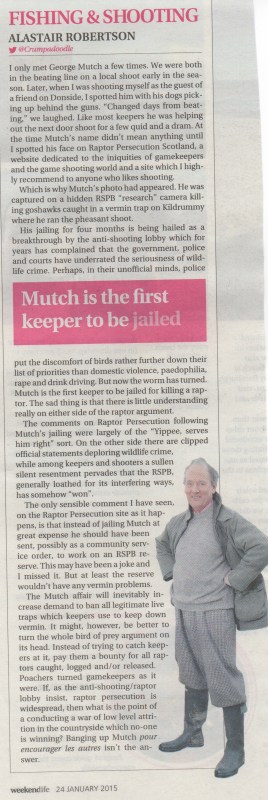 The fall-out from the shock custodial sentence for raptor-killing gamekeeper
 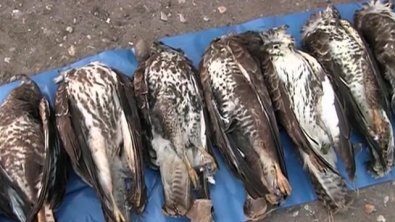 On 1st October 2014, gamekeeper Allen Lambert from the Stody Estate in Norfolk was found guilty of poisoning 10 buzzards and one sparrowhawk, which had been found dead on the estate in April 2013. He was also convicted of storing banned pesticides & other items capable of preparing poisoned baits (a ‘poisoner’s kit’), and a firearms offence (see
  You may remember last May, the Cairngorms National Park Authority (CNPA) wrote to the then Environment Minister, Paul Wheelhouse, to tell him that the continuing incidents of raptor persecution and ‘disappearing’ birds in the eastern part of the Cairngorms National Park “threatens to undermine the reputation of the National Park as a high quality wildlife tourism destination“. The Minister was invited to a meeting of ‘stakeholders’ to discuss ways to address the on-going problem (see
 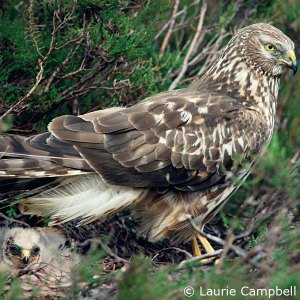 Over the last year or so (and especially over the last few months) there has been an increasing amount of media coverage regarding the political and ecological status of hen harriers in the Republic of Ireland. Much of the media coverage has come from one particular Irish newspaper, heavily influenced by political spin doctors (the equivalent of the Telegraph/Daily Mail in the UK). When these newspaper articles are shared with a UK audience on social media, without an accompanying critique or even a vague understanding of the politics behind each story, a one-sided view of the situation can be accepted as being ‘factual’.
 But if that isn’t enough the private forest lobby has been busy winning over the farming organisations with offers of lucrative tax-free grants for private forestry, leading to calls by the Irish Farmers Association for an end to a moratorium on new forestry in the SPAs (see here
 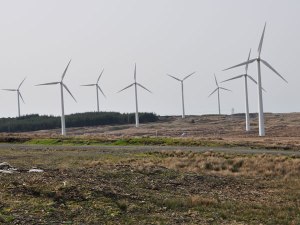 Windfarms, harrier persecution and those ghost SPAs
 Today, the Scottish Government has published its analysis of the public responses to the SSPCA consultation. It is quite extraordinary.
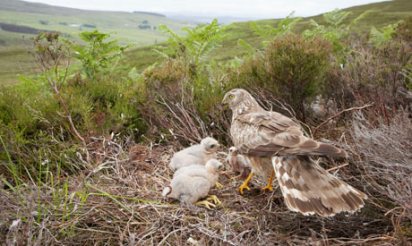 Up until yesterday, we had a lot of respect and admiration for the Hawk & Owl Trust. They’ve got some fantastic staff and volunteers, their conservation work has been exemplary, as has their educational work, and they’ve stood shoulder to shoulder with the rest of us to make a stand against the illegal persecution of raptors. Such was their unity, in 2013 they even walked away from the ridiculous Hen Harrier Dialogue shortly after the RSPB and the Northern England Raptor Forum had walked. They were one of us, with shared ideals and whose patience with the grouse moor owners had been sucked dry. Read their exit statement
  The angst generated by the successful use of video evidence to
  The SGA aren’t the only ones up in arms about the admissibility of the RSPB’s video footage which was used to devastatingly good effect in the Mutch trial.
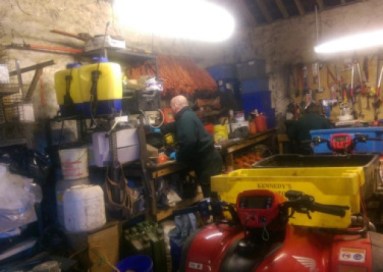 Police in Northern Ireland last week joined forces with officers from the Northern Ireland Environment Agency and the Health & Safety Executive (NI) to conduct a search of premises in one of the region’s most notorious raptor- poisoning blackspots.
 Raptor Persecution UK