Here’s yet another example, as if we need it, of persistent, ignorant Victorian attitudes towards raptors in 21st Century Scotland.
Check out this letter, published this week in the Scottish Farmer:
Vacate your perch!
SIR, – Listening to and reading about the Winter Watch tv programme regarding sea eagles, I found most of it incredible and so ‘too bad’ as far as the loss of lambs was concerned – they didn’t even mention hoggs or ewes.
Then, for Mr Warnock of NFUS to say: “Sea eagles are here to stay”. Surely it’s time for him to vacate his perch – and if that is the view of the NFUS, what a precarious position hill sheep farmers and crofters are in.
Nothing short of complete eradication will do, and it is the same for the pine martin – both should be absolutely destroyed. The National Sheep Association, the Crofting Commission and Crofting Federation should be backing this to the hilt.
Will Mr Lochhead or Mr Wheelhouse do anything about the sea eagle? No, they didn’t even prick their ears until a danger to our native eagle was mentioned and, for Mr Lochhead to say they are a tremendous tourist attraction is rubbish. If, like me, he had spoken to tourists from all over the world over the last 20 years at ‘Working Sheepdogs’ here, he would know they don’t come for one attraction but to see as much as they possibly can. The oblivion of the sea eagle wouldn’t matter and, indeed, would be an absolute blessing for the countryside and its animals.
DW Ross,
Leault, Kincraig
We believe the author is Mr Donnie Ross, a now retired shepherd who was elected in 2012 to represent the East Highlands constituency of the Crofting Commission (see here). It’s quite incredible that someone in this position of influence is so utterly mis-informed and able to incite the illegal killing of two protected species.
UPDATE 14.30: Looks like Mr Ross resigned from the Crofting Commission in Sept for reasons that are now not altogether surprising (see here).
On a related note, Environment Minister Paul Wheelhouse has just answered a Parliamentary Question on the subject of crofters, farmers and sea eagles:
Angus MacDonald (Falkirk East) (Scottish National Party): To ask the Scottish Government how many (a) farmers and (b) crofters applied for compensation under the Sea Eagle Management Scheme, broken down by parliamentary constituency.
(S4W-19252). Paul Wheelhouse: “The Sea Eagle Management Scheme pays for positive management of sheep flocks, in order to reduce conflict with sea eagles. It does not pay compensation for lamb losses. The scheme ran for three years from 2011-13, and closed in summer 2013, but Scottish Natural Heritage (SNH) will honour all agreements entered into under the scheme. Through the scheme, SNH offered three-year management agreements (MAs) to land managers.
SNH received 70 applications, all of which resulted in management agreements being offered to the applicants. Of those 70 management agreement offers, 62 have been accepted or concluded by the land manager and 7 agreements were rejected by the applicants. The final management agreement was only offered recently, so it is not known whether the land manager will accept the offer.
Of the 62 concluded agreements:
1 contains ‘special measures to reduce impacts from sea eagles’;
2 contain ‘promotional measures’;
4 contain ‘special measures to benefit sea eagles’;
58 contain ‘sheep management measures’ (The numbers add up to more than 62 because some MAs contain more than 1 element).
Of the 62 concluded agreements:
17 are with crofters/common grazings;
9 are in Skye, Lochaber and Badenoch;
1 in Argyll and Bute;
5 in Caithness Sutherland and Ross (Wester Ross);
2 in Na h-Eileanan an Iar;
2 are with constituted community groups (these are the two ‘promotional measures’ agreements);
1 in Argyll and Bute (Mull);
1 in Na h-Eileanan an Iar;
43 are with farms/ estates (i.e. not registered croftland);
31 in Argyll and Bute;
9 in Skye, Lochaber and Badenoch;
3 in Caithness, Sutherland and Ross (Wester Ross).
SNH has commissioned a review and evaluation of the scheme, on behalf of the assessment panel, and this will be completed by the end of March 2014. It will help inform the design of a new scheme, along with advice/input from the Sea Eagle Stakeholder Group, which advised on the design of the current management scheme.
The expectation is that a new scheme will be launched in late spring 2014. The budget for this has not yet been agreed, nor has its scope and geographical extent. SNH look forward to working with key interested bodies including the National Farmers Union Scotland and the Scottish Crofting Federation over the coming months to design a scheme that best meets the needs of land managers and others with an interest in sea eagle management.
In the meantime, SNH will continue to provide advice and assistance to land managers concerned by sea eagle impacts on their livestock”.
Let’s hope the new ‘scheme’ includes compulsory attendance on a ‘Basics of Sea Eagle Natural History & Ecology’ course before any more tax-payers’ money is handed out.
For other recent examples of blind prejudice against Scottish sea eagles see here, here and here.
White-tailed eagle photo by Mike Watson.

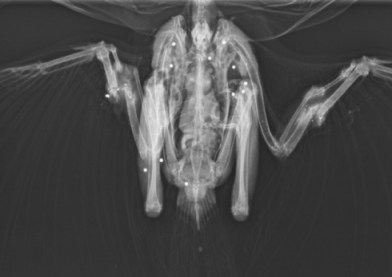 Norfolk Constabulary and the RSPB have issued a joint appeal for information following the discovery of a shot buzzard in the Dereham area.
 For those who missed it, the Channel 4 News report on the illegal persecution of raptors on Scottish grouse moors can be watched
  As HRH Prince Charles & HRH Prince William prepare to host an international summit on tackling wildlife crime, Channel 4 News will take a closer look at crimes against wildlife in the UK, with a particular focus on the illegal persecution of golden eagles on Scottish moors managed for driven grouse shooting.
 Scottish Government press release:
 Over recent weeks we’ve blogged about the increased calls on the Scottish Government to do more in the fight against raptor persecution.
 So here we have a situation where the Minister actually admits that the measures are not working (he acknowledges an increase in the reported poisoning figures from 2012-2013) but claims ‘we have made some progress’. Let’s just be clear – no, we haven’t made any progress. Raptor persecution continues on land used for game-shooting, just as it has for decades, and most of the criminals are still getting away with it without any fear of being prosecuted, with just a handful of exceptions. How that can be dressed up as ‘progress’ is unfathomable.
 The Scottish Ornithologists’ Club (SOC) has joined the voices rising against raptor persecution in Scotland. In a significant move, the President of the SOC has written to Environment Minister Paul Wheelhouse about the continuing levels of crime against raptors, despite all the ‘new measures’ designed to combat the killing, and has asked him to consider introducing further measures to regulate the game-shooting industry. Read his letter
  Raptor Persecution UK