Case against Stody Estate gamekeeper Allen Lambert: part 3

A case management hearing was heard today at Kings Lynn Magistrates Court regarding the remaining charges against Stody Estate gamekeeper, Allen Lambert.

In December 2013, Lambert was charged with seven alleged offences including the killing of 14 buzzards, 1 sparrowhawk and 1 tawny owl (see here).

Lambert, 64, of Old Lodge House, Stody, Melton Constable, Norfolk pled guilty to storing the pesticides Mevinphos and Aldicarb but denied killing and possessing the dead birds.

His case was adjourned today and is expected to continue in February 2014.

Leadhills Estate: “no plans to sell”

leadhills-contributedLast week we blogged about a forthcoming meeting at Leadhills Village Hall to discuss a proposal for a community land buyout scheme at Leadhills (see here).

That meeting took place on Saturday 18th January 2014 and a ‘community company’ has now been formed with the purpose of registering an interest in Leadhills Estate. [The Land Reform (Scotland) Act 2003 provides an opportunity for rural communities to buy land. If a rural community is interested in buying land, the community can register an interest in buying the land, then if the landowner decides to sell, the community has first choice to buy that land – see here for further information].

However, a spokeswoman for Leadhills Estate is reported to have said there are no plans to sell.

Last September we blogged about the Leadhills Estate shooting lease being up for sale (see here). It would appear that the lease is still available, according to the listings on Savills website (see here). We wonder what’ll happen if nobody comes forward to take on the 10-year lease?

There’s an article in today’s Herald about the Leadhills community meeting that took place on Saturday (see here). We’re reproducing it here as the Herald likes to limit access to its on-line paper so there are some who may not be able to read the article on the Herald’s website. Here is the article:

A community is looking to buy-out all or part of a huge sporting estate amid claims more could be done to support the local population.

A packed public meeting in the village hall of Leadhills, in the hills of South Lanarkshire, has agreed to investigate a potential buy-out under land reform legislation.

This could give the community the right to first refusal if all or some of the Leadhills Estate comes on the market.

However, they do not have the absolute right to buy like crofting communities enjoy whether the owners want to sell or not.

For centuries the Leadhills Estate had been owned by the family of Lord Hopetoun. His main base is Hopetoun House on the outskirts of Edinburgh which is regularly cited as one of Scotland’s finest stately homes and is now owned by a charitable trust.

But Leadhills is run primarily for grouse shooting and has been linked to wildlife crime. Its sporting rights over 11,500 acres are being offered for lease for a 10-year period along with a head keeper’s house and up to six under keepers’ houses – price on application.

Many among the 350 people who live in and around Leadhills believe the estate could work better for the community.

As the name suggests, the area was a major lead mining centre, until the industry’s decline in the 1930s. Local people looked to the Highlands and Islands where their counterparts had taken control of their own destinies and most of the 500,000 acres now under community ownership. It was decided to see if something similar might work in Leadhills.

Freelance illustrator Andrew Foley, who attended the weekend’s meeting with his wife, said the houses in the village were “cradled in the middle of the estate”.

“The general feeling of the group that has put the community buyout proposal forward is that they would like a greater stake in that land.

“There was a lot of interest and there was a majority who wanted to investigate this. But I got a sense there were also some who were not totally on board,” he said.

Meanwhile Anjo Abelaira, who works freelance in the marketing and tourism sectors in Scotland and Europe, said: “I came here five years ago and fairly quickly realised there was a general feeling that the estate could provide a lot more opportunities for the local community than it did.

“A few of us got together and started to talk about what more could be done with this amount of land so close to Edinburgh and Glasgow.

“We had a lot of ideas from tourism to hydro to farming, instead of it just being for shooting playground. It is the size of the island of Guernsey, so it should be able to offer more than it has done as just a sporting estate.”

He said 57 people had signed forms agreeing for a community company to be formed with the purpose of registering an interest in the estate. This is well over the 10% legally required and a steering group has now been set up.

A spokeswoman for the estate said: “Leadhills Estate is very much part of the community and has always welcomed the opportunity to support local initiatives.

“Leadhills is a productive farming estate and grouse moor and marketing for a new sporting tenant is well underway. The Trustees are very much committed to Leadhills, have an ongoing programme of investment and there are no plans to sell.

“We are, however, interested in discussing ways in which all interested parties can work together to stimulate greater economic growth in the area.”

Farmers taking aim at sea eagles, again

Scottish Farmer eagle eaction call front pageRepresentatives of NFU Scotland are meeting with SNH today in a ‘call for action’ against white-tailed eagles.

They haven’t exactly specified what ‘action’ they want from the government although the words ‘control measures’ are mentioned. These words are the more palatable version of  ‘kill/cull’.

Why do they want sea eagles to be ‘controlled’? Ah, the usual arguments – the sea eagle population is out of control, sea eagles are out-competing golden eagles, sea eagles are eating all the lambs, sea eagles are eating everything else as well as all the lambs, sea eagles might eat a child, sea eagles are ‘impacting’ on the wider biodiversity, sea eagles are eating all the hares, sea eagles are eating all the goats, sea eagles are causing emotional damage…. Oh, and the government’s ‘eagle-damage’ compensation scheme for farmers/crofters just happens to have ended.

The NFU Scotland ‘call for action’ features on the front page of the Scottish Farmer today (see here).

Unfortunately, the article doesn’t include any information about the findings of previous studies looking at the so-called impact of reintroduced sea eagles on lambs (answer = negligible, see here and here).

Nor does it include any reference to two recent scientific studies looking at the presumed competitive effect of white-tailed eagles on neighbouring golden eagles. Both concluded no evidence of effect:

Evans et al. (2010). Comparative nest habitat characteristics of sympatric White-tailed and Golden Eagles in western Scotland. Bird Study 57 (4): 473-482 (read it here).

Whitfield et al. (2013). Breeding season diets of sympatric white-tailed eagles and golden eagles in Scotland: no evidence for competitive effects. Bird Study 60 (1): 67-76 (read it here).

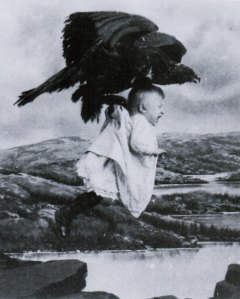
baby-and-eagleOf course, this is just the latest in a long line of alarmist nonsense from both farmers and gamekeepers (who can forget the SGA’s recent claim that sea eagles might eat children – see here!) and then there was this, and perhaps best of all, this.

Not to be deterred by scientific evidence, or even just plain common sense, the editor of the Scottish Farmer, Mr Alasdair Fletcher, has set up a survey to ask whether the sea eagle population should be ‘controlled’ (in his opinion the answer should be ‘yes’). You, too, can take the carefully considered, unbiased survey here!

UPDATE 26th JANUARY 2014 – POLL RESULTS HERE!

‘Man’ reported for hen harrier death in Aberdeenshire

A 58 year-old man has been reported to the Procurator Fiscal in relation to the death of a hen harrier in Aberdeenshire, according to the BBC (see here).

This relates to an incident that took place in June last year.

The un-named man is expected to appear at Aberdeen Sheriff Court ‘at a later date’.

This is another disappointingly vague press release from Police Scotland. There’s no mention of the man’s name, his occupation, the specific location of the incident, or the cause of the harrier’s death.

There is also no explanation as to why it has taken seven months just to get to the reporting stage.

It’s not very impressive given that the hen harrier is supposed to be one of the government’s highest wildlife crime priority species.

We look forward to further details emerging about this case in due course.

Buzzard poisonings in Northern Ireland: 1 confirmed, 3 suspected

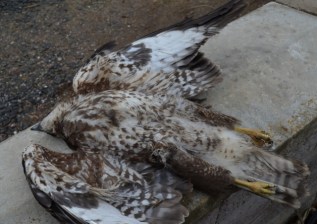
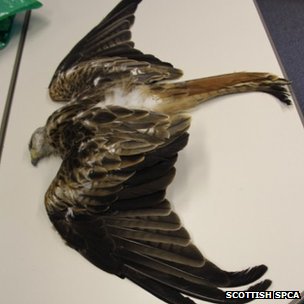
BZNIPolice in Northern Ireland are appealing for information about the suspected poisonings of 3 buzzards in two separate incidents.

In the first incident (April 2013!) a dead buzzard was found on land at Drumdreenagh Road in the Hilltown area of Warrenpoint, County Down. We happen to know that this bird was found with a dead red kite which has since been confirmed as being poisoned with Carbofuran.

The second incident (October 2013) was also in the Hilltown area – this time two buzzards were found dead on land in the Lisnamulligan Road.

Anyone with information can contact the police in Warrenpoint on 0845-600-8000. Article in Newry Times here.

It’s more than a little concerning that the police appeal for information has only just appeared and that the cause of death has not yet been confirmed – poisoning is still only suspected at this stage. We’ve blogged before about the excessively long delays in getting toxicology results from the lab in Northern Ireland (e.g. see here) and it seems reasonable to assume from the information provided in the latest press release that this is an on-going problem. Such slow response times can only hinder the police investigations, and also the work of the conservationists trying to assess whether the buzzards were deliberately targeted or were the unintended victims of secondary poisoning.

Another dead buzzard that was found in Castledawson, Co. Londonderry in March 2013 has been confirmed as being poisoned with Carbofuran. The police put out an appeal for information about this incident in October 2013 (article here).

Parliamentary motion about poisoned golden eagle Fearnan

Fearnan Angus Glens Dec 2013The Scottish Parliament is taking note of the illegal killing of golden eagle Fearnan, who was found poisoned on an Angus grouse moor in December.

The following parliamentary motion has been lodged:

Motion S4M-08715: James Dornan, Glasgow Cathcart, Scottish National Party, Date Lodged: 07/01/2014

No Place for Wildlife Crime

That the Parliament notes the poisoning of the golden eagle named Fearnan and believes that the killing of birds of prey has no place in modern Scotland; believes that the golden eagle population is of national interest, as demonstrated by a recent poll in which the species was voted the country’s favourite animal; supports efforts by Police Scotland to bring wildlife criminals to justice, and commends the Scottish Government’s commitment to end raptor persecution.

Supported by: Joan McAlpine, Stuart McMillan, Chic Brodie, Adam Ingram, Christina McKelvie, Mike MacKenzie, Bill Kidd, Patrick Harvie, Kenneth Gibson, David Torrance, Aileen McLeod, Colin Keir, John WilsonR, Roderick Campbell, Nigel Don, Dennis Robertson, Liam McArthur, Colin Beattie, Fiona McLeod, John Finnie, Jean Urquhart, Rob Gibson, Richard Lyle, Christine Grahame, Graeme Dey, Maureen Watt, Kevin Stewart, Sandra White, Mark McDonald

What’s significant about this motion is not necessarily that one has been lodged – there was a similar motion lodged in 2012 by Nigel Don MSP following the discovery of the now infamous dead ‘Deeside Eagle’ (see here), with an amendment to that motion made by Claudia Beamish MSP following the shooting of a golden eagle in South Lanarkshire (see here).

James Dornan MSPThe significance of this latest motion is that it’s been lodged by an MSP that doesn’t live in the region where Fearnan was killed and isn’t especially well-known for addressing raptor persecution issues – James Dornan MSP, representing  Glasgow Cathcart. We view this as an important indication that the raptor persecution issue is being brought to the attention of people who may previously have been unaware.

Well done, James Dornan. Let’s see how many more MSPs sign up to support this motion. Has yours signed?

A community buyout proposal for Leadhills?

RK Leadhills 2013This looks interesting….

There will be a public meeting at 2.30pm next Saturday (January 18th 2014) at Leadhills Village Hall to discuss the possibility of a community land buyout scheme at Leadhills, South Lanarkshire.

The meeting, which is open to everyone, will hear talks from two prominent figures involved with community land buyout schemes as well as presentations by local residents on the community land buyout process and the benefits these schemes can bring.

A brighter future for the wildlife in and around Leadhills? We think so.

Further details of the meeting here

Photo: this red kite was found critically-injured in Leadhills village in August last year. It had been shot. It didn’t survive (see here).

Latest measure to tackle raptor persecution now in place

Last July, following a series of raptor persecution incidents, Environment Minister Paul Wheelhouse announced his intention to introduce ‘further measures’ to tackle the ongoing problem (see here).

One of those measures has recently come in to force (as of 1st Jan 2014).

That measure is an enabling paragraph in some of the 2014 General Licences that says this:

SNH reserves the right to exclude the use of this General Licence by certain persons and/or on certain areas of land where we have reason to believe that wild birds have been taken or killed by such persons and/or on such land other than in accordance with this General Licence.

First of all, we applaud Paul Wheelhouse’s intentions, at least, and his determination to make sure this measure has been enacted. Good for him. However, as we blogged at the time, we really don’t see how this latest measure can be enforced (see here for our reasons).

For once, it seems that many of the game-shooting organisations are in agreement with us. Before SNH issued the 2014 General Licences, they had their usual consultation period and asked for comments about this new enabling paragraph, amongst other things (see here). They have just published those consultation responses and all the respondents from within the game-shooting lobby raised many of the same concerns as us.

So, even though this new measure is now in place, it is highly unlikely that it will ever be effectively deployed….a bit like the legislation relating to vicarious liability. We might be wrong, of course, but only time will tell.

In general terms, the 2014 General Licences are not much better than the 2013 General Licences in that many of the previous concerns raised (going back several years!) have still not been addressed. We’ve blogged about this a lot (e.g. see here, here, here, here, herehere, here, here, here, here) and don’t intend to go over all the points again….not just yet, anyway. We understand that SNH is intending to organise further research in 2014 to address many of the concerns, although they said that when they issued the 2013 General Licences and yet here we are, another year gone by and we’re still waiting for that research.

While we wait, it’s worth you having a look at the responses to the 2014 General Licence consultation – especially the response from the Scottish Gamekeepers’ Association, who once again are asking for ‘quota systems’ for buzzards, ravens, pine martens and badgers.

Download the PDF here: Consultation responses to General Licences 2014

Naturally, we’ll be watching with interest to see whether SNH has cause to withdraw the use of the General Licences, on the basis that they have ‘reason to believe’ that wild birds have been illegally taken or killed. The enabling paragraph probably cannot be used retrospectively so we’ll just have to wait until we see the next incident of criminal activity, which probably won’t be too far off, and then we’ll see what happens.


Subtle editing of Angus gamekeeper poison article: at whose request?

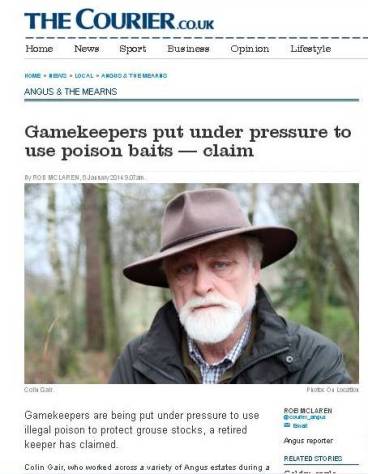
Courier originalOn Wednesday we blogged about an article that had appeared in the Courier that morning. The article was all about a retired Angus gamekeeper, Colin Gair, who claimed that gamekeepers were being put under pressure to use poison baits to protect grouse stocks. Here is what we wrote in that blog.

The Courier article seemed to cause quite a stir and was soon being cited all over social media sites like Facebook and Twitter. That’s not surprising – it’s not very often that you get a gamekeeper willing to admit that illegal practices such as poisoning are still taking place so of course, people would be interested in reading about that.

We didn’t think anything more of it until Thursday morning. After reading one of the comments left on our blog it became apparent that the original article in the Courier appeared to have been edited with some material removed and some new material added.

That’s not so unusual – many on-line news articles are edited, often adding new quotes from different sources when they become available; we even do that on our own lowly blog. However, not many news articles are edited in such a radical way as to change the original information into something completely different. Bizarrely, that is exactly what looks like has happened with the Courier article.

After some digging, we have been able to find a cached version of the original Courier article, which was published on-line at 9.07 am on Weds 8th Jan 2014. Here is the text:

Gamekeepers are being put under pressure to use illegal poison to protect grouse stocks, a retired keeper has claimed.

Colin Gair, who worked across a variety of Angus estates during a 50-year career, has hit out at the use of poisoned baits, which claimed the life of a golden eagle in Angus in November.

Fearnan’s death is the latest in a series of incidents — several other eagles and other raptors having been shot, poisoned or trapped on sporting estates.

Mr Gair, 66, claimed the situation in Angus had deteriorated in the past two years and is urging gamekeepers to speak out if they are being asked to use poison.

He said: “Grouse have to be reared naturally on the heather moors, therefore vermin must be controlled, but legally all the keeper can do is trap and shoot.

“If you are a gamekeeper who is a married man with wife and family and the very nature of the job entails living in a tied house, pressure can be applied to you.

“If you are asked by a landowner or the tenant to use poison it is not easy for a keeper to say ‘I refuse to do this’ when his house, job and future might be at risk.”

The Tayside division of Police Scotland said their inquiries into the death of Fearnan are continuing.

Fearnan Angus Glens Dec 2013Now, compare the original version of the Courier article with the edited version that appeared on-line five hours later at 2.07 pm on Weds 8th Jan 2014. Here is the text:

Gamekeepers are being urged to contact police if they are asked by landowners or tenants to use illegal poisons to protect grouse stocks.

Retired keeper Colin Gair made the plea in the wake of the death of the golden eagle Fearnan, which died after being poisoned in Angus in November.

The type of poison used has not been revealed by police, but website Raptor Persecution Scotland, which has been tracking the series of killings in Angus, claim the poison was the illegal pesticide carbofuran.

In the past five and a half years, four eagles, a red kite and seven buzzards have been shot, poisoned or trapped on sporting estates in the Angus glens.

Mr Gair said he didn’t have pressure applied to him to use poison during his career, but was aware of the practice taking place.

He claimed young keepers who are fearful of losing their job could easily be coerced into using poison by unscrupulous tenants.

“I am certain many moors do not use poison, but some do and there are areas of Angus which are regarded as raptor black holes,” he claimed.

“If you are a young keeper with a wife and kids you dare not stick your head above the parapet, but I hope that someone will come forward and report that they have been asked to use poison to police.”

Mr Gair, 66, said the agricultural poisons used would be very difficult to obtain by gamekeepers and speculated that they were more likely to be supplied by corrupt traders to one or two shoot managers before being passed down to keepers.

He added: “Who is the real criminal in the poisoning cases? Is it the keeper who knowingly uses the chemical or is it another person who deliberately buys the chemical and passes it on to keepers with instructions to use it for vermin control?

“With most of these concentrated agricultural chemicals you would just need a few drops on an animal’s carcase and it would be deadly for anything that eats it.”

Tayside Raptor Study Group expert and wildlife artist Keith Brockie has called on the Scottish Government to licence shooting estates, a move Mr Gair said he would not oppose.

However, if licensing did come in, he said there would have to be some “give and take” and that the killing of certain raptors be allowed.

He added: “If gamekeeping and shooting interests are to face a licencing system, then we should be given something in return.”

Anyone with information that could assist police inquiries regarding the death of Fearnan is asked to contact 101, or speak to any officer.

That’s quite a different story being told in the edited version. What struck us the most was the change in the opening paragraph. In the original version, Mr Gair’s claim is crystal clear:

Gamekeepers ARE BEING put under pressure to use illegal poison to protect grouse stocks“.

In the edited version, this claim has been considerably diluted to this:

Gamekeepers are being urged to contact police IF they are asked by landowners or tenants to use illegal poisons to protect grouse stocks“.

Suddenly the article has gone from ‘they are being put under pressure’ to ‘if they are being asked’.

Another  significant change is the removal of Mr Gair’s claim that ‘the situation in Angus has deteriorated in the past two years‘. That statement does not appear in the edited version.

New material in the edited version includes: a reference to this blog, Mr Gair’s claims that he was never asked to poison anything throughout his career, his claim that ‘young keepers could easily be coerced’ [into poisoning], his view that ‘many moors do not use poison’, his view on the ‘difficulty’ of obtaining poisons, the reference to Keith Brockie and Keith Brockie’s view that estate licensing should be on the cards, and Mr Gair’s view of estate licensing.

We are intrigued by the scale of the editing that took place on the original article, and we’re particularly interested in who or what might have prompted such fundamental changes to the original article. Who might not have been happy with the claims made in the original article, that gamekeepers were being pressurised by landowners to use poison to protect grouse stocks? And who might have the power and influence to instruct those editorial changes? Hmmm….

Meanwhile, the landowners’ organisation Scottish Land & Estates has written a letter to the Courier to complain about the [edited] version of the article. Here’s what they had to say:

Sir,

The article by Rob McLaren “Gamekeepers urged to report unscrupulous owners” (January 8) repeats some very dangerous assumptions.  The death of the golden eagle “Fearnan” has been subject to police investigation for over a month and there has been no indication that it resulted from the actions of a gamekeeper or that it was related to grouse moor management. Anything more than was included in the police press release of 19th December is speculation.

The gamekeeper Colin Mair [sic], whose purely personal comments are repeated in the article, admits that he “didn’t have pressure applied to him to use poison during his career” and merely speculates that others might have done. To be quite clear, landowners do not put pressure on gamekeepers to use poison or break the law, indeed any gamekeeper would have full protection of employment legislation if that should happen. In the few cases where gamekeepers have been convicted for using poison to control predators, there has been no indication that they were told by their employers to do so and particularly no evidence that poisons were supplied by shoot managers, as the article alleges.  Since 2011, the already strong laws on employer liability have been tightened further by a “vicarious liability” offence whereby a land owner, manager or employer can be held liable for wild bird offences carried out by another person even if he was not aware of them.  Any estate employing gamekeepers now has to make it doubly clear that no illegal activity can be condoned.

If anyone, including a gamekeeper, has specific evidence as to who was responsible for the death of the golden eagle, it should be reported to the police immediately.  This case needs to be resolved as soon as possible, not least to put an end to speculative comment of the kind repeated in this article.

Tim Baynes

Director, Scottish Land & Estates Moorland Group 

Gamekeepers put under pressure to use poison, claims retired Angus keeper

A retired gamekeeper whose 50-year career included working on Angus sporting estates has claimed that gamekeepers are being put under pressure to use illegal poison to protect grouse stocks, according to an article in today’s Courier (see here).

Colin Gair, 66, says the situation in Angus has deteriorated in the past two years and he is encouraging other gamekeepers to speak out if they are being asked to use poison.

His comments come after the discovery of ‘Fearnan’, the golden eagle found poisoned on a grouse moor in the Angus Glens in December. Fearnan is the latest victim in a long line of alleged poisoning incidents in the area (see here).

Mr Gair deserves a great deal of credit for his willingness to speak out on a subject that is usually vehemently denied by all connected with the game-shooting industry, despite the overwhelming evidence to the contrary, and we applaud his courage.

It’ll be interesting to see whether there’s any response to his claims from certain game- shooting industry organisations that are usually at the forefront of the denials.

UPDATE 10th January 2014: see here