Gamekeeper convicted for theft & massive illegal stash of ammunition & pesticides

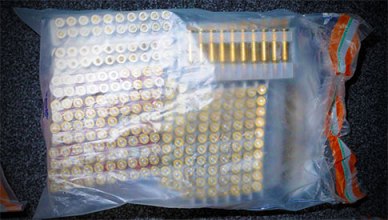
Knights ammoGamekeeper Andrew Knights, 47, of Sandy Lane, Dereham, in Norfolk has been convicted for stealing over 7,500 rounds of ammunition and cartridges from his former employer, and for possessing 5,200 rounds illegally, and for illegally storing 36 canisters of the pesticide Talunex in his bedroom.

The offences were so serious (read the details in the news links below) that his case was heard at Norwich Crown Court as opposed to a Magistrates Court. On Monday he was given a 15-month prison sentence, suspended for 18 months, and a £1,000 fine. One report suggests he also received a 200-hour community service order. Essentially then, as long as he doesn’t commit any offences for the next 18 months, all he got for these offences was a £1,000 fine, and possibly a few weeks of unpaid work. Quite incredible, considering the scale of his criminal activities and the very high risk of danger to his family, neighbours and visitors to his home.

Excellent work by Norfolk Constabulary, Natural England, and the Health & Safety Executive who worked together to bring this case to court. As usual, the sentencing was a major disappointment; it was just a fraction of what could have been imposed.

Wonder if Mr Knights was/is a member of the National Gamekeepers’ Organisation? So far there’s been no comment about it on their website (here). Let’s ask them! Emails to: info@nationalgamekeepers.org.uk

Norfolk Constabulary press release here

BBC news here


Pathetic fine & curfew order for kestrel chick thief

Here’s a very good example of how just how useless the court system is at addressing wildlife crime.

Last week at Wolverhampton Magistrates Court, 38-year-old Cogoo Sherman Bowen was fined £210 and given a six-week curfew after his conviction for being in possession of four x 2-week-old kestrel chicks.

He was caught with the chicks in the dead of night on 19th June in the grounds of St Mary’s Church in Bushbury. The police had been alerted to suspicious activity on the church roof and had turned up expecting to find metal thieves; instead they found the defendant in his car with the bag of kestrels.

Quick-thinking RSPCA officials and the police wildlife crime officer, PC Chris Watson, found the nest ledge on the side of the church and were able to return the chicks, which fledged safely several weeks later.

Great work by the investigating authorities but a pathetic result in terms of the magistrate providing any sort of deterrent to other would-be chick thieves or indeed a meaningful punishment to the convicted criminal in this case.

Full story in the Express and Star here

supersize me

Check this out. It’s a giant supersized clam trap (also known as a Larsen Mate trap, a snapper trap and a butterfly trap) that was on sale at this summer’s Galloway Country Fair.

These traps are supposedly for catching crows.

Do you think the trap size has been increased from the standard size to allow the trapped victim more space to be comfortable before it’s bludgeoned to death by the trap operator? Or do you think the size has been increased to allow the capture of larger species…?

We’ve blogged a lot about these controversial traps over the last 12 months (see here and scroll down through the posts) and we’re likely to be blogging about them again before the end of the year as we await SNH’s proposed ‘Code of Conduct’ on trap use, likely to be published in November/December when the 2014 General Licences are announced…

Criminal case opens against Scottish gamekeeper

According to local sources, a criminal case against a Scottish gamekeeper opened today in the sheriff’s court. He faces six charges under Sections 1 and 5 of the Wildlife and Countryside Act.

Section 1 of the Act is concerned with the protection of wild birds, their nests and eggs.

Section 5 of the Act is concerned with the prohibition of certain methods of killing and taking wild birds.

The case today was continued, without plea, until 2nd October.

This case looks set to be of VERY significant interest. Without going in to detail, there are four aspects in which we’re particularly interested:

1. The nature of the alleged offences.

2. The type of evidence that could be presented by the prosecution.

3. The length of time it has taken for this case to reach court.

4. The relationship of the defendant with a particular organisation.

Watch this space…

The untouchables

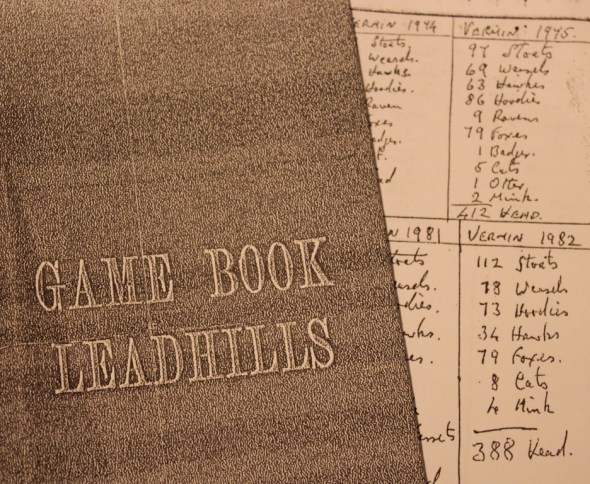
Last month we blogged about getting our hands on the Leadhills Estate Game Book and our interest in the lists of killed ‘vermin’ dating over several decades (see here). These ‘vermin’ lists include the usual species that are typically referred to as ‘vermin’ by the game-shooting industry: species such as foxes, stoats, weasels and crows. However, also included on these ‘vermin’ lists are supposedly protected species such as birds of prey, ravens, otters and badgers. We said we’d blog about the lists in more detail when we had more time.
Leadhills game book vermin lists

Since then an independent academic has contacted us to ask whether we’d consider allowing access to the documents so the data could be analysed, in combination with other data sources, to provide a ~50 year dossier of alleged illegal raptor persecution incidents recorded at Leadhills Estate, stretching from the 1970s right up to the present day. These results would be written up as a peer-reviewed paper in a scientific journal. We think that such a paper would hold much more gravitas than a simple analysis of a sub-set of those data written up for this blog so we have agreed to pass the information to the academic. We look forward to seeing the results in due course.

So as not to steal the academic’s thunder we won’t be writing in detail about the contents, but we did want to share one startling statistic.

We looked at the number of killed ‘hawks’ listed in the Leadhills Estate Game Book, just between the years 1980-1987. The vermin lists in the Game Book stretch well beyond these years but we selected this particular period because we wanted to compare the figures with the RSPB’s published figures for all of Scotland during this period (the RSPB data were published in McMillan’s 2011 paper – here).

Here’s what we found:

RSPB: Number of illegally killed raptors recorded for the whole of Scotland between 1980 and 1987 = 91 birds.

Leadhills Estate Game Book: Number of illegally killed raptors recorded on Leadhills Estate between 1980 and 1987 = 383 birds.

The difference between these two figures gives a very clear illustration of a situation that conservationists have been arguing for decades: that is, the ‘official’ recorded figures of illegally-killed raptors that are published each year by the RSPB are just the tip of a bloody great big massive iceberg. Just on this one estate (Leadhills), more than four times as many raptors were recorded illegally killed during this seven-year period than those officially reported throughout the whole of Scotland. That’s just one estate. Think what these figures would look like if we had access to the vermin lists of other estates across Scotland!

Now, there’ll be some in the game-shooting industry who will argue that raking over historical persecution records dating back 30 years is irrelevant. They’ll claim that although persecution was common practice several decades ago, things have now changed for the better and it’s only the odd ‘rogue’ estate that are still at it. This, of course, is absolute nonsense. Anybody who bothers to read through the pages of this blog will know that that is simply not a true statement. Sure, some estates have since got their acts together and are now supporting healthy raptor populations on their land (e.g. see Atholl Estate in McMillan’s 2011 paper above) but these estates seem to be exceptional: there are many, many other estates that are still, even to this day, systematically and illegally persecuting raptors and many of them seem to have a curious immunity to prosecution.
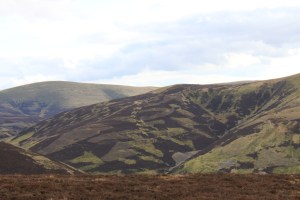
leadhills estateLeadhills Estate has been at the centre of allegations of wildlife crime for a very long time. The list of confirmed reported incidents dating from 2003 to 2011 makes for shocking reading (see here). Of these 41 confirmed incidents, only a couple have resulted in a prosecution and a conviction.

Earlier this year we reported the discovery of a substantial illegal stash of poisoned baits that was reportedly found on the estate (see here). Unsurprisingly, six months later we’re still waiting for Police Scotland to issue a statement.

What was particularly interesting about this incident was the reaction of the Scottish landowners’ organisation, Scottish Land and Estates. They refused to discuss the incident, citing an ‘on-going police investigation’ (how very convenient – this excuse relieves them of having to comment on any alleged persecution incident that never gets resolved – i.e. most of them). They also wrote to the Environment Minister and posted an article on their website complaining about the alleged incident being reported on this blog (see here). They gave an impression of being more outraged by the reporting of the incident than they were of the alleged discovery of a big stash of deadly poisoned baits on a Scottish sporting estate.

Now, compare that reaction to their response to the conviction of gamekeeper Peter Bell earlier this year. Bell was convicted of four offences including the poisoning of a buzzard on the Glasserton and Physgill Estates. Immediately following his conviction, Scottish Land and Estates issued a statement to say that Glasserton had been booted out of their organisation (see here). So why didn’t SLE issue a similarly strong statement when the poisoned baits had allegedly been found at Leadhills? They could argue that nothing is proven until a conviction has been secured, as in the Glasserton case. But if that is their argument, then why didn’t they distance themselves from Leadhills Estate when a Leadhills Estate gamekeeper (Lewis Whitham) was convicted of laying a poisoned bait in 2010 (see here)? Why is Leadhills Estate, with its long, long, long history of alleged wildlife crime, treated so differently to an estate like Glasserton, which in relative terms barely registers on the persecution radar? Back in June we asked SLE to provide some transparency about their relationship with Leadhills Estate (see here). They still haven’t.

There may be some who will argue that things are about to change at Leadhills Estate with the shooting lease now up for sale; the sales document itself makes for an interesting read – note the reason given for the current tenants’ departure and the fate of the gamekeepers currently employed on Leadhills Estate: Leadhills brochure 2013

Yes, there may well be a change in the tenancy but will that make any difference? There have been numerous shooting tenants at Leadhills Estate over the years and yet, if the available data are to be believed, the background level of alleged persecution has remained constant.

The raptor killers, whoever they are, appear to be untouchable.

Red kite poisoned N Yorkshire: police appeal 11 months later

North Yorkshire Police are appealing for information 11 months after a red kite was found poisoned in Tadcaster. The RSPB has also put up a £1,000 reward for information leading to an arrest and charge.

The dead bird (a three-year old believed to have been part of a breeding pair) was discovered by a member of the public at Toulston Polo Ground in October 2012. Toxicology results have revealed the bird had been poisoned with Carbofuran.

On the face of it, this looks like another farcical mishandling of a raptor persecution crime by the police, with an exceptionally long delay between the discovery of the victim and an appeal for information. However, rumours from colleagues in Yorkshire suggest that the initial testing (post-mortem) was not straightforward, leading to a prolonged delay. It is also rumoured that the bird was eventually submitted for toxicology analysis under a private submission co-funded by the Yorkshire Kite Group and the RSPB, leading to the detection of the banned poison Carbofuran.

The bird is believed to be the 20th poisoned red kite reported in North Yorkshire since 2000.

North Yorkshire police press release here

Rescued peregrine succumbs to its injuries

Last week we blogged about the valiant efforts made by a farmer, an RSPB warden, a politician and a falconer/gamekeeper to save a stricken peregrine that was believed to have been poisoned (see here).

We heard yesterday that she didn’t make it. Her body has now been sent to the veterinary labs at the Agri-Food and Biosciences Institute for testing.

Further incitement to persecute the hen harrier in Ireland

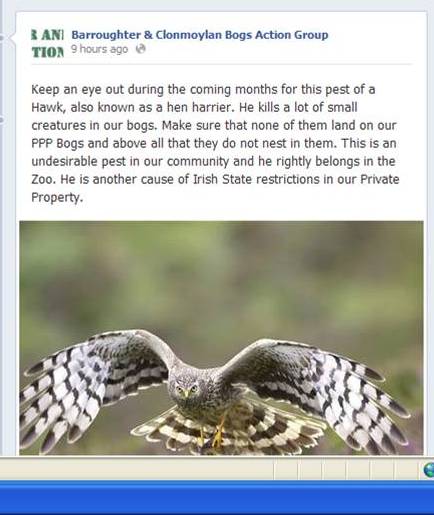
Following on from the controversy in July when an Irish council leader in Limerick called for ‘open season’ on hen harriers (see here), another group in Ireland, this time in Galway, is now encouraging illegal activity against this protected species.

The following piece was published yesterday on the Barroughter & Clonmoylan Bogs Action Group’s Facebook page:

BAG HH FB

This particular group of Irish peat cutters is very familiar with controversy – see here.

It’s unclear why this group detests the hen harrier – it’s not as though there is the usual perceived conflict between the hen harrier and game-shooting interests – although perhaps their last sentence reveals the root cause of their issue, not dissimilar to Councillor Sheahan’s arguments back in July.

UPDATE 11pm: The peat cutters’ Facebook page (where the above article was posted) has been virtually under seige today by many many people posting comments in condemnation of hen harrier persecution. The volume and strength of feeling has resulted in the peat cutters removing their original post. Great to see so many people respond – there is hope!

Also today, The National Trust for Ireland issued a strong statement condemning the peat cutters’ position on hen harriers  (see here).

Not just any red grouse…part 4

MSOn 14th August we blogged about Marks and Spencer’s decision to sell red grouse in two of its flagship London stores (see here). We were particularly interested to learn that M&S was sourcing this product from Yorkshire, one of the UK’s worst raptor persecution hotspots, and we wanted to know whether M&S could assure its customers that red grouse were not being sourced from dodgy grouse moor estates involved in the illegal persecution of hen harriers and other protected raptor species. We emailed M&S’s Director of Food, Steve Rowe, and asked him to name the estates involved and to tell us what measures were taken to ensure these estates were not involved in illegal persecution.

On 20th August we blogged about two responses we’d received from M&S (see here). We were told, amongst other things, that:

We are working with only the most sustainable and well-managed estates, and do not work with any suppliers that interfere with Hen Harriers“.

We were also told that the names of the estates could not be divulged “as this is commercially sensitive information“.

We weren’t very impressed and we wrote back to M&S to advise that if they didn’t substantiate their claim of ‘working with only the most sustainable and well-managed estates’ and of ‘not working with any suppliers that interefere with hen harriers’ we would report them to Trading Standards for making what we believed to be misleading claims (see here).

Marks and Spencer has failed to reply and has therefore failed to substantiate its environmental claims about this product. We believe this is in contravention of The Sale of Goods Act 1979 and the Supply of Goods and Services Act 1982. This legislation states, amongst other things, that goods sold or supplied must be ‘as described’. An environmental claim made by the retailer to a consumer must be accurate. Public statements made by manufacturers, importers or producers about specific characteristics of the goods – for example, environmental claims in marketing and advertising – must be accurate and are part of the contract that the consumer has with the retailer.

According to information produced by Trading Standards, “In order for a consumer to make informed choices, the trader must provide clear, truthful and accurate information about the environmental claims they have made, which must be capable of being substantiated. The trader should not make vague or ambiguous claims, nor should they mislead consumers by implying that their environmental claims relate to the entire product when this is not the case“.

According to DEFRA’s guide for retailers on making environmental claims (see here), the retailer has to consider the ‘full environmental impact’ of the product (very relevant to red grouse, eh?) and they must also ‘make available transparent information about their environmental claim to those seeking reasonable justification of it’.

Given all the above information, and Marks and Spencer’s refusal to provide evidence to substantiate their environmental claims about their red grouse suppliers, we have now reported them to Trading Standards.

If you also want to report them to Trading Standards, you can do via an online form or by telephone, through the Citizens Advice Bureau (here). We understand that Trading Standards are particularly interested in assessing environmental claims so we’re hopeful that they will launch an investigation in this case.