
 The SNH clam trap fiasco continues. First, here’s a quick re-cap on their controversial decision to authorise the use of clam-type traps in the 2013 Open General Licences:
In October 2012, SNH announced that they would undertake a public consultation about the use of clam-type traps in Scotland (see here).
In early December 2012, following the public consultation, SNH announced that they would allow the use of clam-type traps on the Open General Licences beginning 1st January 2013 (see here). We questioned whether SNH had favoured the views of game-shooting lobby and ignored the views of the conservationists, and we asked to see the full set of consultation responses.
In mid-December 2012, SNH’s decision to authorise the use of clam traps led to several parliamentary questions. The questions can be read here, and the Environment Minister’s responses can be read here. The responses suggested that the Scottish Government didn’t see anything wrong with the decision to authorise clam-type trap use.
Meanwhile, also in mid-December 2012, at least two organisations (SSPCA and RSPB) asked SNH to reconsider their decision to approve the use of clam-type traps (see here).
In late December 2012, we blogged about how to recognise a clam trap being used lawfully and one being used unlawfully (see here).
In late December, SNH released the full set of consultation responses for scrutiny. In early January, we blogged about our analysis of these responses and concluded that SNH had not been truthful when they’d said that the “majority of consultees supported the proposed amendments” and that their decision to authorise the use of clam traps was based on “the feedback received“. In fact, our analysis showed that more than twice as many respondents were against the use of clam traps prior to independent testing than those who were supportive of their use! (see here). We encouraged people to contact SNH Chief Executive Ian Jardine to ask for an explanation.
So, the latest update is that SNH have now responded. The following generic letter was sent out in mid-January by one of Ian Jardine’s underlings, Nick Halfhide, Head of Operations:
“I am sorry that you disagree with the decision that we have taken to include clam-type traps in the 2013 General Licences. We are aware of the potential risks to non-target species from these, as with other licensed traps, but at the same time we recognise the legitimate needs of the land management community to control certain bird species.
In balancing the needs of land managers and the risk to non-target species, we sought to gather evidence through the recent public consultation to inform our decision making. This produced much valid opinion but little solid evidence. We therefore formed the view that as these traps are already in use, and have been for some time, it would be disproportionate to ban their use outright.
Instead, we decided to take steps to minimise the risk to non-target species by placing a special condition that eggs or bread are the only permitted baits for use with Larsen mate and Larsen pod traps. In addition we intend to further test these traps this year which will be both rigorous and independent. If evidence does come to light that they pose unacceptable risks then any General Licence permitting their use could be revoked at any time.
I also understand your concerns over the potential misuse of all traps permitted under General Licences and this is something that we take very seriously. These issues are of course not new and we are aware of the recent misuse of traps to target birds of prey and this is something we are very keen to address.
We believe that one important step will be to develop a Code of Practice with the industry and key stakeholders – this document would provide clarity on design and use of traps to ensure that there is a clear understanding and agreement as to when and how they can be used. This should help to maximise their effectiveness in addressing the legitimate needs of users whilst minimising risk in relation to animal welfare, conservation and potential for misuse. We aim to take this forward early this year.
Finally, in relation to views received during the formal consultation last year, I agree that the majority of respondents did not favour the use of clam traps but were in favour of clarifying which traps could be used under General Licence. The commentary on this point in paragraph 2 of section 5 of Annex 1 in the letter to consultees dated 4 December 2012 is ambiguous and thus confusing, for which I apologise.
Yours sincerely
Nick Halfhide
Head of Operations”
Having considered this response for a few weeks, we have now decided on the next course of action. We think the SNH response is unsatisfactory in that it still does not address the fundamental problem behind their decision to authorise the use of clam-type traps; that is, SNH’s decision not to carry out independent testing prior to authorising clam trap use. A further blog entry will explain what we can do about it….
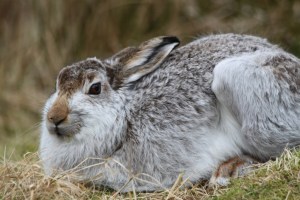 The ‘not guilty’ verdict in the recent Lochindorb hare snare trial (see
  RPS readers may be interested to see that Christine Grahame MSP [Midlothian South, Tweeddale and Lauderdale, SNP] has lodged some questions which ask the Scottish Gov to clarify current legal position:”
 Raptor Persecution UK