 On Dec 5th we blogged about the changes being brought in by SNH to the 2013 General Licences following a period of public consultation (see here).
We suggested that it looked like SNH had listened to the recommendations made by the game-shooting lobby and had ignored those made by the pro-raptor groups. This was pure speculation because at that time SNH hadn’t actually published the responses they’d received during the consultation. We (and many of you) asked for them to be published. They did so on 21st December. Click here to read them.
Having now had the chance to review all these responses in detail, we believe that SNH has indeed favoured the recommendations made to them by the game-shooting lobby and ignored the recommendations made by the pro-raptor groups. But on a much more serious level, we now also believe that SNH’s decision to approve the use of clam traps in the 2013 General Licences before conducting an independent assessment of their suitability is based on a flawed interpretation of the responses.
In the letter sent by SNH to the consultees, dated 4th December (see here), SNH wrote this:
“On the basis of the feedback received we have made a number of decisions for changes for 2013”.
One of these changes was this:
“Traps permitted under General Licences 1-4 will be clarified, including authorisation to use ‘clam’-type traps”.
Later in the same letter they further explained this change:
“In the consultation we asked whether there was a need to clarify the traps that are permitted for use under the General Licences. Our proposal was to provide further clarification and to specifically permit the use of ‘clam’-type traps. These traps have been available and used for a number of years but whether or not their use is covered by the General Licences has been debated due to unclear trap definitions in the General Licences to date.
Whilst the majority of consultees supported the proposed amendments, concerns were expressed by a number of respondents over potential welfare implications of these traps and how they could be used to trap non-target species”.
So, in this letter, SNH told us that the “majority of consultees supported the proposed amendments” [to explicitly authorise the use of clam-type traps before conducting an independent assessment of their suitability] and that SNH’s decision to authorise their use was based on “the feedback received”. According to our analyses of the responses, this is blatantly untrue on both counts.
We divided the respondents into four groups:
(1) Those who explicitly supported the use of clam-type traps prior to an independent assessment of their suitability;
(2) Those who didn’t expressly mention clam-type traps in their response;
(3) Those who did specifically mention clam-type traps but were unclear about whether they supported use prior to independent assessment; and
(4) Those who explicitly did not support the use of clam-type traps prior to an independent assessment of their suitability.
In group (1) –
Scottish Countryside Alliance, Scottish Association for Country Sports, Scottish Gamekeepers’ Association, Scottish Land & Estates Moorland Group, Game & Wildlife Conservation Trust, British Association for Shooting and Conservation.
TOTAL: 6
In group (2) –
National Farmers Union Scotland, Scotland for Animals, Animal Concern Advice Line, Scottish Tree Trust, Individual B, Grampian Wildlife Crime Unit, Grampian Police, Glasgow City Council, Individual C, University of Stirling.
TOTAL: 10
In group (3) –
National Wildlife Crime Unit
TOTAL: 1
In group (4) –
OneKind, RSPB, Scottish Raptor Study Groups, SSPCA, Against Corvid Traps, Kindrogan Field Centre (Field Studies Council), Individual A, Individual D, Individual E, Individual F, Individual G, Individual H, Individual I.
TOTAL: 13
For the purposes of this analysis, groups (2) and (3) can be discounted. That leaves us with groups (1) and (4).
It is clear that the number of respondents in group (4), i.e. those opposing the use of clam-type traps prior to independent testing, is more than double those in group (1). Thirteen respondents were against the use of clam-type traps; only six were supportive.
So how on earth can SNH justify their decision, “based on feedback received”, to authorise the use of these traps prior to independent testing? At best this appears to be incompetence; at worst, corruption.
This is a serious issue. Has SNH intentionally misled the public to believe that the majority of respondents supported the use of clam traps prior to independent testing? Why hasn’t SNH heeded the majority of the responses, which clearly stated their opposition to the use of clam-type traps prior to independent assessment?
We demand an immediate review of this consultation process and we urge you to seek the same. In the first instance, we suggest you contact SNH Chief Executive Dr Ian Jardine: ian.jardine@snh.gov.uk
If you don’t know how to phrase your complaint, you could simply cut and paste from this blog or provide a URL to this posting.
SNH have a duty to respond to emails within 20 working days. If Dr Jardine’s response is unsatisfactory, then we have the right to ask the Scottish Public Services Ombudsman to investigate the complaint.

 On January 3rd we blogged about an apparent discrepancy in SNH’s 2013 General Licence consultation. In early December 2012, SNH claimed that “the majority of consultees” supported the idea of using clam-type traps without the need for prior independent testing on their suitability. In mid-December we asked SNH to publish the full list of responses for public scrutiny. They did this on 21st Dec. Our analyses of those responses suggested that the majority of consultees DID NOT support the use of clam-type traps prior to independent testing (see here).
 Raptors have been the subject of discussion in a couple of BBC Radio 4 programmes over the last two days.
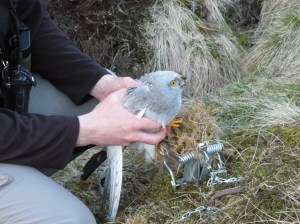 There’s another article out today about the imminent extinction of breeding hen harriers in England (see
  Raptor Persecution UK