
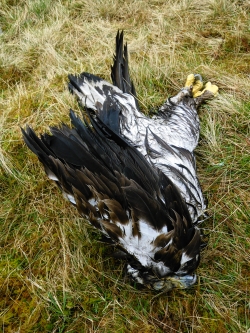
 So, SGA Chairman Alex Hogg is “hugely encouraged” by the forthcoming 2012 poisoning statistics, due to be released by the government agency SASA in the next few days (see here for STV news story and here for SGA press release). The figures are expected to show just two confirmed raptor poisonings in the first half of 2012, a considerable drop from the figures of previous years.
Unfortunately, these figues are just a small part of the story, as many regular readers will already be aware. We’ve blogged about this before, back in March when the poisoning figures for 2011 were published (see here for our previous post). As we said then, these figures look promising on a superficial level but do they really reflect the true extent of illegal persecution?
The lower poisoning figures may well be a true indicator that fewer people are still poisoning raptors. That’s what the SGA and friends clearly think and would like the rest of us to think. However, another equally plausible explanation is that the poisoners are just getting better at hiding the evidence. We’ve always known that the published poisoning figures just show a tiny fraction of actual poisoning incidents; these poisonings usually take place in vastly remote areas where few people are around to find the evidence. The poisoned birds that have been discovered have usually been discovered by chance. More recently, they’ve been discovered because more raptors are now fitted with satellite tags so it’s easier to follow their movements and to find the locations where they die.
There is another plausible explanation, too. As we’ve also said before, poisoning is not the only method of illegally killing raptors. Perhaps the lower poisoning figures reflect a substantial shift in the methods used to persecute raptors. Are more raptors being shot at the nest? Are more raptors being shot at roost sites? Are more nests and eggs being destroyed? Are more raptors being caught in traps and being bludgeoned to death? The persecutors know very well that the government doesn’t record these types of incidents; only reported poisoning incidents are published. What better way to make it look like you’ve cleaned up your act than by reducing the poisoning but increasing the other techniques that you know will never be officially reported? (Except by the RSPB who always publish these other persecution incidents in their annual reports, but which are then dismissed as being ‘unofficial’ and ‘exaggerated’ by the game-shooting lobby).
Is it plausible that other persecution methods have now taken precedence over poisoning? Let’s look at the hen harrier situation. The UK’s hen harriers continue to spiral towards oblivion and the main cause has been identified as illegal persecution. Everyone knows it and even the government has acknowledged it. But how many hen harriers do you see listed in the annual poisoning figures? Very few indeed. Mainly because poison is rarely used to kill harriers – they’re not typically a scavenging species that depends on carrion so they’re harder to poison. But just because they don’t feature on the annual list of poisoned raptors doesn’t mean they’re not persecuted! Of course they are; the national hen harrier survey results say it all.
If anyone is still in any doubt about whether the latest poisoning figures are an accurate reflection of the extent of illegal raptor persecution, then consider this. Will the figures for Jan-June 2012 include this ‘missing’ satellite-tagged golden eagle (here), or this ‘missing’ satellite-tagged golden eagle (here), or this dead golden eagle found with substantial injuries (here), or this dead golden eagle found in what was described as ‘suspicious circumstances’ here? Or just the one confirmed poisoned golden eagle found dead in Lochaber (here)?
 Raptor Persecution UK