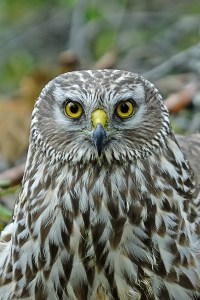
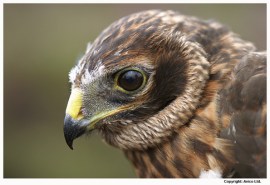
Scottish sea eagles reach plague proportions

Concern is growing across Scotland as it was revealed last night that the sea eagle population has now increased to 57 territorial pairs; this is up from 52 last year, prompting calls for a cull.

Albert Hogburn of the Modern Poisoners’ Society said: “It’s ridiculous. These things have been reintroduced without a thought for the safety of our children. They swarm around schools waiting for the lunch bell when there’s easy pickings to be had in the playground. Last week I saw 48 of them hiding behind the school gate. Something’s got to be done, they’ve reached plague proportions“.

Donald Spewing-Moore of the Royal Bird Protection Society said: “That man’s talking out of his arse“.

BBC news article here

Modern Poisoners’ Society website here

‘Bumper’ grouse season proves raptors aren’t having a ‘significant impact’

The 2011 grouse season closed on Saturday. According to an article in the Shooting Times, it’s been a “bumper season“, and, “many moor owners, keepers and shooters around the UK will be reflecting on one of their best years in decades” (see here for article).

In another review, this time just of the Scottish grouse season, Robert Rattray, head of CKD Galbraith’s Sporting Letting Department, comments on the performance of some well-known grouse moors (including Glenogil, Millden and Invercauld) and he writes: “The 2011 grouse season will be looked upon as one of the best in recent living memory, and in many instances a distinct improvement on the 2010 season, in itself regarded as one of the best seasons for a decade or more” (see here for his report).

All very interesting. So much for the supposed ‘significant impact’ of raptors on gamebirds, repeatedly trotted out by the gamekeeper and landowner associations in their quest to legalise persecution. If, as they claim, they are not already killing everything with a hooky beak that dares to even look at their grouse moor, then it seems to me that they’re managing to [legally] kill a record number of red grouse without having to go after the raptors. So what’s the problem?

Of course, there are some who’ll read this blog and will have a different perspective – that is, the 2011 grouse season was a ‘bumper’ one precisely because anything with a hooky beak in the vicinity of the grouse moors had already been killed off.

Environment Minister ‘answers’ question about the lost Langholm hen harriers

Following yesterday’s report that Elaine Murray MSP had asked the Scottish Executive for information about the young hen harriers from the Langholm Moor Demonstration Project (see here), Environment Minister Stewart Stevenson has provided a response:

S4W-04336 Elaine Murray: To ask the Scottish Executive what information it has regarding the number of hen harriers that have been satellite tagged as part of the Langholm Moor Demonstration Project and what is known about the whereabouts of those birds.

Stewart Stevenson: In 2010, three hen harriers were satellite tagged as part of the Langholm Moor Demonstration Project. All three have now stopped transmitting. One tag was recovered at Langholm, with no trace of the bird. The other two birds were tracked through southern Scotland, south west England and France and Spain. No tags or birds have been found.

In 2011, three birds were satellite tagged and all have now stopped transmitting. Transmissions were last received from south of Carlisle, in the Moorfoot Hills and France. No tags or birds have been found and there are no indications of the cause of the lost signals.

The life expectancy of the satellite tags used is between a few months to around three years. While live, the tags provide valuable information on hen harrier range and dispersal.

(Link to parliamentary questions and answers here)

It’s a shame the Environment Minister didn’t elaborate further, although he was probably just reciting the information he’d been given, possibly from government advisors at SNH or maybe from Natural England, who are responsible for the satellite tag data from Langholm. Could the lack of transparency be because two of the locations (in the Moorfoot Hills and in the Northern Pennines to the south east of Carlisle) from where the last known signals were transmitted, just happen to be grouse moors? And not just any old grouse moors. One grouse moor with a long history of alleged raptor persecution (dead raptors and poisoned bait found on different occasions but no convictions) and one grouse moor with a head keeper and under keeper convicted of raptor persecution (pole trapping and inproper storage and use of a pesticide). One of these estates has already been named on the Raptor Politics website (see here and here).

Is it just an unfortunate coincidence that the signals from these two young hen harriers failed after they were tracked to these two moors? It could well be. But it’s very hard to be optimistic when we hear that the hen harrier in England is just four precious nests away from extinction (see here).

Perhaps one of these days the Langholm Project officials will deem us all worthy of knowing all the facts about this publicly-funded project, which would allow us all to draw our own conclusions instead of being spoon-fed a clearly sterilised version of events.

Perhaps you don’t want to wait for something that might never happen though. In which case, you can email the Natural England spokesperson for the Langholm Project (press officer Emma Lusby) and ask her yourself: emma.lusby@naturalengland.org.uk

Norfolk estate gamekeeper guilty of animal cruelty

Here’s another example of the fine work of a ‘professional’ gamekeeper. This was published in the Norwich Advertiser yesterday:

A Norfolk gamekeeper was told today he could be sent to prison after admitting causing a fight between two dogs and a fox.

Christopher John Carter, 49, of The Burrows, in Gayton Thorpe, pleaded guilty at King’s Lynn Magistrates’ Court to causing the fight between the animals in July 2009.

Appearing alongside Carter was Luke James Byrne, 19, of Mill Houses, King’s Lynn, who admitted causing three animal fights on Westacre Estate.

The 19-year-old also admitted possessing three dead wild birds, a heron, cormorant and a buzzard, in King’s Lynn.

Jonathan Eales, prosecuting for the RSPCA, showed magistrates video footage, recorded by Byrne, of the fights which saw dogs attacking animals trapped in a snare. The first clip showed a fight between Byrne’s dog and rat which took place on June 20, 2009. The other videos showed Carter’s two dogs attacking a fox on July 2, 2009 and a fight between one of Carter’s dogs and a fox on June 15, 2010.

Mr Eales said: “In March this year, a woman purchased a mobile phone from Mr Byrne’s parents. The phone had been used by Mr Byrne and had a video clip on it of one of these fights. The woman was so shocked by what she saw that she reported it to the RSPCA which then investigated it. The investigating officer then took possession of Mr Byrne’s father’s laptop and two further video clips were found.”

During each of the videos, Byrne can be heard laughing as the fights took place and encouraging the dogs to attack. He can also be heard screaming “kill it” repeatedly and during the second video, Byrne says: “Well, that didn’t last very long”.

Mr Eales continued: “A number of pictures were also found on Mr Byrne’s father’s laptop of dead animals – three of which were dead wild birds. The conclusion was made that he must have been in possession of these birds to take pictures of them and he has pleaded guilty to these charges.”

Mr Eales told the court Carter is a gamekeeper and that Byrne had done work experience with him but added they had known each other for a long time.

He continued: “When these matters were discovered, both men were interviewed. At first, Mr Byrne denied having any involvement in or knowledge of these matters but after being shown the video clips, he made a no comment interview. Mr Carter didn’t make any admissions until the videos were shown to him but he did assist us in relation to the other two clips which he wasn’t involved in. Mr Carter gave no reason why he thought these things had happened. He said he had no excuse for it and said he knew what had happened was against the law. He also said he was ashamed of himself.”

Mr Eales asked magistrates to consider depriving the two men of ownership of the dogs and told the court these dogs would then be re-homed by the RSPCA. Carter’s two dogs are currently in the care of the RSPCA but Byrne’s dog remains at his home address.

Mr Eales also asked magistrates to consider whether or not to disqualify both men from owning animals for a short period or for life.

James MacWhirter, representing Byrne, asked magistrates to put off sentencing his client until a pre-sentence report had been carried out by the probation service. But Malcolm Savory, representing Carter, urged magistrates to deal with his client and told them he could produce plenty of character references for Carter.

He also appealed to the magistrates to take into account the fact the video footage relating to his client lasted 30 seconds but in the other cases the RSPCA bring to court, the suffering can go on for “minutes, days weeks, months or sometimes years”.

Lead magistrate Paul Kidd asked for all-option pre-sentence reports to be prepared for both men, including possible custodial sentences.

The two men will return to King’s Lynn Magistrates’ Court on January 11 to be sentenced.

Source article at Norwich Advertiser here

If anyone wants to find out whether Christopher John Carter is a member of the National Gamekeepers Organisation, send an email to: info@nationalgamekeepers.org.uk

Congratulations to the RSPCA and the Crown Prosecution Service.

Questions on the whereabouts of Langholm hen harriers asked in parliament

Elaine Murray MSP has put forward a question to the Scottish Executive concerning the whereabouts of the tagged hen harriers from the Langholm Moor Demonstration Project:
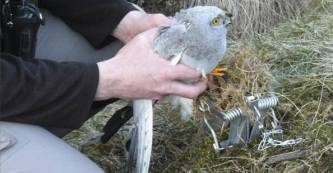
S4W-04336 Elaine Murray: To ask the Scottish Executive what information it has regarding the number of hen harriers that have been satellite tagged as part of the Langholm Moor Demonstration Project and what is known about the whereabouts of those birds.

The written answer is due to be provided on 16 December 2011, according to the Scottish Parliament website.

Some background to the mysterious disappearance of these birds can be found here

Hen harrier is four steps away from English extinction, says RSPB

The RSPB has today issued a press release that says the hen harrier is the bird most likely to become extinct in England because of human pressure.
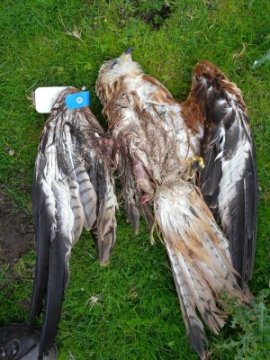
A 2011 joint survey of the English uplands by the RSPB and Natural England found that only four nesting pairs of hen harrier successfully raised young; all on a single estate in the Forest of Bowland, Lancashire.

This is believed to be the lowest population in England since they recolonised in the 1960s following extinction in the late Nineteenth Century. Historically, the hen harrier was widespread in England.

A government-backed report – the Hen Harrier Conservation Framework – proved that illegal persecution on driven-grouse moors is the main factor restricting the growth of the hen harrier population in the UK. The framework reported that England’s uplands could support at least 320 pairs of this bird of prey. (See here, here and here for our earlier posts about the Hen Harrier research).

To read the rest of the press release, click here

Mark Avery also has a commentary about this on his blog, here

Cumbrian man in red kite investigation guilty of firearm & pesticide offences

Further to the blog post last week (see here), Allan Armistead appeared at Furness & District magistrates court today, charged with a string of offences relating to illegal pesticide storage and firearms offences.

He pled guilty to the following charges:

Possession of a firearm (believed to be a rifle) without a certificate

Storing the pesticide Cymag

Storing the pesticide Sodium Cyanide

Storing Strychnine Hydrochloride

Storing Degesch Phostoxin

Storing Aluminium Phosphide

Storing Phosdrin + Phosdrin 24

Storing Lindex with HCH seed dressing

Possessing firearm ammunition

Failing to disclose possession of ownership of 3 x 12 bore side by side shotguns.

Armistead (74), of Hulleter Farm, Oxen Park, Ulverston, Cumbria, will appear at Lancaster Crown Court on 6 January 2012 for sentencing.

Three charges against Armistead were withdrawn, relating to the possession of shotguns without a certificate.

Armistead pled not guilty to three charges:

Storing pesticide Sodium Cyanide

Storing Strychnine Hydrochloride

Storing Lead Arsenate

Armistead will appear back at Furness & District Magistrates Court on 31 January 2012, where a date will be set for his case to be continued at Crown Court.

Interestingly, but perhaps not surprisingly, no charges were brought for the killing of red kites. Armistead was released on unconditional bail until his next court appearance on 6 January 2012. Very well done, Cumbria Constabulary and the Crown Prosecution Service!

Story at North West Evening Mail here

Man charged in relation to red kite deaths in Cumbria

Further to the blog post in July 2011 about the arrest of a man in connection to the investigation of poisoned and shot red kites in Cumbria (see here), Cumbria Constabulary has today announced that a man has been charged.
Allan Armistead (74), of Oxen Park, Ulverston, has been charged with five offences under the Firearms Act and ten offences under the Control of Pesticides and Food and Environmental Protection Acts.

Armistead is due to appear at Furness and District magistrates court next Tuesday (6 December 2011).

Congratulations to Cumbria Constabulary for securing enough evidence to get the case to court, and for keeping the public updated.

Cumbria Constabulary press release here

BBC news story here

Convicted poisoner (gamekeeper) is a member of SGA

There’ll be some red faces at the SGA today. After all the proclamations of Alex Hogg, Chairman of the Scottish Gamekeepers Association, who is on record as saying, “Professional gamekeepers do not poison raptors” (see here), it turns out that the gamekeeper David Alexander Whitefield, who today was convicted of poisoning four buzzards (see here), is a member of the SGA!!

The SGA has issued a statement after today’s conviction, that says Whitefield’s membership will be suspended with immediate effect (see here). This is welcome, if belated, news. But why wasn’t his membership terminated after his earlier conviction for wildlife offences in 2008? Or is membership only terminated after a conviction for poisoning, as opposed to other types of wildlife crime?
Previously convicted gamekeeper guilty again

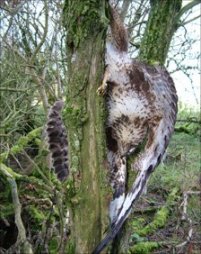
A previously convicted gamekeeper has today admitted to poisoning four buzzards with Alpha-chloralose laced baits. At Lanark Sheriff Court, David Alexander Whitefield (45) of Coulter, near Biggar in Lanarkshire, pled guilty to the offences that took place between March and November 2009 at Culter Allers Farm, near Biggar, where Whitefield was employed as the sole gamekeeper for pheasant and partridge shooting. He has reportedly blamed his employer (the landowner), whom Whitefield claims told him to reduce the number of buzzards.

In addition to the four poisoned buzzards found on the shooting estate, a large quantity of Alpha-chloralose was found inside unlocked outbuildings, some of it inside a coffee jar – this extremely hazardous poison could have easily been mistaken for sugar or powdered milk by an unsuspecting visitor. Culter Allers is a popular area for walkers and it is fortunate indeed that no person or pet was poisoned. The buzzards were not so lucky.

This case has been in the works for some time, first reported a year ago and then delayed for legal technicalities (see here, here and here). Sentencing for his latest conviction has been deferred for background reports and will take place in early January. We will watch with great interest.

Whitefield’s previous convictions include failing to ensure the welfare of a buzzard and possession of a buzzard. These offences took place at Culter Allers and he was convicted at Lanark Sheriff Court in September 2008. He received a pathetic £300 fine (see here). Just six months later he was poisoning buzzards. At the time of the first conviction (Sept 2008), he was reported to be a self-confessed member of the Scottish Gamekeepers Association. It is not known if he was a member of the SGA at the time of the buzzard poisoning incidents (March-Nov 2009) or whether he is still a member – you can find out by emailing info@scottishgamekeepers.co.uk

Congratulations to the SSPCA for leading this case and for securing a conviction. Let’s hope the Scottish parliament takes heed next year when they’re consulting on extending the powers of the SSPCA for the investigation of wildlife crime.

STV news story about Whitefield’s latest conviction here

BBC news story here